If you have any questions, you are always welcome to contact us. We'll get back to you as soon as possible, withing 24 hours on weekdays.
Customer service
All questions about your order, return and delivery must be sent to our customer service team by e-mail at yourstore@yourdomain.com
Sale & Press
If you are interested in selling our products, need more information about our brand or wish to make a collaboration, please contact us at press@yourdomain.com
Help
If you have any questions, you are always welcome to contact us. We'll get back to you as soon as possible, withing 24 hours on weekdays.
Customer service
All questions about your order, return and delivery must be sent to our customer service team by e-mail at yourstore@yourdomain.com
Sale & Press
If you are interested in selling our products, need more information about our brand or wish to make a collaboration, please contact us at press@yourdomain.com
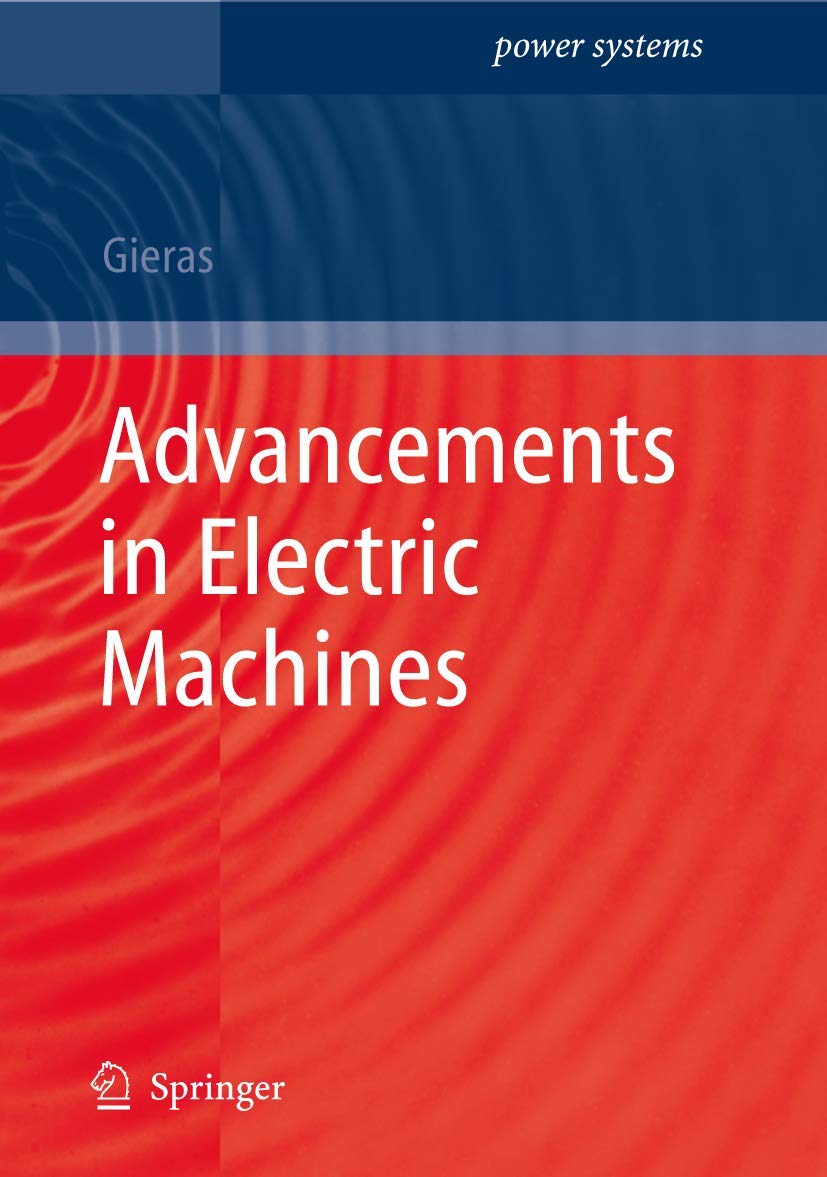
Traditionally, electrical machines are classi?ed into d. c. commutator (brushed) machines, induction (asynchronous) machines and synchronous machines. These three types of electrical machines are still regarded in many academic curricula as fundamental types, despite that d. c. brushed machines (except small machines) have been gradually abandoned and PM brushless machines (PMBM) and switched reluctance machines (SRM) have been in mass p duction and use for at least two decades. Recently, new topologies of high torque density motors, high speed motors, integrated motor drives and special motors have been developed. Progress in electric machines technology is stimulated by new materials, new areas of applications, impact of power electronics, need for energy saving and new technological challenges. The development of electric machines in the next few years will mostly be stimulated by computer hardware, residential and public applications and transportation systems (land, sea and air). At many Universities teaching and research strategy oriented towards el trical machinery is not up to date and has not been changed in some co tries almost since the end of the WWII. In spite of many excellent academic research achievements, the academiaindustry collaboration and technology transfer are underestimated or, quite often, neglected. Underestimation of the role of industry, unfamiliarity with new trends and restraint from technology transfer results, with time, in lack of external ?nancial support and drastic cline in the number of students interested in Power Electrical Engineering.
⚠️ WARNING (California Proposition 65):
This product may contain chemicals known to the State of California to cause cancer,
birth defects, or other reproductive harm.
For MAP (Minimum Advertised Price) violations and Intellectual Property (IP) or Trademark concerns, please contact:
support@ergodebooks.com
⚠️ California Proposition 65 Warning: Some products sold on this website may expose you to chemicals known to the State of California to cause cancer, birth defects, or other reproductive harm. For more information, visit www.P65Warnings.ca.gov.