
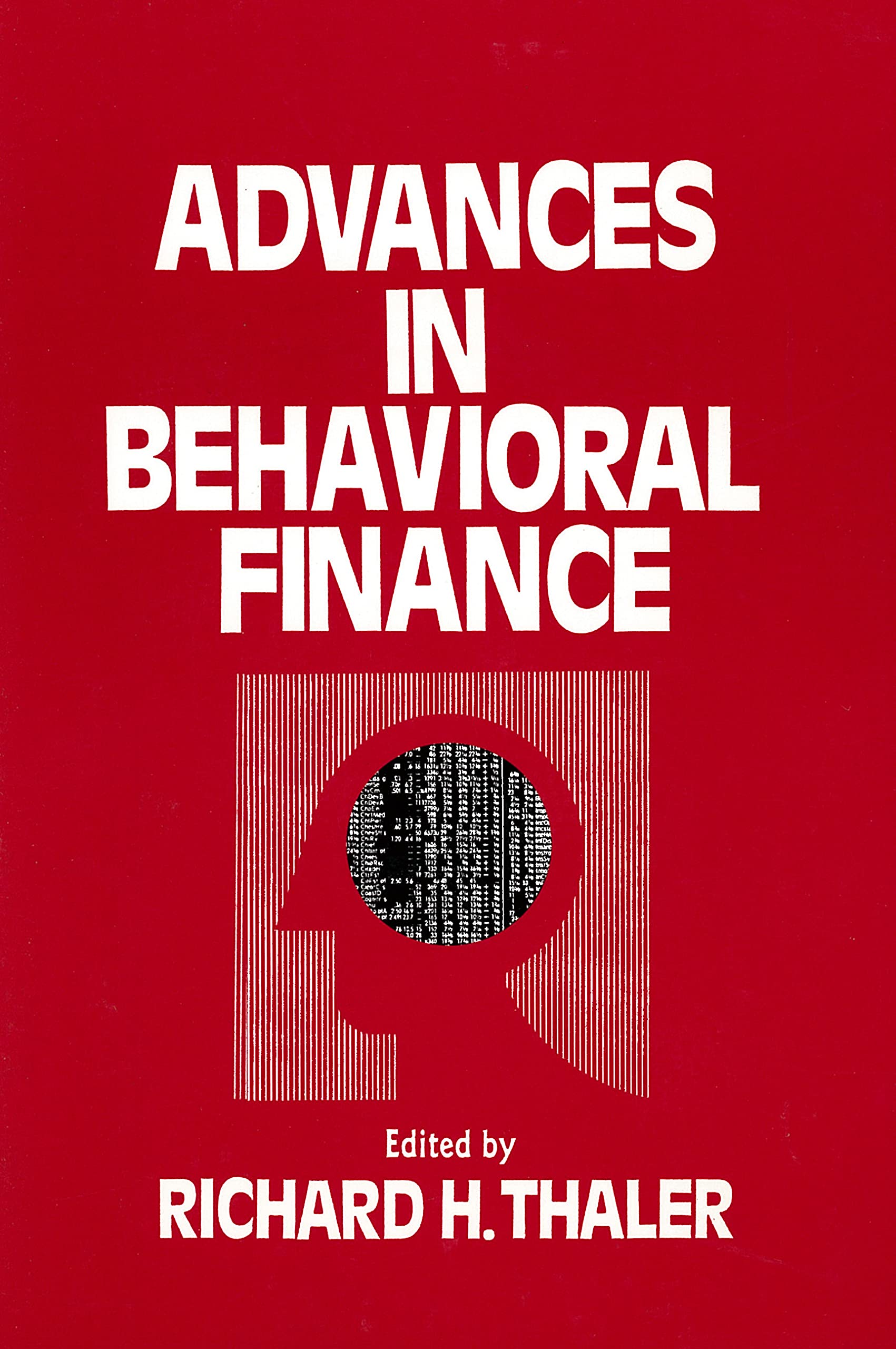
Title

Advances In Behavioral Finance (Volume 1) (The Roundtable Series In Behavioral Economics),New
Sold by Ergodebooks, an authorized reseller.
Returns accepted within 30 days | support@ergodebooks.com
Shipping Information
- Free Standard Shipping — United States only
- Processing Time: 3–5 business days
- Estimated Delivery: 6–10 business days after dispatch
- Double-boxed, fully insured & discreetly packaged
- Tracking number sent via email once dispatched
Returns & Refund
Returns accepted within 30 days of delivery.
Damaged or Defective Item
Free return shipping + replacement or full refund
Wrong Item Received
Free return shipping + replacement or full refund
Change of Mind
Return shipping at customer's expense · 25% restocking fee applies
Payment Option

Modern Financial Markets Offer The Real World'S Best Approximation To The Idealized Price Auction Market Envisioned In Economic Theory. Nevertheless, As The Increasingly Exquisite And Detailed Financial Data Demonstrate, Financial Markets Often Fail To Behave As They Should If Trading Were Truly Dominated By The Fully Rational Investors That Populate Financial Theories. These Markets Anomalies Have Spawned A New Approach To Finance, One Which As Editor Richard Thaler Puts It, 'Entertains The Possibility That Some Agents In The Economy Behave Less Than Fully Rationally Some Of The Time.' Advances In Behavioral Finance Collects Together Twentyone Recent Articles That Illustrate The Power Of This Approach. These Papers Demonstrate How Specific Departures From Fully Rational Decision Making By Individual Market Agents Can Provide Explanations Of Otherwise Puzzling Market Phenomena. To Take Several Examples, Werner De Bondt And Thaler Find An Explanation For Superior Price Performance Of Firms With Poor Recent Earnings Histories In The Tendencies Of Investors To Overreact To Recent Information. Richard Roll Traces The Negative Effects Of Corporate Takeovers On The Stock Prices Of The Acquiring Firms To The Overconfidence Of Managers, Who Fail To Recognize The Contributions Of Chance To Their Past Successes. Andrei Shleifer And Robert Vishny Show How The Difficulty Of Establishing A Reliable Reputation For Correctly Assessing The Value Of Long Term Capital Projects Can Lead Investment Analysis, And Hence Corporate Managers, To Focus Myopically On Short Term Returns. As A Testing Ground For Assessing The Empirical Accuracy Of Behavioral Theories, The Successful Studies In This Landmark Collection Reach Beyond The World Of Finance To Suggest, Very Powerfully, The Importance Of Pursuing Behavioral Approaches To Other Areas Of Economic Life. Advances In Behavioral Finance Is A Solid Beachhead For Behavioral Work In The Financial Arena And A Clear Promise Of Wider Application For Behavioral Economics In The Future.
⚠️ WARNING (California Proposition 65):
This product may contain chemicals known to the State of California to cause cancer, birth defects, or other reproductive harm.
For more information, please visit www.P65Warnings.ca.gov.
- Q: How many pages are in this book? A: This book contains five hundred ninety-seven pages. It offers a comprehensive look at behavioral finance and its implications.
- Q: What is the binding type of the book? A: The book is a paperback edition. This makes it lightweight and easy to handle.
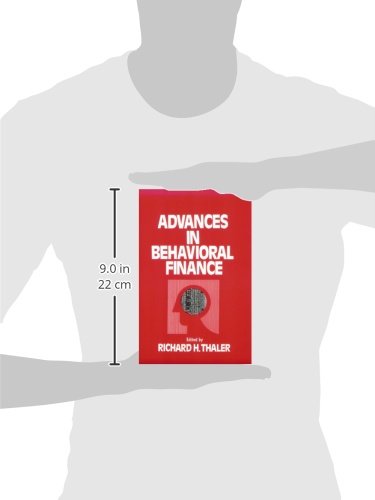
- Q: What are the dimensions of this book? A: The dimensions of the book are six inches in length, one point one inches in width, and nine point zero two inches in height.
- Q: Who is the author of 'Advances in Behavioral Finance'? A: The author of this book is Richard H. Thaler. He is a prominent figure in the field of behavioral economics.
- Q: What category does this book belong to? A: This book falls under the category of Economics. It specifically focuses on behavioral finance.
- Q: How do I use this book? A: You can use this book as a resource for understanding behavioral finance. It is suitable for both students and professionals in economics.
- Q: Is this book suitable for beginners in finance? A: Yes, this book is suitable for beginners in finance. It presents complex concepts in an accessible manner.
- Q: What is the reading level for this book? A: The reading level of this book is aimed at college students and professionals. It requires some foundational knowledge of economics.
- Q: How do I keep this book in good condition? A: To keep this book in good condition, store it in a dry place away from direct sunlight. Handle it with clean hands to avoid dirt.
- Q: Is this book safe for children? A: No, this book is not specifically intended for children. It covers advanced economic theories that may not be suitable for young readers.
- Q: Can I return the book if I don’t like it? A: Yes, you can return the book if you are unsatisfied. Check the specific return policy of the retailer for details.
- Q: What if the book arrives damaged? A: If the book arrives damaged, contact customer support immediately. They will assist you with returns or exchanges.
- Q: Is there any warranty on this book? A: There is no warranty on books as they are considered consumable items. However, check the return policy for damaged items.
- Q: What genre does 'Advances in Behavioral Finance' belong to? A: This book belongs to the genre of academic finance. It delves into behavioral aspects of economic decision making.
- Q: How does this book compare to other finance books? A: This book uniquely focuses on behavioral finance, distinguishing it from traditional finance texts that assume rational behavior.
- Q: What should I do if I need help with the content? A: If you need help with the content, consider joining study groups or online forums dedicated to behavioral finance. They can provide additional insights.