
Title
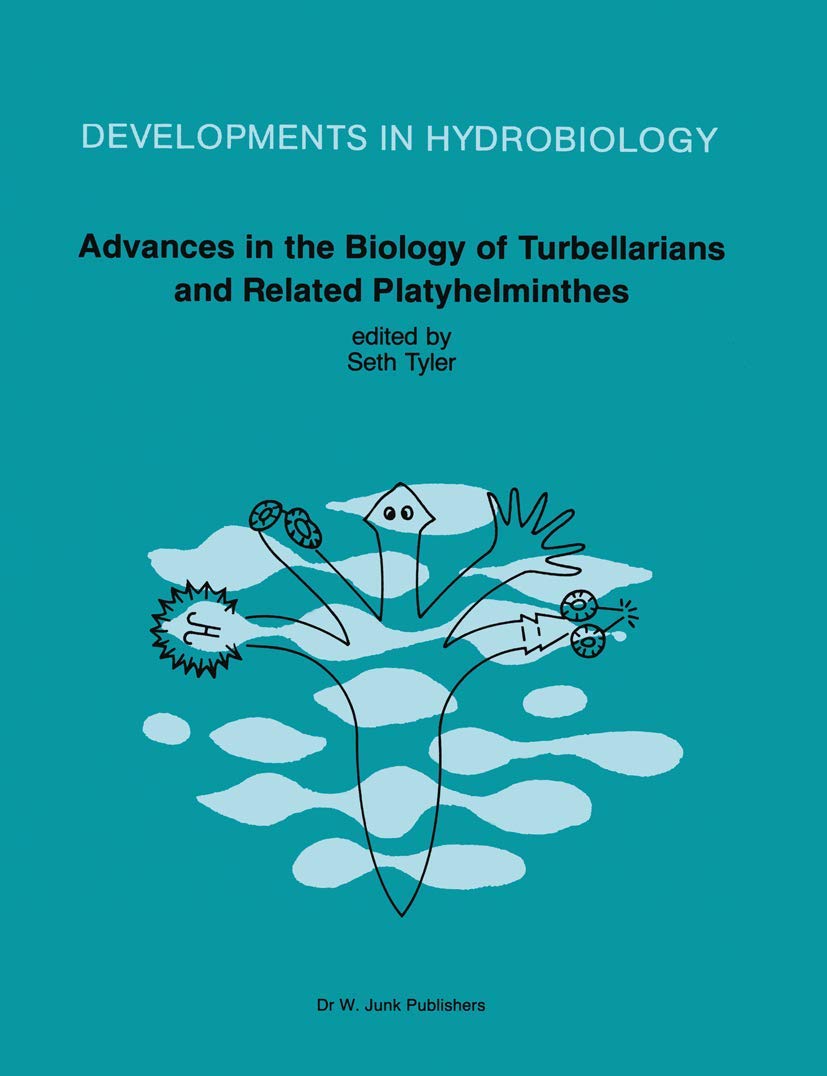
Advances in the Biology of Turbellarians and Related Platyhelminthes: Proceedings of the Fourth International Symposium on the T,New
Sold by Ergodebooks, an authorized reseller.
Returns accepted within 30 days | support@ergodebooks.com
Shipping Information
- Free Standard Shipping — United States only
- Processing Time: 3–5 business days
- Estimated Delivery: 6–10 business days after dispatch
- Double-boxed, fully insured & discreetly packaged
- Tracking number sent via email once dispatched
Returns & Refund
Returns accepted within 30 days of delivery.
Damaged or Defective Item
Free return shipping + replacement or full refund
Wrong Item Received
Free return shipping + replacement or full refund
Change of Mind
Return shipping at customer's expense · 25% restocking fee applies
Payment Option

While the reality of the taxon Turbellaria has been called into question lately, turbellarians are nevertheless the subject of active research by a sizable group of biologists. Turbellarians are relatives of the major groups of parasitic platyhelminthes monogeneans, digeneans, and tapeworms and most are freeliving. Because the ancestors to the major parasitic groups would be classified as turbellarians, strict application of princi ples of phylogenetic systematics dictates that the Turbellaria is not properly considered a separate taxon; i. e. , it is, in the parlance of systematics, a paraphyletic group. The relationships of turbellarians to other inver tebrates are even more problematic than their relationships to other platyhelminthes; their relatively simple morphology has been variously interpreted as quintessentially primitive meaning a turbellarianlike ances tor would have given rise to most of the major groups of invertebrates or as secondary simplification, meaning they would essentially be a deadend group. Modern research on turbellarians covers a broad spectrum. Questions of phylogenetics have inspired ultrastructural studies; the simply structured nervous systems of turbellarians make them good subjects for neurophysiology; simplicity of their tissue structure and the limited number of cell types make them good subjects of embryological and regeneration studies; they are emerging as iIIJ. portant indicator species in ecolo gy; and improvements in biochemical methodology have meant they are at last amenable despite their small size to molecular biological study.
⚠️ WARNING (California Proposition 65):
This product may contain chemicals known to the State of California to cause cancer, birth defects, or other reproductive harm.
For more information, please visit www.P65Warnings.ca.gov.