
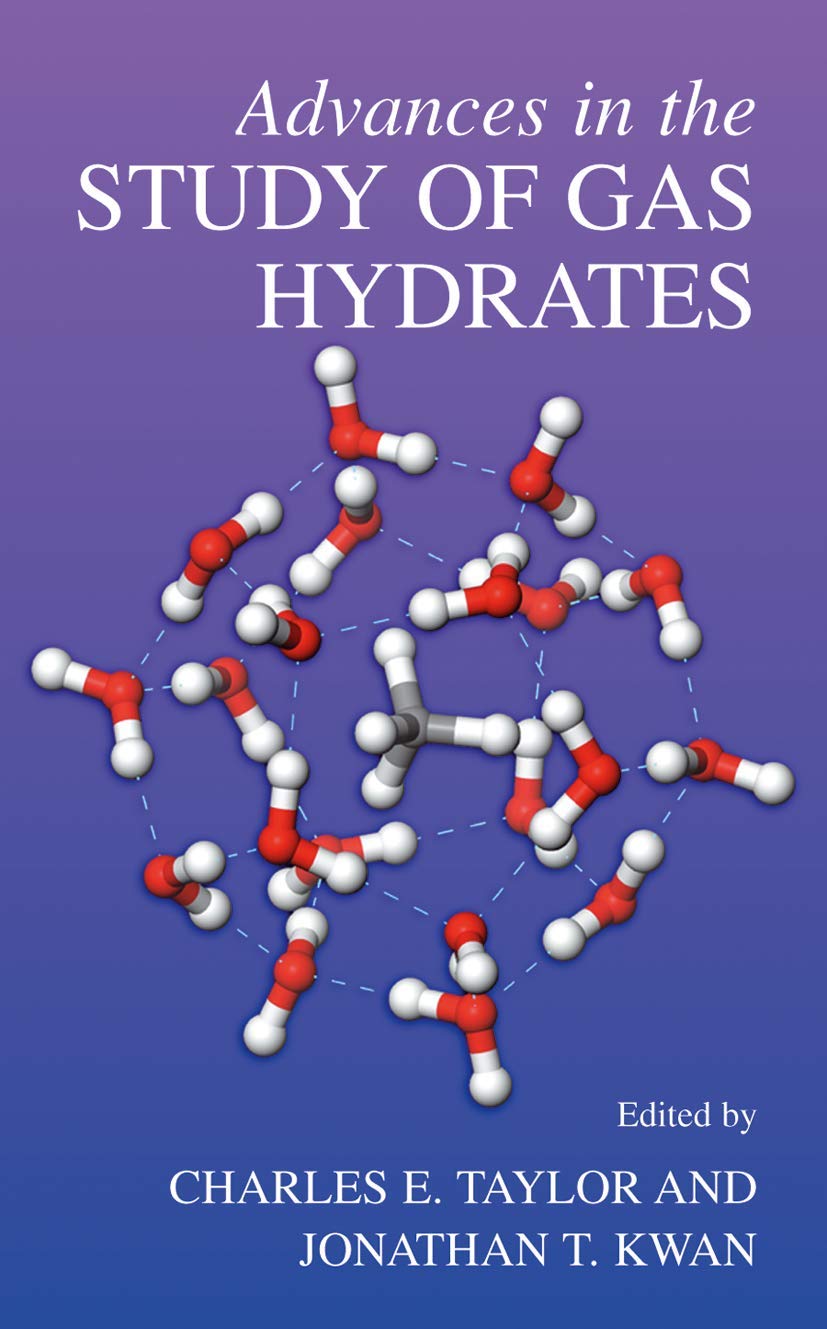
Title
Advances in the Study of Gas Hydrates,Used
Sold by Ergodebooks, an authorized reseller.
Returns accepted within 30 days | support@ergodebooks.com
Shipping Information
- Free Standard Shipping — United States only
- Processing Time: 3–5 business days
- Estimated Delivery: 6–10 business days after dispatch
- Double-boxed, fully insured & discreetly packaged
- Tracking number sent via email once dispatched
Returns & Refund
Returns accepted within 30 days of delivery.
Damaged or Defective Item
Free return shipping + replacement or full refund
Wrong Item Received
Free return shipping + replacement or full refund
Change of Mind
Return shipping at customer's expense · 25% restocking fee applies
Payment Option

This book had its genesis in a symposium on gas hydrates presented at the 2003 Spring National Meeting of the American Institute of Chemical Engineers. The symposium consisted of twenty papers presented in four sessions over two days. Additional guest authors were invited to provide continuity and cover topics not addressed during the symposium. Gas hydrates are a unique class of chemical compounds where molecules of one compound (the guest material) are enclosed, without bonding chemically, within an open solid lattice composed of another compound (the host material). These types of configurations are known as clathrates. The guest molecules, u ally gases, are of an appropriate size such that they fit within the cage formed by the host material. Commonexamples of gas hydrates are carbon dioxide/water and methane/water clathrates. At standard pressure and temperature, methane hydrate contains by volume 180 times as much methane as hydrate. The United States Geological Survey (USGS) has estimated that there is more organic carbon c tained as methane hydrate than all other forms of fossil fuels combined. In fact, methane hydrates could provide a clean source of energy for several centuries. Clathrate compounds were first discovered in the early 1800s when Humphrey Davy and Michael Faraday were experimenting with chlorinewater mixtures.
⚠️ WARNING (California Proposition 65):
This product may contain chemicals known to the State of California to cause cancer, birth defects, or other reproductive harm.
For more information, please visit www.P65Warnings.ca.gov.