
Title
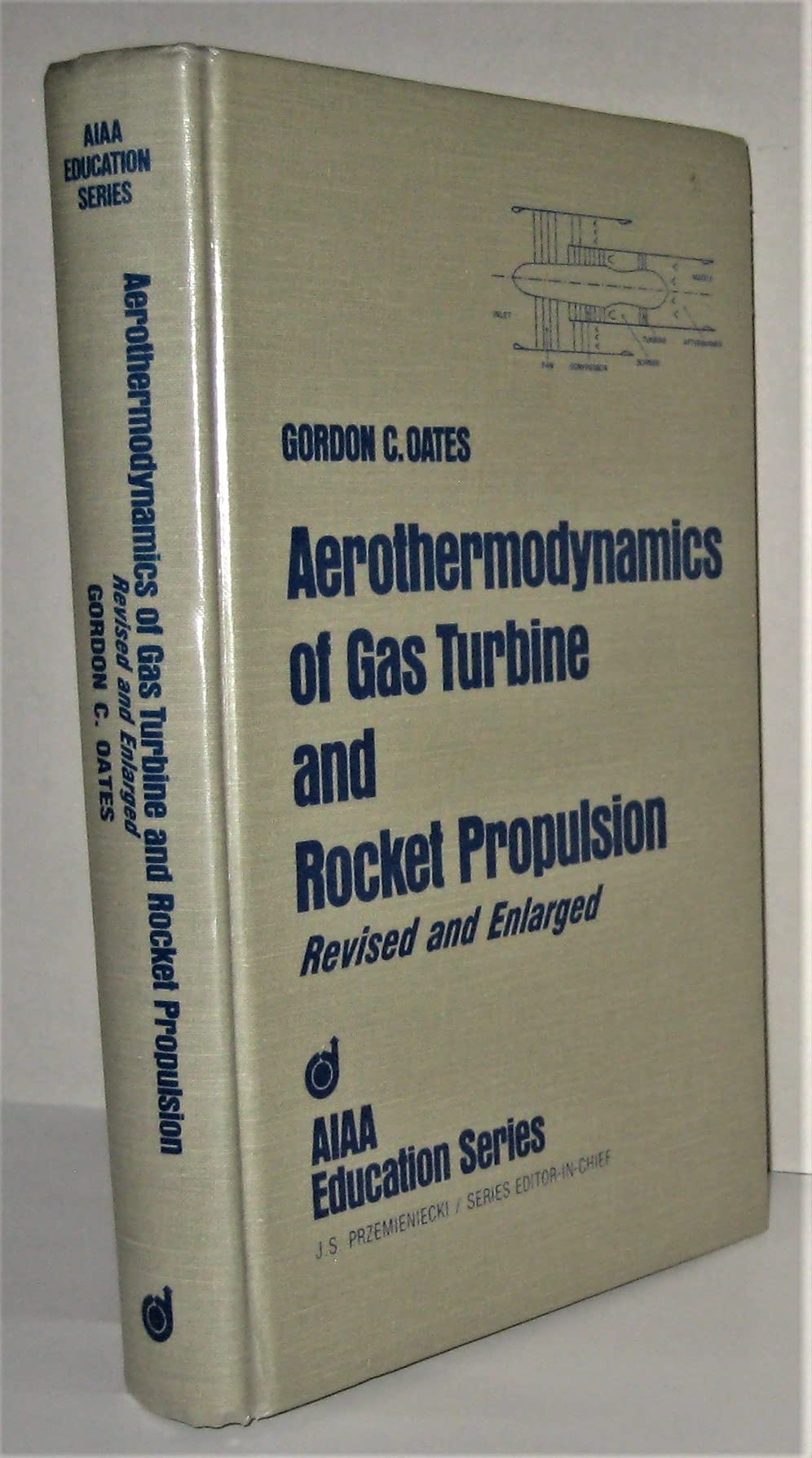
Aerothermodynamics of Gas Turbine and Rocket Propulsion : Revised and Enlarged,Used
Sold by Ergodebooks, an authorized reseller.
Returns accepted within 30 days | support@ergodebooks.com
Shipping Information
- Free Standard Shipping — United States only
- Processing Time: 3–5 business days
- Estimated Delivery: 6–10 business days after dispatch
- Double-boxed, fully insured & discreetly packaged
- Tracking number sent via email once dispatched
Returns & Refund
Returns accepted within 30 days of delivery.
Damaged or Defective Item
Free return shipping + replacement or full refund
Wrong Item Received
Free return shipping + replacement or full refund
Change of Mind
Return shipping at customer's expense · 25% restocking fee applies
Payment Option

This text on gas turbine technology has been a bestseller since it was first published in 1984. This revised edition now includes a comprehensive set of software programmes that complement the text with problems and design analyses. Software topics included are: atmosphere programmes, quasi1D flows programmes (ideal constantarea heat interaction, adiabatic constantarea flow with friction, rocket nozzle performance, normal shock waves, oblique shock waves), gas turbine programmes (engine cycle analysis and engine offdesign performance), and rocket combustion (tc and pc are given, hc and pc are given, Isentropic expansion). Used as a standard text in more than 50 universities, the book and software continue to fulfil the need for a comprehensive, modern book on the principles of propulsion. System requirements: IBM PC 386/486/586/Pentium or clone; 640 Kb RAM hard disk with 1.0Mb of available disk space; EGA or better video capability.
⚠️ WARNING (California Proposition 65):
This product may contain chemicals known to the State of California to cause cancer, birth defects, or other reproductive harm.
For more information, please visit www.P65Warnings.ca.gov.
- Q: What is the page count of this book? A: This book has four hundred fifty-two pages. It provides extensive coverage of aerothermodynamics and propulsion principles.
- Q: What type of binding does this book have? A: This book is a hardcover edition. The durable binding ensures longevity for frequent use in academic settings.
- Q: What are the dimensions of this book? A: The dimensions are one point two six inches in thickness, six point five inches in width, and nine point seven six inches in height. This size makes it easy to handle and store.
- Q: How do I use the software that comes with this book? A: To use the software, install it on a compatible IBM PC or clone. Follow the instructions provided in the book for setup and application.
- Q: Is this book suitable for beginners? A: Yes, this book is suitable for beginners and advanced learners. It is used as a standard text in over fifty universities.
- Q: What topics does this book cover? A: This book covers gas turbine technology and rocket propulsion. It includes theoretical and practical applications, along with software for design analyses.
- Q: How should I store this book? A: Store this book in a cool, dry place, standing upright on a shelf. Avoid exposure to moisture to preserve its condition.
- Q: Is this book safe for young readers? A: Yes, this book is safe for young readers interested in aeronautics. However, it is best suited for those with a basic understanding of physics.
- Q: Can I return the book if I'm not satisfied? A: Yes, most retailers offer a return policy for unsatisfied customers. Check the specific store's policy for details.
- Q: What if the book arrives damaged? A: If the book arrives damaged, contact the seller immediately for a replacement or refund. Keep all packaging for return purposes.
- Q: What software is included with this book? A: The software includes atmosphere programmes and quasi-one-dimensional flow simulations. It also covers gas turbine and rocket combustion analysis.
- Q: Who is the author of this book? A: The author of this book is Gordon C. Oates. He is a respected figure in the field of aeronautics.
- Q: Is this book intended for professional engineers? A: Yes, this book is also suitable for professional engineers. It provides advanced insights into gas turbine and rocket propulsion technologies.
- Q: What system requirements are needed for the software? A: The software requires an IBM PC from the three eighty-six to Pentium series with six hundred forty kilobytes of RAM and one megabyte of available disk space.
- Q: Does this book contain problem sets for practice? A: Yes, this book includes a comprehensive set of problems for practice. They are designed to reinforce the concepts presented in the text.