
Title
Aesop'S Fables: With A Life Of Aesop (Studies In Romance Languages),Used
Sold by Ergodebooks, an authorized reseller.
Returns accepted within 30 days | support@ergodebooks.com
Shipping Information
- Free Standard Shipping — United States only
- Processing Time: 3–5 business days
- Estimated Delivery: 6–10 business days after dispatch
- Double-boxed, fully insured & discreetly packaged
- Tracking number sent via email once dispatched
Returns & Refund
Returns accepted within 30 days of delivery.
Damaged or Defective Item
Free return shipping + replacement or full refund
Wrong Item Received
Free return shipping + replacement or full refund
Change of Mind
Return shipping at customer's expense · 25% restocking fee applies
Payment Option

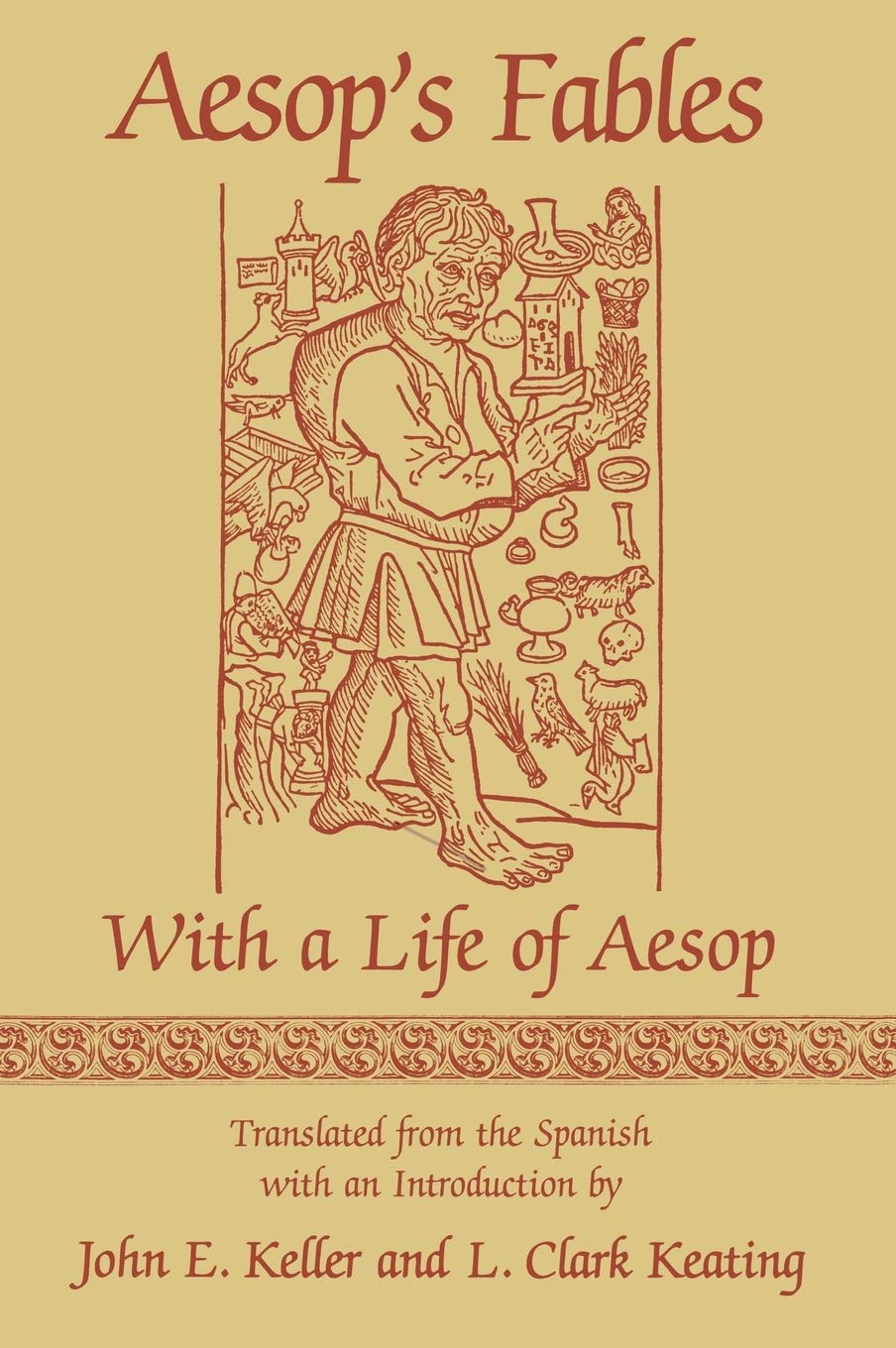
In 1489 Johan Hurus printed the first collection of fables in Spain, Lavida del Ysopetconsusfabulas hystoriadas. Illustrated with nearly 200 woodcuts, this work quickly became the mostread book in Spain, beloved of both children and adults. Reprinted many times in the next three centuries and carried to the New World, it brought to Spanish letters a cornucopia of Aesopic fables, oriental apologues, and folktales that were borrowed by such writers as Cervantes, Lope de Vega, and especially the fabulists Iriarte and Samaniego. John Keller and Clark Keating now present the first English translation of this important literary work.The Latin and German lineage of La vida was significant, for it placed Spain in the mainstream of European fable lore. The highly fictitious life of Aesop, the misshapen Greek slave who reached the highest social level, contributed to the development of medieval romance and the picaresque novel. The book is thus important to students of comparative literature, literary history, and the development of the Spanish language.Of equal value are the woodcuts, which depict the daily life of medieval Europe and contribute to a better understanding of fifteenthcentury art history, bookmaking, natural history, and the visualization of narrative. La vida del Ysopet thus constitutes one of the finest concordances of text and illustration in European literary history.
⚠️ WARNING (California Proposition 65):
This product may contain chemicals known to the State of California to cause cancer, birth defects, or other reproductive harm.
For more information, please visit www.P65Warnings.ca.gov.
- Q: How many pages are in Aesop's Fables? A: This book contains two hundred fifty-six pages. It's a hardcover edition that preserves the integrity of the original illustrations.
- Q: What are the dimensions of this book? A: The dimensions of the book are seven point twenty-five inches by ten point fifty-one inches by one inch. This size makes it easy to handle while reading.
- Q: Who is the author of Aesop's Fables? A: The author is John E. Keller, who, along with Clark Keating, translated this significant literary work into English.
- Q: What genre does Aesop's Fables belong to? A: This book falls under the Medieval genre, specifically focusing on fables and tales that have shaped literary traditions.
- Q: Is Aesop's Fables suitable for children? A: Yes, this book is suitable for children. The fables are designed to convey moral lessons in an engaging manner.
- Q: How can I use Aesop's Fables in a classroom setting? A: You can use this book to teach moral lessons and storytelling techniques. It’s ideal for reading aloud and discussion.
- Q: What age group is Aesop's Fables appropriate for? A: This book is appropriate for readers of all ages, especially children and young adults who enjoy engaging stories.
- Q: How should I store Aesop's Fables to keep it in good condition? A: Store the book in a cool, dry place away from direct sunlight. Keeping it upright on a shelf will prevent damage to the spine.
- Q: Can I clean the pages of Aesop's Fables? A: No, you should not clean the pages with water or cleaners. Instead, handle the book with clean hands to avoid smudges.
- Q: What makes Aesop's Fables significant in literature? A: This collection is significant as it introduced a wealth of fables and storytelling traditions to Spanish literature and beyond.
- Q: How does Aesop's Fables compare to other fable collections? A: Aesop's Fables is unique due to its historical significance and the quality of its illustrations, setting it apart from other collections.
- Q: Is Aesop's Fables a good choice for teaching morals? A: Yes, this book is an excellent choice for teaching morals through engaging stories that resonate with readers.
- Q: What if my copy of Aesop's Fables arrives damaged? A: If your copy arrives damaged, you should contact the seller for a return or replacement as per their return policy.
- Q: Does Aesop's Fables contain illustrations? A: Yes, it contains nearly two hundred woodcut illustrations that enhance the storytelling experience and historical context.
- Q: Who published Aesop's Fables? A: The book is published by The University Press of Kentucky, ensuring a quality edition of this literary classic.
- Q: Is there a specific theme in Aesop's Fables? A: Yes, the primary theme is moral lessons conveyed through animal characters, making complex ideas accessible to readers.