
Title


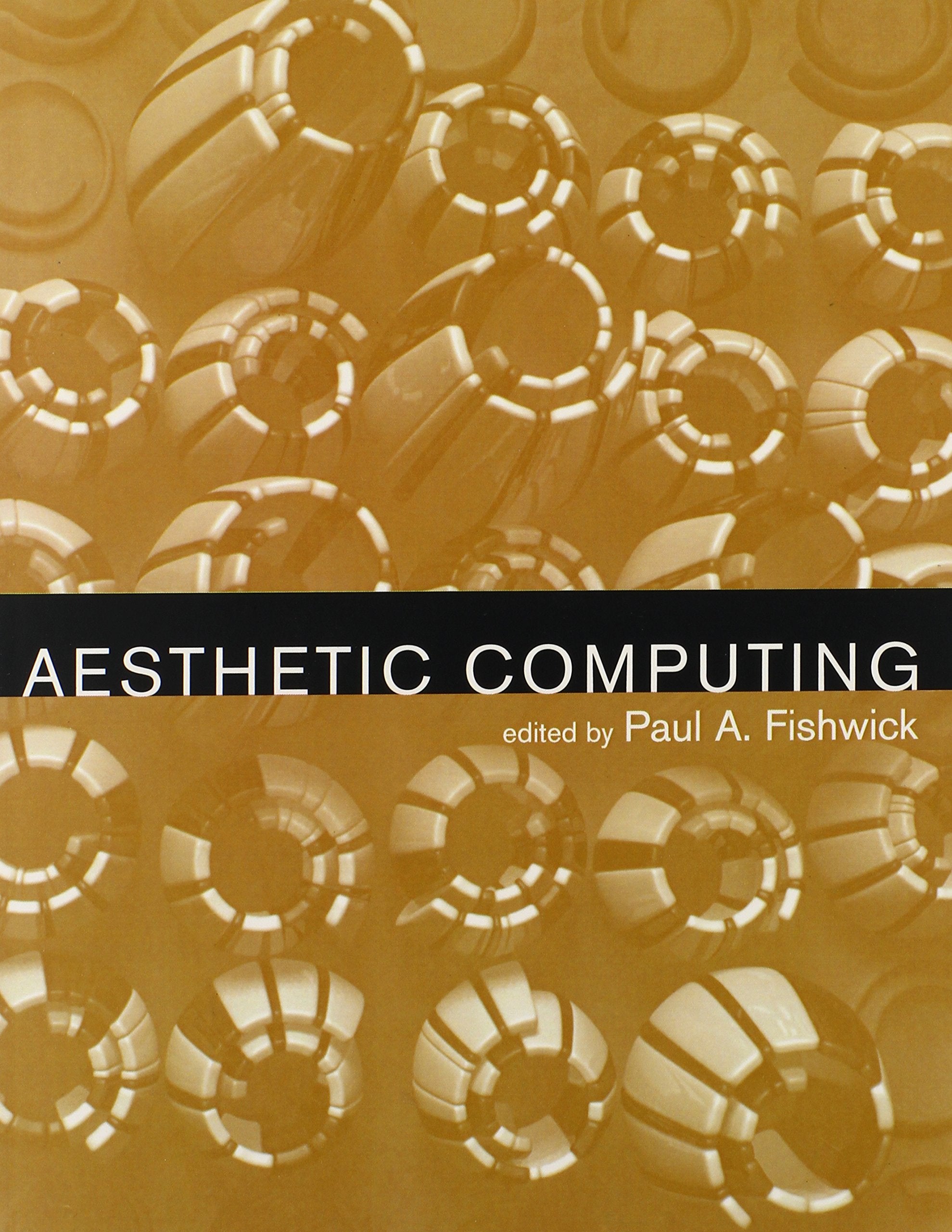
Aesthetic Computing,Used
Sold by Ergodebooks, an authorized reseller.
Returns accepted within 30 days | support@ergodebooks.com
Shipping Information
- Free Standard Shipping — United States only
- Processing Time: 3–5 business days
- Estimated Delivery: 6–10 business days after dispatch
- Double-boxed, fully insured & discreetly packaged
- Tracking number sent via email once dispatched
Returns & Refund
Returns accepted within 30 days of delivery.
Damaged or Defective Item
Free return shipping + replacement or full refund
Wrong Item Received
Free return shipping + replacement or full refund
Change of Mind
Return shipping at customer's expense · 25% restocking fee applies
Payment Option

In Aesthetic Computing, key scholars and practitioners from art, design, computer science, and mathematics lay the foundations for a discipline that applies the theory and practice of art to computing. Aesthetic computing explores the way art and aesthetics can play a role in different areas of computer science. One of its goals is to modify computer science by the application of the wide range of definitions and categories normally associated with making art. For example, structures in computing might be represented using the style of Gaudi or the Bauhaus school. This goes beyond the usual definition of aesthetics in computing, which most often refers to the formal, abstract qualities of such structuresa beautiful proof, or an elegant diagram. The contributors to this book discuss the broader spectrum of aestheticsfrom abstract qualities of symmetry and form to ideas of creative expression and pleasurein the context of computer science. The assumption behind aesthetic computing is that the field of computing will be enriched if it embraces all of aesthetics. Humancomputer interaction will benefit'usability,' for example, could refer to improving a user's emotional stateand new models of learning will emerge.Aesthetic Computing approaches its subject from a variety of perspectives. After defining the field and placing it in its historical context, the book looks at art and design, mathematics and computing, and interface and interaction. Contributions range from essays on the art of visualization and 'the poesy of programming' to discussions of the aesthetics of mathematics throughout history and transparency and reflectivity in interface design.ContributorsJames Alty, Olav W. Bertelsen, Jay David Bolter, Donna Cox, Stephan Diehl, Mark d'Inverno, Michele Emmer, Paul Fishwick, Monica Fleischmann, Ben Fry, Carsten Grg, Susanne Grabowski, Diane Gromala, Kenneth A. Huff, John Lee, Frederic Fol Leymarie, Michael Leyton, Jonas Lwgren, Roger F. Malina, Laurent Mignonneau, Frieder Nake, Ray Paton, Jane Prophet, Aaron Quigley, Casey Reas, Christa Sommerer, Wolfgang Strauss, Noam Tractinksy, Paul Vickers, Dror Zmiri
⚠️ WARNING (California Proposition 65):
This product may contain chemicals known to the State of California to cause cancer, birth defects, or other reproductive harm.
For more information, please visit www.P65Warnings.ca.gov.