
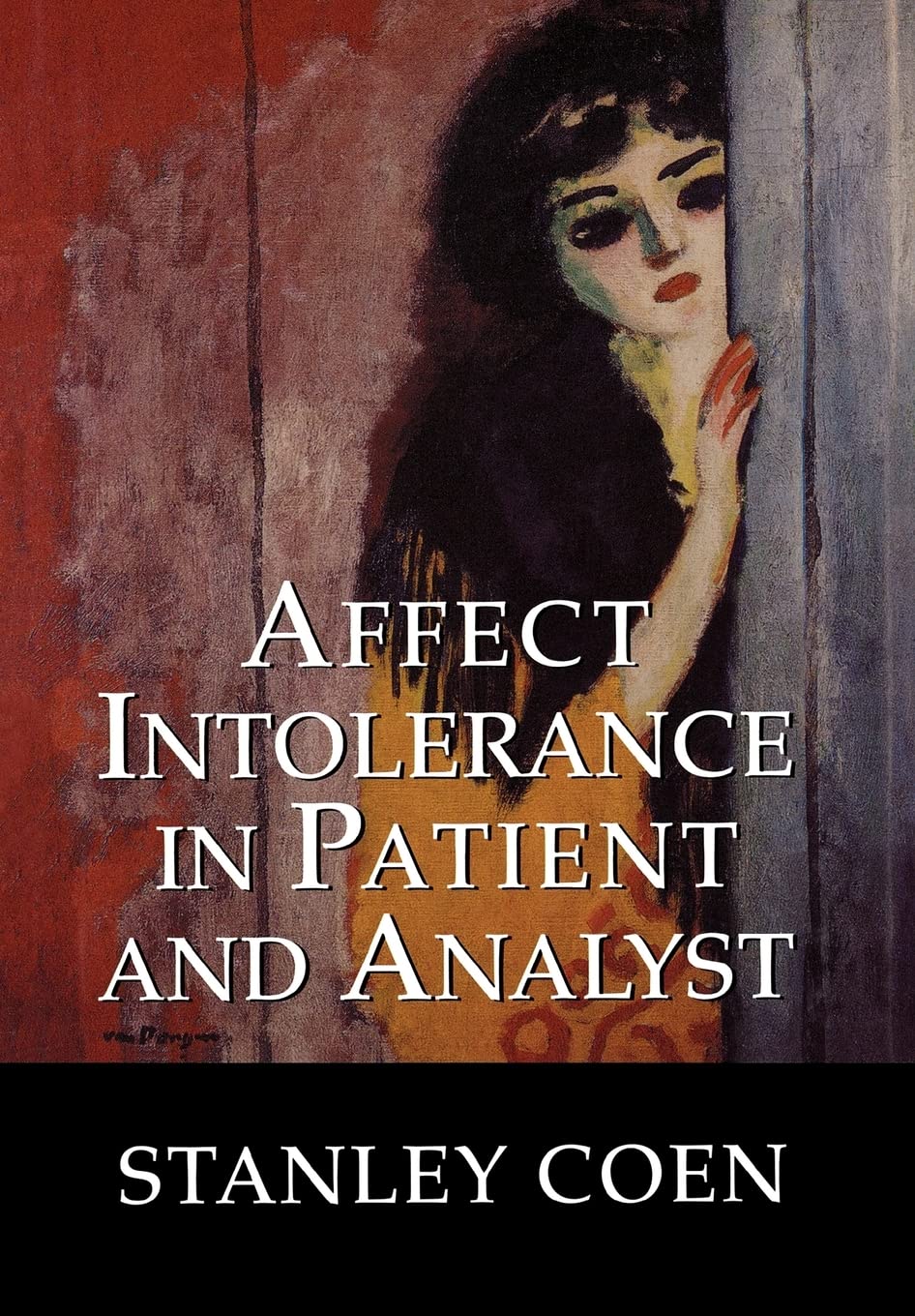
Title
Affect Intolerance in Patient and Analyst,Used
Sold by Ergodebooks, an authorized reseller.
Returns accepted within 30 days | support@ergodebooks.com
Shipping Information
- Free Standard Shipping — United States only
- Processing Time: 3–5 business days
- Estimated Delivery: 6–10 business days after dispatch
- Double-boxed, fully insured & discreetly packaged
- Tracking number sent via email once dispatched
Returns & Refund
Returns accepted within 30 days of delivery.
Damaged or Defective Item
Free return shipping + replacement or full refund
Wrong Item Received
Free return shipping + replacement or full refund
Change of Mind
Return shipping at customer's expense · 25% restocking fee applies
Payment Option

The ability of psychotherapists to tolerate their own feelings in the clinical situation determines how their patients experience and tolerate their own intenseand often distressingaffect.Dr. Stanley J. Coen draws on his own struggles with the most difficult and challenging patients in his practice, and finds that affect intolerance, in both patient and therapist, can be mitigated and understood when therapists broaden their emotional range, enabling them to engage in emotionally richer interactions with the patient.The more of their own feelings and wishes that clinicians can take responsibility for, the more they can tolerate, contain, and eventually interpret what patients find emotionally unbearable. Dr. Coen describes, in detail, how he works with difficult patients, trying to engage them as deeply and fully as both they and he can tolerate.Coen focuses on the pragmatic use of affect tolerance in the clinical situation. Real change through treatment requires mobilization of intense feeling, including hate and love. Therapists, too, must contend with their own emotional inhibitions and stalemates, and he suggests collaborative ways to help them. He encourages therapists to broaden their perspectives, consult with colleagues, listen to others, write about their difficulties, work in peer supervision, and perhaps even go back to treatment themselves. He counsels them to study one anothers difficult cases in a spirit of collegiality to learn what is most effective for patients.Coen shares his own experiences in troublesome clinical situations to help other therapists identify similar difficulties. He shows how all therapists can be prepared to catch their own vulnerabilities and discomforts with their patients passions, and how they can then subject their feelings to selfscrutiny. By seeking to understand and confront their struggles with the feelings that their patients arouse, therapists can more fully help their patients work out their conflicts and to expand their emotional depth.A
⚠️ WARNING (California Proposition 65):
This product may contain chemicals known to the State of California to cause cancer, birth defects, or other reproductive harm.
For more information, please visit www.P65Warnings.ca.gov.