
Title
Affect Regulation and the Origin of the Self,Used
Sold by Ergodebooks, an authorized reseller.
Returns accepted within 30 days | support@ergodebooks.com
Shipping Information
- Free Standard Shipping — United States only
- Processing Time: 3–5 business days
- Estimated Delivery: 6–10 business days after dispatch
- Double-boxed, fully insured & discreetly packaged
- Tracking number sent via email once dispatched
Returns & Refund
Returns accepted within 30 days of delivery.
Damaged or Defective Item
Free return shipping + replacement or full refund
Wrong Item Received
Free return shipping + replacement or full refund
Change of Mind
Return shipping at customer's expense · 25% restocking fee applies
Payment Option

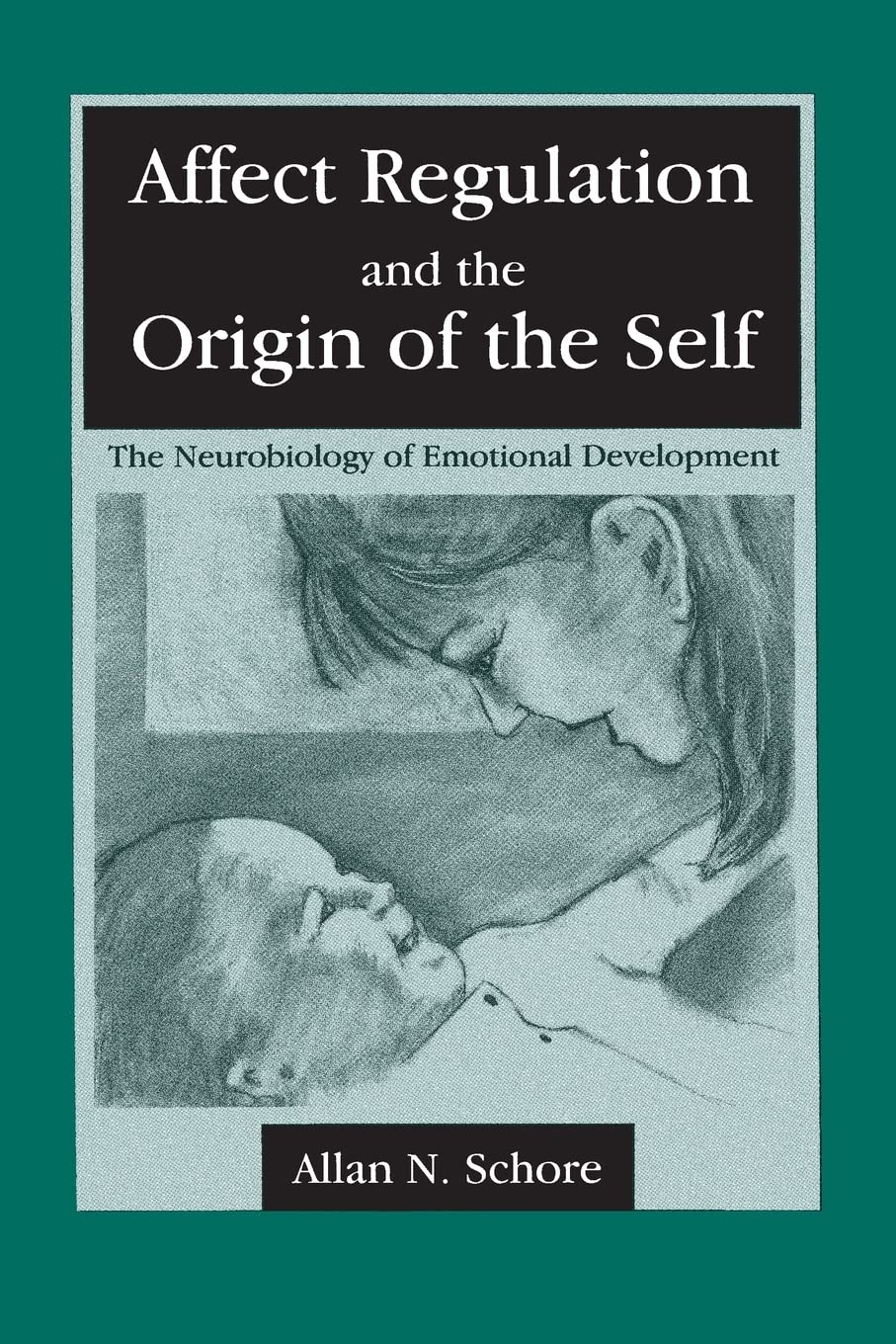
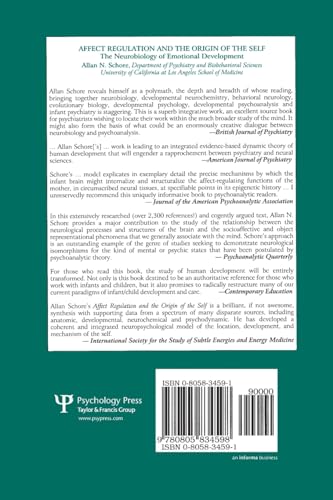
During the past decade a diverse group of disciplines have simultaneously intensified their attention upon the scientific study of emotion. This proliferation of research on affective phenomena has been paralleled by an acceleration of investigations of early human structural and functional development. Developmental neuroscience is now delving into the ontogeny of brain systems that evolve to support the psychobiological underpinnings of socioemotional functioning. Studies of the infant brain demonstrate that its maturation is influenced by the environment and is experiencedependent. Developmental psychological research emphasizes that the infant's expanding socioaffective functions are critically influenced by the affecttransacting experiences it has with the primary caregiver. Concurrent developmental psychoanalytic research suggests that the mother's affect regulatory functions permanently shape the emerging self's capacity for selforganization. Studies of incipient relational processes and their effects on developing structure are thus an excellent paradigm for the deeper apprehension of the organization and dynamics of affective phenomena.This book brings together and presents the latest findings of socioemotional studies emerging from the developmental branches of various disciplines. It supplies psychological researchers and clinicians with relevant, uptodate developmental neurobiological findings and insights, and exposes neuroscientists to recent developmental psychological and psychoanalytic studies of infants. The methodology of this theoretical research involves the integration of information that is being generated by the different fields that are studying the problem of socioaffective developmentneurobiology, behavioral neurology, behavioral biology, sociobiology, social psychology, developmental psychology, developmental psychoanalysis, and infant psychiatry. A special emphasis is placed upon the application and incorporation of current developmental data from neurochemistry, neuroanatomy, neuropsychology, and neuroendocrinology into the main body of developmental theory.More than just a review of several literatures, the studies cited in this work are used as a multidisciplinary source pool of experimental data, theoretical concepts, and clinical observations that form the base and scaffolding of an overarching heuristic model of socioemotional development that is grounded in contemporary neuroscience. This psychoneurobiological model is then used to generate a number of heuristic hypotheses regarding the proximal causes of a wide array of affectrelated phenomenafrom the motive force that drives human attachment to the proximal causes of psychiatric disturbances and psychosomatic disorders, and indeed to the origin of the self.
⚠️ WARNING (California Proposition 65):
This product may contain chemicals known to the State of California to cause cancer, birth defects, or other reproductive harm.
For more information, please visit www.P65Warnings.ca.gov.
- Q: How many pages does the book have? A: This book has seven hundred pages. It provides an extensive exploration of affect regulation and the development of the self.
- Q: What is the binding type of this book? A: The binding type is paperback. This makes it lightweight and suitable for easy reading and portability.
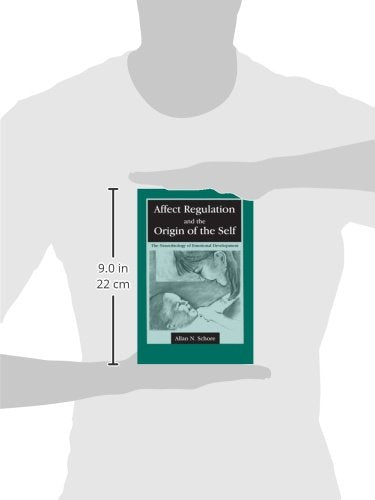
- Q: What are the dimensions of the book? A: The dimensions are five point ninety-eight inches in length, one point sixty-six inches in width, and nine point zero two inches in height. These sizes make it a standard-sized paperback.
- Q: Is this book suitable for professionals in psychology? A: Yes, this book is suitable for professionals in psychology. It presents the latest findings relevant to psychological researchers and clinicians.
- Q: Can students benefit from reading this book? A: Yes, students in psychology or neuroscience can benefit from it. The book integrates findings from various disciplines which is valuable for academic growth.
- Q: How is this book organized for reader comprehension? A: The book is organized into sections that integrate findings from multiple disciplines. This structure aids in understanding complex topics related to socioemotional development.
- Q: How should I store this book to maintain its condition? A: Store the book in a cool, dry place away from direct sunlight. This will help preserve the quality of the paperback binding and pages.
- Q: Is there a recommended way to clean the book? A: Yes, gently wipe the cover with a soft, dry cloth. Avoid using liquids that could damage the paper or binding.
- Q: What if my book arrives damaged? A: If your book arrives damaged, contact customer service for assistance with returns or exchanges. They will guide you through the process.
- Q: Does the book come with a warranty? A: No, this book does not come with a warranty. However, check the return policy for options if you're unsatisfied.
- Q: Is this book appropriate for beginners in psychology? A: Yes, it is appropriate for beginners. The book provides foundational knowledge on affect regulation that can be understood with basic psychology knowledge.
- Q: How does this book compare to other psychology texts? A: This book uniquely integrates findings from neuroscience and psychoanalysis, offering a comprehensive view not typically found in standard psychology texts.
- Q: Are there any specific theories covered in this book? A: Yes, the book discusses various theories related to socioemotional development and the psychoneurobiological model. It presents a multidisciplinary approach to these theories.
- Q: What should I do if I have questions about the content? A: If you have questions about the content, consider reaching out to academic professionals or discussing it in study groups for deeper understanding.
- Q: Can I find references to other studies in this book? A: Yes, the book references numerous studies across various disciplines. It serves as a multidisciplinary source pool for related research.
- Q: Is this book intended for a specific age group? A: No, the book is intended for adults and professionals in psychology and related fields, not a specific age group.