
Title
African Fractals: Modern Computing and Indigenous Design,Used
Sold by Ergodebooks, an authorized reseller.
Returns accepted within 30 days | support@ergodebooks.com
Shipping Information
- Free Standard Shipping — United States only
- Processing Time: 3–5 business days
- Estimated Delivery: 6–10 business days after dispatch
- Double-boxed, fully insured & discreetly packaged
- Tracking number sent via email once dispatched
Returns & Refund
Returns accepted within 30 days of delivery.
Damaged or Defective Item
Free return shipping + replacement or full refund
Wrong Item Received
Free return shipping + replacement or full refund
Change of Mind
Return shipping at customer's expense · 25% restocking fee applies
Payment Option

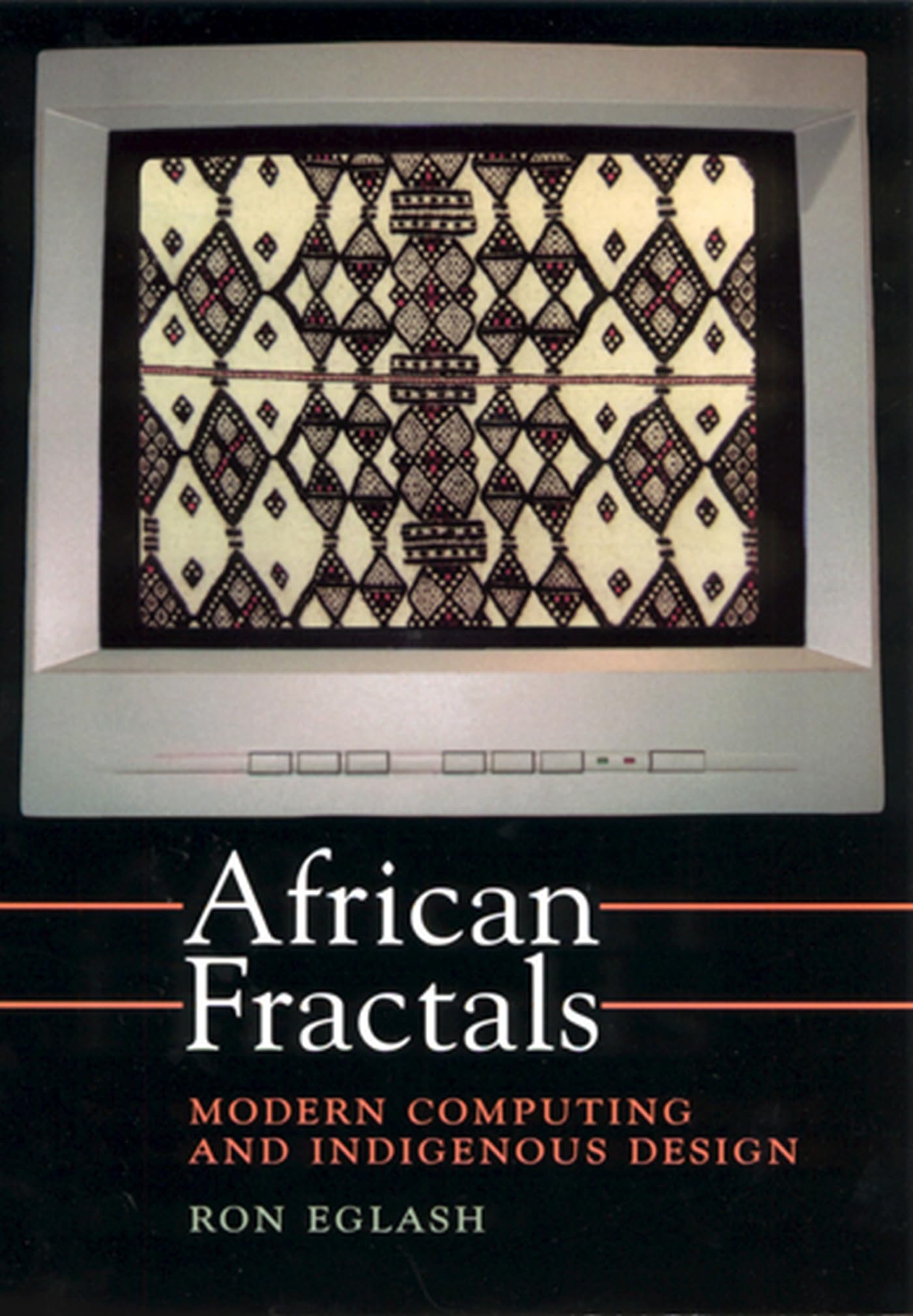
Fractals are characterized by the repetition of similar patterns at everdiminishing scales. Fractal geometry has emerged as one of the most exciting frontiers on the border between mathematics and information technology and can be seen in many of the swirling patterns produced by computer graphics. It has become a new tool for modeling in biology, geology, and other natural sciences.Anthropologists have observed that the patterns produced in different cultures can be characterized by specific design themes. In Europe and America, we often see cities laid out in a grid pattern of straight streets and rightangle corners. In contrast, traditional African settlements tend to use fractal structurescircles of circles of circular dwellings, rectangular walls enclosing eversmaller rectangles, and streets in which broad avenues branch down to tiny footpaths with striking geometric repetition. These indigenous fractals are not limited to architecture; their recursive patterns echo throughout many disparate African designs and knowledge systems.Drawing on interviews with African designers, artists, and scientists, Ron Eglash investigates fractals in African architecture, traditional hairstyling, textiles, sculpture, painting, carving, metalwork, religion, games, practical craft, quantitative techniques, and symbolic systems. He also examines the political and social implications of the existence of African fractal geometry. His book makes a unique contribution to the study of mathematics, African culture, anthropology, and computer simulations.
⚠️ WARNING (California Proposition 65):
This product may contain chemicals known to the State of California to cause cancer, birth defects, or other reproductive harm.
For more information, please visit www.P65Warnings.ca.gov.
- Q: What is the size of the book? A: The book measures seven point zero one inches in length, zero point seventy-one inches in width, and ten inches in height.
- Q: How many pages does the book contain? A: The book has two hundred fifty-eight pages, providing extensive exploration of its themes.
- Q: What type of binding does this book have? A: The book is available in paperback binding, making it lightweight and easy to handle.
- Q: Who is the author of this book? A: The author of the book is Ron Eglash, who investigates the intersection of mathematics and African design.
- Q: What is the genre of this book? A: The book falls under the category of Topology, focusing on mathematical concepts related to fractals.
- Q: Is this book suitable for beginners? A: Yes, the book is suitable for beginners, as it presents complex ideas in an accessible manner.
- Q: What themes are explored in this book? A: The book explores themes of fractal geometry in African culture, architecture, and various art forms.
- Q: How can I apply the concepts from this book? A: You can apply the concepts by studying fractal patterns in art, architecture, and nature, as discussed by the author.
- Q: Is this book appropriate for all ages? A: Yes, the book is appropriate for all ages, as it provides educational content without explicit material.
- Q: How should I store this book? A: Store the book in a cool, dry place, away from direct sunlight to preserve its condition.
- Q: Can I clean the book if it gets dirty? A: Yes, you can gently wipe the cover with a dry cloth to remove dust and dirt.
- Q: What if my book arrives damaged? A: If your book arrives damaged, you should contact customer support for a replacement or return.
- Q: Does this book come with a warranty? A: No, this book does not come with a warranty, but it is covered by standard return policies.
- Q: How can I return the book if I don't like it? A: You can return the book by following the return process outlined by the seller within the specified return period.
- Q: What if I need help understanding the content? A: If you need help, consider joining a discussion group or seeking online resources related to fractal geometry.
- Q: Is there a digital version of this book available? A: Yes, a digital version of the book is often available for those who prefer reading electronically.