
Title
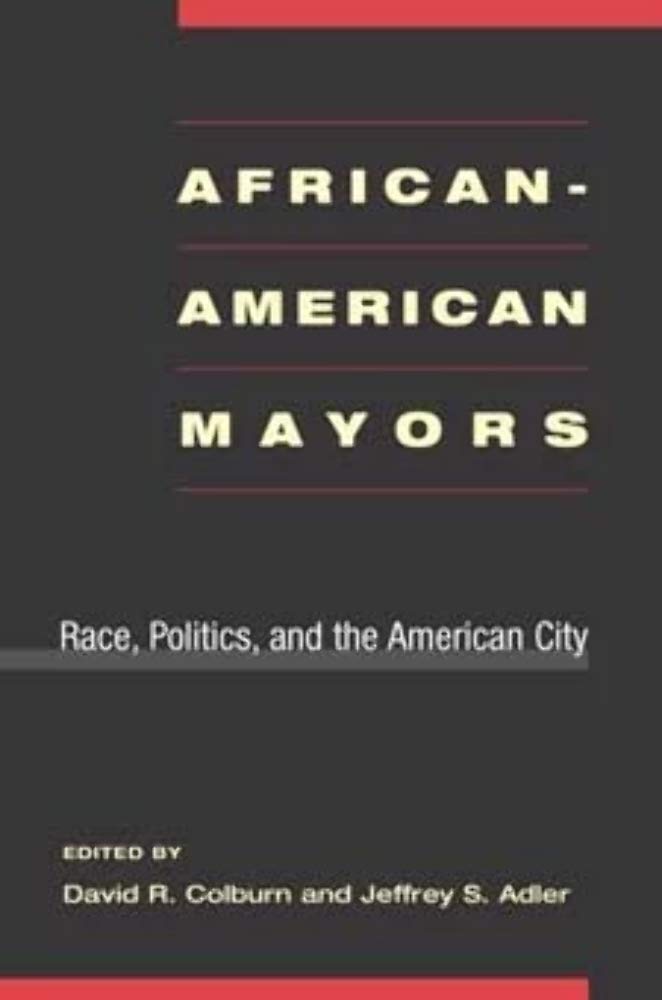
AfricanAmerican Mayors: Race, Politics, and the American City,Used
Sold by Ergodebooks, an authorized reseller.
Returns accepted within 30 days | support@ergodebooks.com
Shipping Information
- Free Standard Shipping — United States only
- Processing Time: 3–5 business days
- Estimated Delivery: 6–10 business days after dispatch
- Double-boxed, fully insured & discreetly packaged
- Tracking number sent via email once dispatched
Returns & Refund
Returns accepted within 30 days of delivery.
Damaged or Defective Item
Free return shipping + replacement or full refund
Wrong Item Received
Free return shipping + replacement or full refund
Change of Mind
Return shipping at customer's expense · 25% restocking fee applies
Payment Option

On November 7, 1967, the voters of Cleveland, Ohio, and Gary, Indiana, elected the nation's first AfricanAmerican mayors to govern their cities. Ten years later more than two hundred black mayors held office, and by 1993 sixtyseven major urban centers, most with majoritywhite populations, were headed by African Americans.Once in office, AfricanAmerican mayors faced vexing challenges. In large and small cities from the Sunbelt to the Rustbelt, black mayors assumed office during economic downturns and confronted the intractable problems of decaying inner cities, white flight, a dwindling tax base, violent crime, and diminishing federal support for social programs. Many encountered hostility from their own parties, city councils, and police departments; others worked against longestablished power structures dominated by local business owners or politicians. Still others, while trying to respond to multiple demands from a diverse constituency, were viewed as traitors by blacks expecting special attention from a leader of their own race. All struggled with the contradictory mandate of meeting the increasing needs of poor innercity residents while keeping white businesses from fleeing to the suburbs.This is the first comprehensive treatment of the complex phenomenon of AfricanAmerican mayors in the nation's major urban centers. Offering a diverse portrait of leadership, conflict, and almost insurmountable obstacles, this volume assesses the political alliances that brought black mayors to office as well as their accomplishmentsnotably, increased minority hiring and funding for minority businessesand the challenges that marked their careers. Mayors profiled include Carl B. Stokes (Cleveland), Richard G. Hatcher (Gary), 'Dutch' Morial (New Orleans), Harold Washington (Chicago), Tom Bradley (Los Angeles), Marion Barry (Washington, D.C.), David Dinkins (New York City), Coleman Young (Detroit), and a succession of black mayors in Atlanta (Maynard Jackson, Andrew Young, and Bill Campbell).Probing the elusive economic dimension of black power, AfricanAmerican Mayors demonstrates how the same circumstances that set the stage for the victories of black mayors exaggerated the obstacles they faced.
⚠️ WARNING (California Proposition 65):
This product may contain chemicals known to the State of California to cause cancer, birth defects, or other reproductive harm.
For more information, please visit www.P65Warnings.ca.gov.
- Q: How many pages does the book have? A: This book has two hundred eighty pages. It provides a comprehensive analysis of African-American mayors and their challenges.
- Q: What is the binding type of this book? A: The book is available in paperback binding. This makes it lightweight and easy to handle for reading.
- Q: What are the dimensions of the book? A: The book measures six inches in length, nine inches in height, and zero point ninety-one inches in width. These dimensions make it convenient for storage and reading.
- Q: Who is the author of this book? A: The author of this book is David R. Colburn. He explores the complex landscape of African-American leadership in urban settings.
- Q: What is the main topic of the book? A: The main topic is the role of African-American mayors in U.S. cities. It discusses their political challenges and achievements.
- Q: Is this book suitable for academic use? A: Yes, this book is suitable for academic use. It provides in-depth analysis and historical context relevant for studies in political science.
- Q: What themes are covered in this book? A: The book covers themes of race, politics, urban issues, and leadership. It highlights the unique challenges faced by African-American mayors.
- Q: Can I find case studies of specific mayors in this book? A: Yes, the book includes case studies of notable mayors. It profiles figures like Carl B. Stokes and Harold Washington.
- Q: What challenges did African-American mayors face according to the book? A: African-American mayors faced challenges like economic downturns, white flight, and political hostility. These factors complicated their governance.
- Q: How does the book address the economic aspects of black power? A: The book probes the economic dimensions of black power, illustrating how victories were often accompanied by significant obstacles.
- Q: Are there any recommendations for further reading in the book? A: Yes, the book may suggest further reading on related topics. It provides a solid foundation for understanding urban politics.
- Q: What is the target audience for this book? A: The target audience includes scholars, students, and anyone interested in African-American history and urban politics. It appeals to a wide demographic.
- Q: Does this book include any visual aids or illustrations? A: No, this book does not include visual aids. It focuses on text-based analysis and narrative.
- Q: Is there a focus on any specific city in this book? A: Yes, the book discusses several cities, including Cleveland, Chicago, and Los Angeles. Each city's unique political landscape is explored.
- Q: Where can I purchase this book? A: You can purchase this book from major online retailers or bookstores. It's published by the University of Illinois Press.