
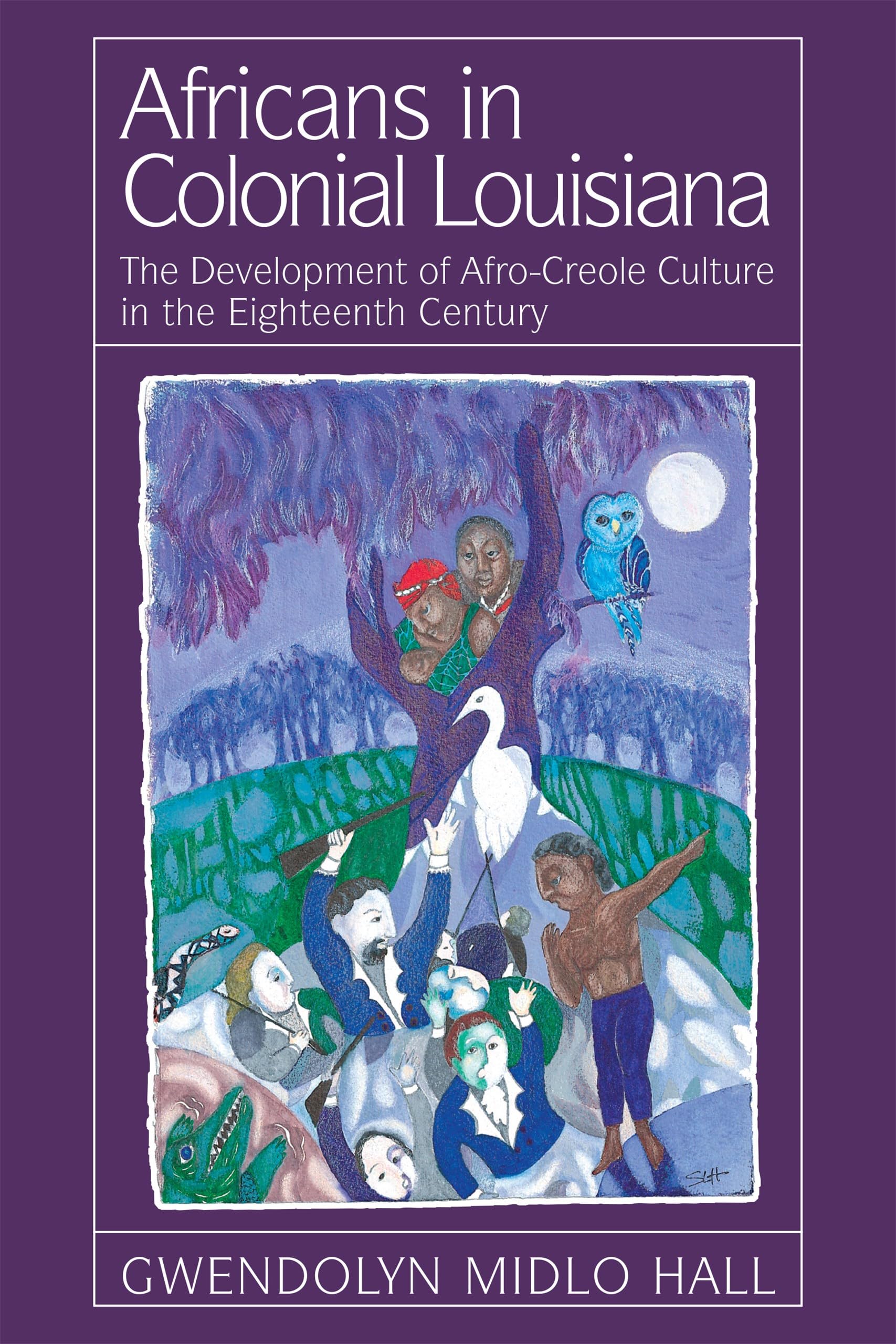
Title
Africans In Colonial Louisiana: The Development Of Afrocreole Culture In The Eighteenthcentury
Sold by Ergodebooks, an authorized reseller.
Returns accepted within 30 days | support@ergodebooks.com
Shipping Information
- Free Standard Shipping — United States only
- Processing Time: 3–5 business days
- Estimated Delivery: 6–10 business days after dispatch
- Double-boxed, fully insured & discreetly packaged
- Tracking number sent via email once dispatched
Returns & Refund
Returns accepted within 30 days of delivery.
Damaged or Defective Item
Free return shipping + replacement or full refund
Wrong Item Received
Free return shipping + replacement or full refund
Change of Mind
Return shipping at customer's expense · 25% restocking fee applies
Payment Option

Although A Number Of Important Studies Of American Slavery Have Explored The Formation Of Slave Cultures In The English Colonies, No Book Until Now Has Undertaken A Comprehensive Assessment Of The Development Of The Distinctive Afrocreole Culture Of Colonial Louisiana. This Culture, Based Upon A Separate Language Community With Its Own Folkloric, Musical, Religious, And Historical Traditions, Was Created By Slaves Brought Directly From Africa To Louisiana Before 1731. It Still Survives As The Acknowledged Cultural Heritage Of Tens Of Thousands Of People Of All Races In The Southern Part Of The State. In This Pathbreaking Work, Gwendolyn Midlo Hall Studies Louisiana'S Creole Slave Community During The Eighteenth Century, Focusing On The Slaves' African Origins, The Evolution Of Their Own Language And Culture, And The Role They Played In The Formation Of The Broader Society, Economy, And Culture Of The Region. Hall Bases Her Study On Research In A Wide Range Of Archival Sources In Louisiana, France, And Spain And Employs Several Disciplineshistory, Anthropology, Linguistics, And Folklorein Her Analysis. Among The Topics She Considers Are The French Slave Trade From Africa To Louisiana, The Ethnic Origins Of The Slaves, And Relations Between African Slaves And Native Indians. She Gives Special Consideration To Race Mixture Between Africans, Indians, And Whites; To The Role Of Slaves In The Natchez Uprising Of 1729; To Slave Unrest And Conspiracies, Including The Pointe Coupee Conspiracies Of 1791 And 1795; And To The Development Of Communities Of Runaway Slaves In The Cypress Swamps Around New Orleans.
⚠️ WARNING (California Proposition 65):
This product may contain chemicals known to the State of California to cause cancer, birth defects, or other reproductive harm.
For more information, please visit www.P65Warnings.ca.gov.
- Q: What is the page count of the book? A: This book has four hundred fifty-six pages. It provides a comprehensive overview of Afro-Creole culture in colonial Louisiana.
- Q: What is the binding type of this book? A: The binding type is paperback. This makes it lightweight and easy to handle for reading.
- Q: Who is the author of this book? A: The author is Gwendolyn Midlo Hall. She is known for her extensive research on slave cultures and Afro-Creole heritage.
- Q: What topics are covered in the book? A: The book covers topics like African origins, slave unrest, and cultural evolution of Afro-Creole communities. It also discusses the role of slaves in regional history.
- Q: What is the main focus of the book? A: The main focus is the development of Afro-Creole culture in colonial Louisiana. It explores how this culture was formed by African slaves.
- Q: What size dimensions does the book have? A: The book dimensions are six inches in length, zero point nine one inches in width, and nine point zero two inches in height. This size makes it convenient for reading.
- Q: Is this book suitable for academic research? A: Yes, this book is suitable for academic research. It employs various disciplines like history and anthropology, making it valuable for scholarly work.
- Q: Can this book be used for casual reading? A: Yes, it can be used for casual reading. The engaging narrative style makes it accessible to general readers interested in cultural history.
- Q: What kind of cultural aspects does the book explore? A: The book explores folkloric, musical, religious, and historical traditions of the Afro-Creole community. It highlights their unique cultural heritage.
- Q: What are some key events discussed in the book? A: Key events include the Natchez Uprising of 1729 and the Pointe Coupee conspiracies of 1791 and 1795. These events provide insight into slave resistance.
- Q: How should I care for the book? A: Keep the book in a dry place and avoid exposing it to direct sunlight. This will help maintain its condition over time.
- Q: What if the book arrives damaged? A: If the book arrives damaged, you can return it for a replacement or refund. Check the retailer's return policy for specific instructions.
- Q: Is there a warranty available for this book? A: No, there is no warranty for this book. However, you can return it if it is damaged or defective upon arrival.
- Q: Can I gift this book to someone interested in history? A: Yes, this book makes a great gift for anyone interested in history. Its detailed exploration of Afro-Creole culture will appeal to history enthusiasts.
- Q: What makes this book different from others on American slavery? A: This book is unique because it focuses specifically on Afro-Creole culture in Louisiana, a topic that has been largely overlooked in other studies.