
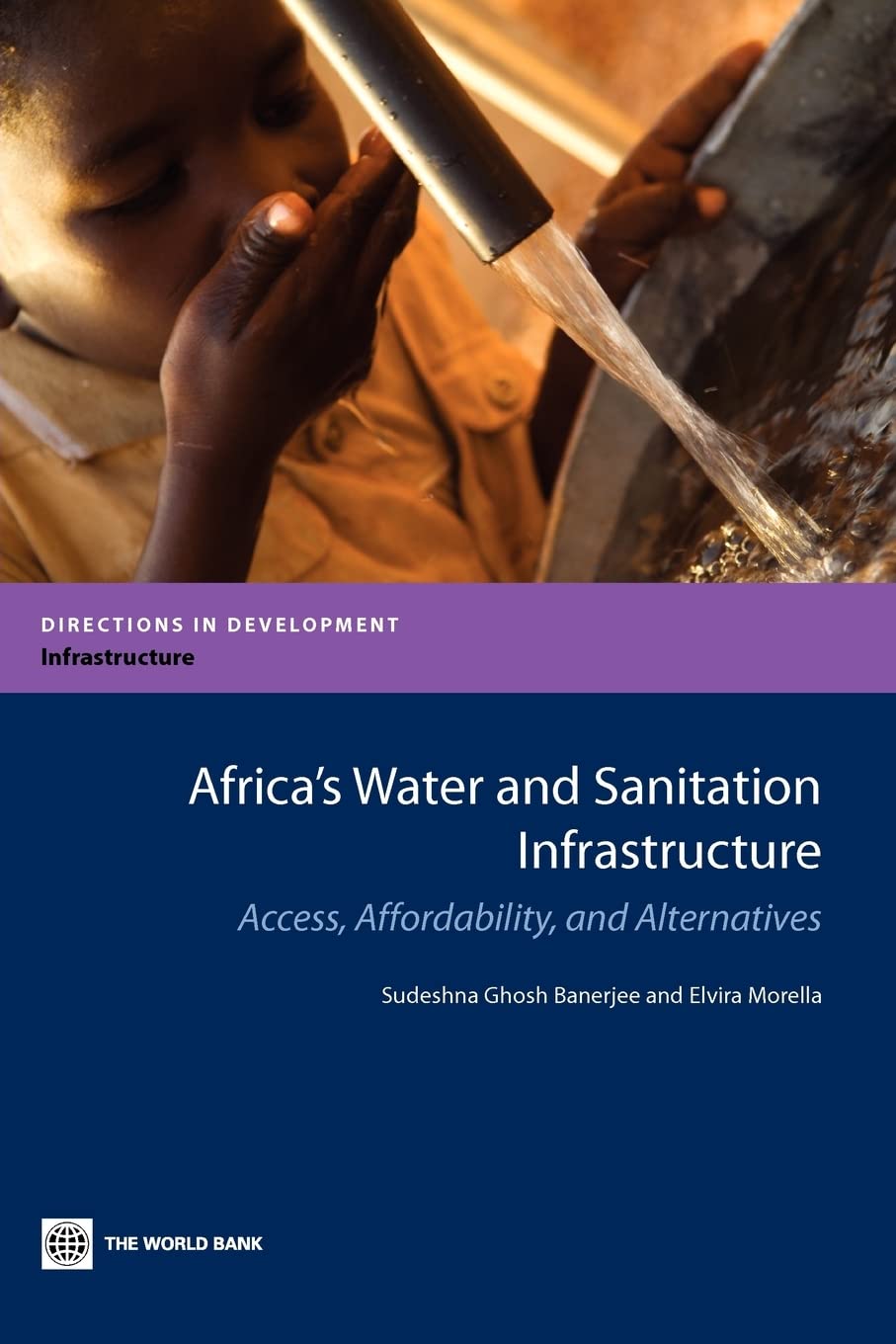
Title
Africa'S Water And Sanitation Infrastructure: Access, Affordability, And Alternatives,New
Sold by Ergodebooks, an authorized reseller.
Returns accepted within 30 days | support@ergodebooks.com
Shipping Information
- Free Standard Shipping — United States only
- Processing Time: 3–5 business days
- Estimated Delivery: 6–10 business days after dispatch
- Double-boxed, fully insured & discreetly packaged
- Tracking number sent via email once dispatched
Returns & Refund
Returns accepted within 30 days of delivery.
Damaged or Defective Item
Free return shipping + replacement or full refund
Wrong Item Received
Free return shipping + replacement or full refund
Change of Mind
Return shipping at customer's expense · 25% restocking fee applies
Payment Option

The welfare implications of safe water and sanitation cannot be overstated. The economic gains from provision of improved services to millions of unserved Africans in enormous. The international adoption of Millennium Development Goals brought the inadequacies of service provision sharply into focus. With only 58% and 31% enjoying access to water and sanitation services respectively, SubSaharan Africa is the only continent that is offtrack in achieving the MDGs in 2015. The problem is compounded by the fact that a rigorous and credible baseline did not exist on coverage to improved water and sanitation and resources required to meet the MDGs.This book aims to contribute to this gap by collecting a wealth of primary and secondary information to present the most uptodate and comprehensive quantitative snapshot of water and sanitation sectors. The book evaluates the challenges to the water and sanitation sectors within the urban and rural areas and deepen our understanding of drivers of coverage expansion in the context of financing, institutional reforms, and efficiency improvements. Finally, the book establishes the investment needs for water and sanitation with a target of meeting the MDGs and compares with the existing financing envelopes, disaggregated by proportions that can be recouped by efficiency gains and net financing gaps.The directions for the future draw on lessons learned from best practices and present the menu of choices available to African countries. There is no recipe book that neatly lays out the possible steps the country should adopt to enhance coverage and quality of service. The challenges differ to a significant extent among African countries and solutions must be tailored to individual national or regional conditions.
⚠️ WARNING (California Proposition 65):
This product may contain chemicals known to the State of California to cause cancer, birth defects, or other reproductive harm.
For more information, please visit www.P65Warnings.ca.gov.