
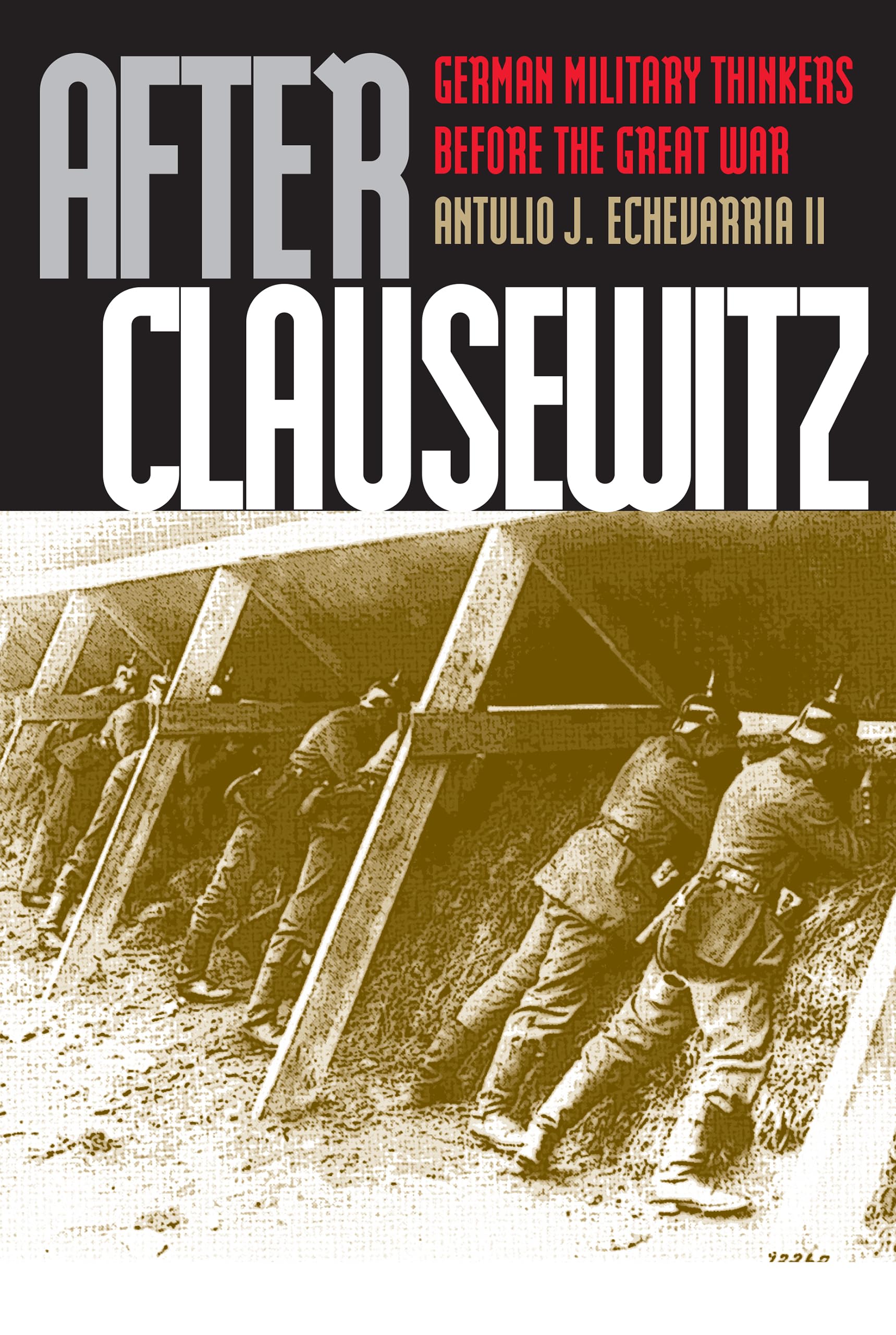
Title
After Clausewitz: German Military Thinkers Before the Great War,Used
Sold by Ergodebooks, an authorized reseller.
Returns accepted within 30 days | support@ergodebooks.com
Shipping Information
- Free Standard Shipping — United States only
- Processing Time: 3–5 business days
- Estimated Delivery: 6–10 business days after dispatch
- Double-boxed, fully insured & discreetly packaged
- Tracking number sent via email once dispatched
Returns & Refund
Returns accepted within 30 days of delivery.
Damaged or Defective Item
Free return shipping + replacement or full refund
Wrong Item Received
Free return shipping + replacement or full refund
Change of Mind
Return shipping at customer's expense · 25% restocking fee applies
Payment Option

The writings of Carl von Clausewitz loom so large in the annals of military theory that they obscure the substantial contributions of thinkers who came after him. This is especially true for those German theorists who wrote during the half century preceding World War I. However, as Antulio Echevarria argues, although none of those thinkers approached Clausewitz's stature, they were nonetheless theorists of considerable vision.The Kaiser's theorists have long been portrayed as narrowminded thinkers rigidly attached to an outmoded way of war, little altered since Napoleon's time. According to this view, they ignored or simply failed to understand how industrialization and modernization had transformed the conduct of war. They seemed unaware of how numerous advances in technology and weaponry had so increased the power of the defensive that decisive victory had become virtually impossible.But Echevarria disputes this traditional view and convincingly shows that these theoristsBoguslawski, Goltz, Schlieffen, Hoenig, and their American and European counterpartswere not the architects of outmoded theories. In fact, they duly appreciated the implications of the vast advances in modern weaponry (as well as in transportation and communications) and set about finding solutions that would restore offensive maneuver to the battlefield.Among other things, they underscored the emerging need for synchronizing concentrated firepower with rapid troop movements, as well as the necessity of a decentralized command scheme in order to cope with the greater tempo, lethality, and scope of modern warfare. In effect, they redefined the essential relations among the combined arms of infantry, artillery, and cavalryEchevarria goes on to suggest that attempts to apply new military theories and doctrine were uneven due to deficiencies in training and an overall lack of interest in theory among younger officers. It is this failure of application, more than the theories themselves, that are responsible for the ruinous slaughter of World War I.
⚠️ WARNING (California Proposition 65):
This product may contain chemicals known to the State of California to cause cancer, birth defects, or other reproductive harm.
For more information, please visit www.P65Warnings.ca.gov.
- Q: What is the main focus of 'After Clausewitz'? A: 'After Clausewitz' examines the contributions of German military theorists who wrote after Carl von Clausewitz, highlighting their responses to changes in warfare leading up to World War I.
- Q: Who is the author of 'After Clausewitz'? A: The book is authored by Antulio J. Echevarria II, a respected scholar in military theory.
- Q: What themes are explored in the book? A: The book explores themes such as the evolution of military thought, the effects of industrialization on warfare, and the need for new strategies in response to modern weaponry.
- Q: How does the author challenge traditional views of German military theorists? A: Echevarria argues that these theorists were not outdated thinkers, but rather recognized the implications of technological advancements and sought to adapt military strategies accordingly.
- Q: What is the significance of the book's publication date? A: 'After Clausewitz' was published on March 6, 2001, placing it within a contemporary discourse on military theory and its historical influences.
- Q: What is the book's format and length? A: 'After Clausewitz' is available in hardcover format and consists of 356 pages.
- Q: Does the book include practical applications of military theory? A: Yes, the book discusses the application of military theories and identifies challenges such as training deficiencies and a lack of interest among younger officers.
- Q: What category does 'After Clausewitz' fall under? A: The book falls under the category of Strategy, focusing on military theory and historical analysis.
- Q: Is this book suitable for those interested in military history? A: Yes, 'After Clausewitz' is suitable for readers interested in military history, theory, and the evolution of warfare strategies leading up to World War I.
- Q: How does 'After Clausewitz' contribute to understanding modern warfare? A: The book provides insights into how historical military theories can inform contemporary military strategies and operations, emphasizing the importance of adapting to technological changes.