If you have any questions, you are always welcome to contact us. We'll get back to you as soon as possible, withing 24 hours on weekdays.
Customer service
All questions about your order, return and delivery must be sent to our customer service team by e-mail at yourstore@yourdomain.com
Sale & Press
If you are interested in selling our products, need more information about our brand or wish to make a collaboration, please contact us at press@yourdomain.com
Help
If you have any questions, you are always welcome to contact us. We'll get back to you as soon as possible, withing 24 hours on weekdays.
Customer service
All questions about your order, return and delivery must be sent to our customer service team by e-mail at yourstore@yourdomain.com
Sale & Press
If you are interested in selling our products, need more information about our brand or wish to make a collaboration, please contact us at press@yourdomain.com
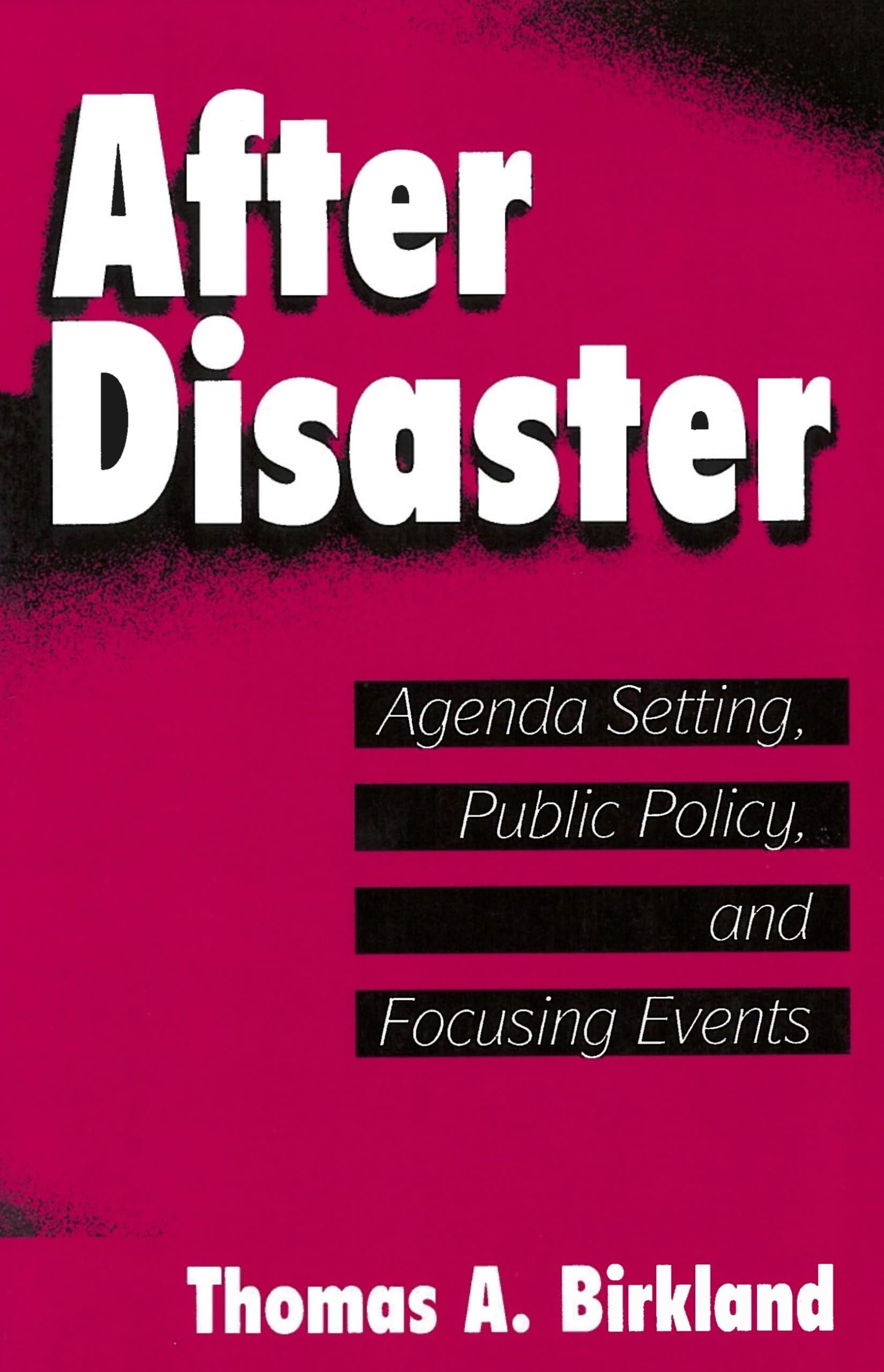
Disasters like earthquakes are known as focusing eventssudden calamities that cause both citizens and policymakers to pay more attention to a public problem and often to press for solutions. This book, the first comprehensive analysis of these dramatic events, explains how and why some public disasters change political agendas and, ultimately, public policies.Thomas A. Birkland explores important successes and failures in the policy process by analyzing the political outcomes of four types of events: earthquakes, hurricanes, oil spills, and nuclear accidents. Using this empirical data to go beyond an intuitive understanding of focusing events, he presents a theory of where and when these events will gain attention and how they trigger political reactions. Birkland concludes that different types of disasters result in different kinds of agenda politics. Public outrage over the highly visible damage caused by the Exxon Valdez oil spill, for example, ended a fourteenyear logjam holding back Congressional legislation to regulate oil spill cleanups. On the other hand, the intangible effects of Three Mile Island had less concrete results in a political arena that was already highly polarized.Integrating a variety of theories on the policy process, including agenda setting, policy communities, advocacy coalitions, the political aspects of the news media, and the use of symbols in political debate, Birkland illuminates the dynamics of eventdriven policy activity. As the first extensive study of its kind, this book offers new insights into the policy process.
⚠️ WARNING (California Proposition 65):
This product may contain chemicals known to the State of California to cause cancer,
birth defects, or other reproductive harm.
For MAP (Minimum Advertised Price) violations and Intellectual Property (IP) or Trademark concerns, please contact:
support@ergodebooks.com
⚠️ California Proposition 65 Warning: Some products sold on this website may expose you to chemicals known to the State of California to cause cancer, birth defects, or other reproductive harm. For more information, visit www.P65Warnings.ca.gov.