
Title
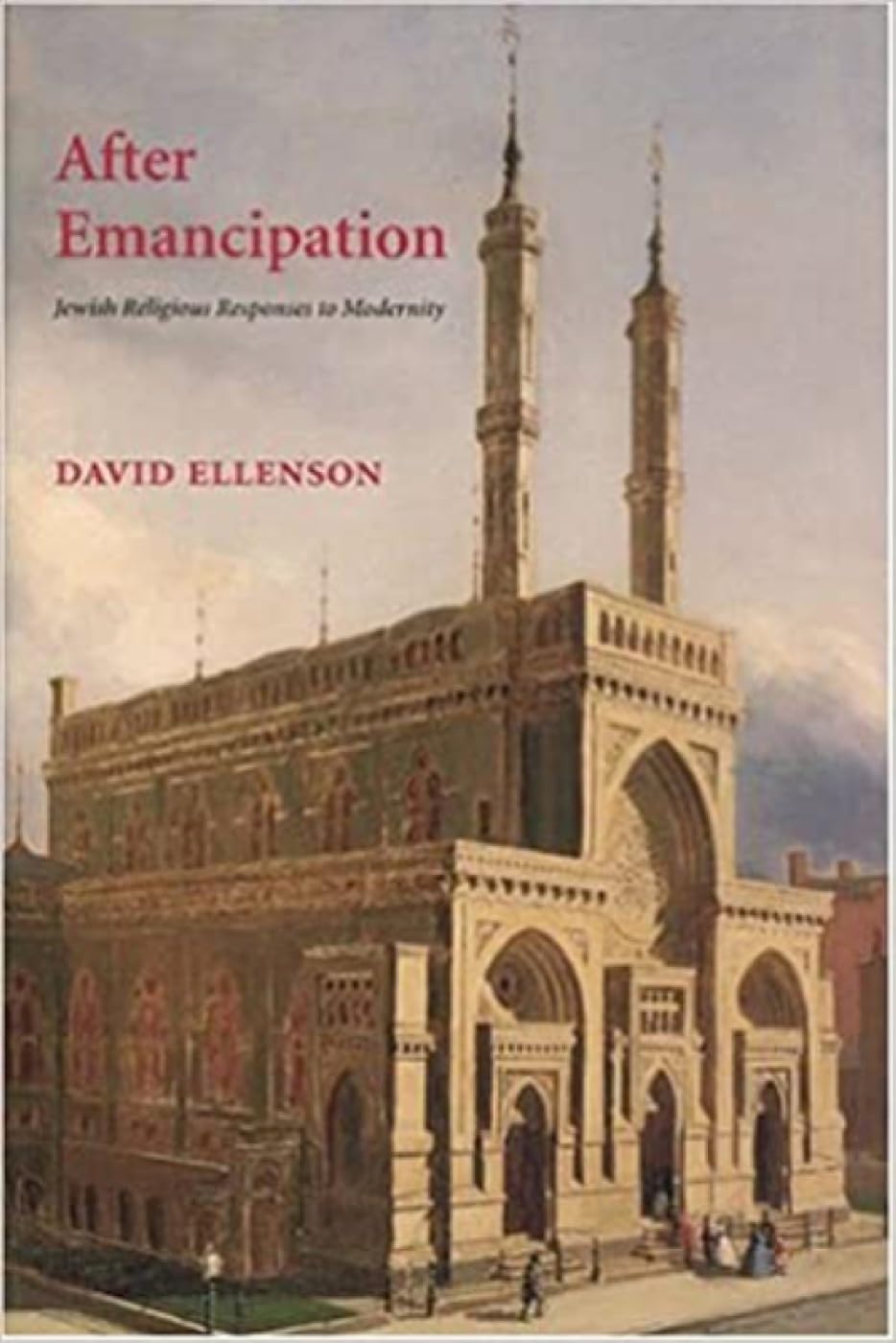
After Emanicipation: Jewish Religious Responses to Modernity,Used
Sold by Ergodebooks, an authorized reseller.
Returns accepted within 30 days | support@ergodebooks.com
Shipping Information
- Free Standard Shipping — United States only
- Processing Time: 3–5 business days
- Estimated Delivery: 6–10 business days after dispatch
- Double-boxed, fully insured & discreetly packaged
- Tracking number sent via email once dispatched
Returns & Refund
Returns accepted within 30 days of delivery.
Damaged or Defective Item
Free return shipping + replacement or full refund
Wrong Item Received
Free return shipping + replacement or full refund
Change of Mind
Return shipping at customer's expense · 25% restocking fee applies
Payment Option

David Ellenson prefaces this fascinating collection of twentythree essays with a remarkably candid account of his intellectual journey from boyhood in Virginia to the scholarly immersions in the history, thought, and literature of the Jewish people that have informed his research interests in a long and distinguished academic career. Ellenson, President of the Hebrew Union CollegeJewish Institute of Religion, has been particularly intrigued by the attempts of religious leaders in all denominations of Judaism, from Liberal to NeoOrthodox, to redefine and reconceptualize themselves and their traditions in the modern period as both the Jewish community and individual Jews entered radically new realms of possibility and change. The essays are grouped into five sections. In the first, Ellenson reflects upon the expression of Jewish values and Jewish identity in contemporary America, explains his debt to Jacob Katz's socioreligious approach to Jewish history, and shows how the works of nonJewish social historian Max Weber highlight the tensions between the universalism of western thought and Jewish demands for a particularistic identity. In the second section, 'The Challenge of Emanicpation,' he indicates how Jewish religious leaders in nineteenthcentury Europe labored to demonstrate that the Jewish religion and Jewish culture were worthy of respect by the larger gentile world. In a third section, 'Denominational Responses,' Ellenson shows how the leaders of Liberal and Orthodox branches of Judaism in Central Europe constructed novel parameters for their communities through prayer books, legal writings, sermons, and journal articles. The fourth section, 'Modern Responsa,' takes a close look at twentiethcentury Jewish legal decisions on new issues such as the status of woemn, fertility treatments, and even the obligations of the Israeli government towards its minority populations. Finally, review essays in the last section analyze a few landmark contemporary works of legal and liturgical the new Israeli Masorti prayer book, David Hartman's works on covenantal theology, and Marcia Falk's Book of Blessings. As Ellenson demonstrates, 'The reality of Jewish cultural and social integration into the larger world after Emancipation did not signal the demise of Judaism. Instead, the modern setting has provided a challenging context where the ongoing creativity and adaptability of Jewish religious leaders of all stripes has been tested and displayed.'
⚠️ WARNING (California Proposition 65):
This product may contain chemicals known to the State of California to cause cancer, birth defects, or other reproductive harm.
For more information, please visit www.P65Warnings.ca.gov.