
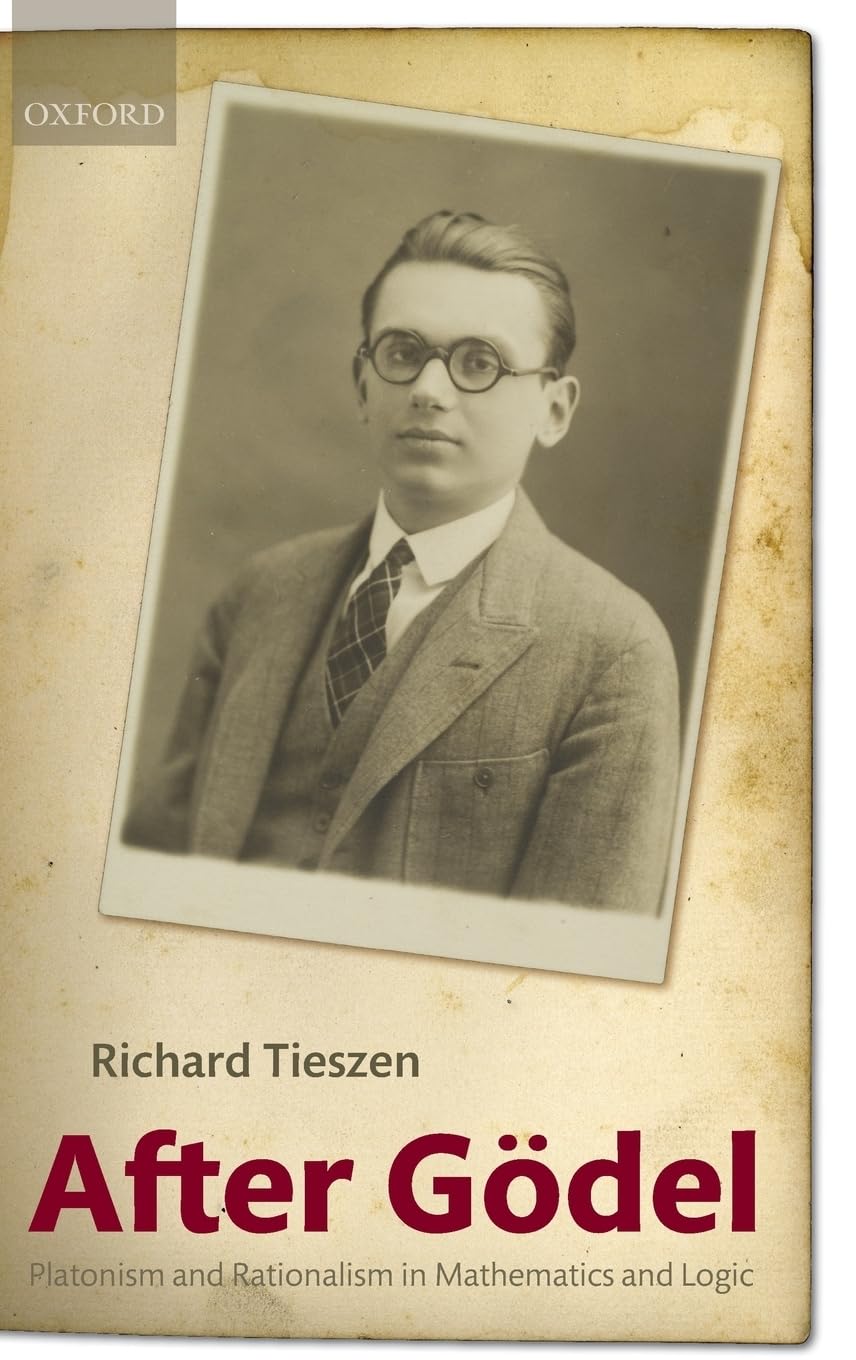
Title
After Godel: Platonism And Rationalism In Mathematics And Logic
Processing time: 1-3 days
US Orders Ships in: 3-5 days
International Orders Ships in: 8-12 days
Return Policy: 15-days return on defective items
Payment Option

Richard Tieszen Presents An Analysis, Development, And Defense Of A Number Of Central Ideas In Kurt Godel'S Writings On The Philosophy And Foundations Of Mathematics And Logic. Tieszen Structures The Argument Around Godel'S Three Philosophical Heroes Plato, Leibniz, And Husserl And His Engagement With Kant, And Supplements Close Readings Of Godel'S Texts On Foundations With Materials From Godel'S Nachlass And From Hao Wang'S Discussions With Godel. As Well As Providing Discussions Of Godel'S Views On The Philosophical Significance Of His Technical Results On Completeness, Incompleteness, Undecidability, Consistency Proofs, Speedup Theorems, And Independence Proofs, Tieszen Furnishes A Detailed Analysis Of Godel'S Critique Of Hilbert And Carnap, And Of His Subsequent Turn To Husserl'S Transcendental Philosophy In 1959. On This Basis, A New Type Of Platonic Rationalism That Requires Rational Intuition, Called 'Constituted Platonism', Is Developed And Defended. Tieszen Shows How Constituted Platonism Addresses The Problem Of The Objectivity Of Mathematics And Of The Knowledge Of Abstract Mathematical Objects. Finally, He Considers The Implications Of This Position For The Claim That Human Minds ('Monads') Are Machines, And Discusses The Issues Of Pragmatic Holism And Rationalism.
⚠️ WARNING (California Proposition 65):
This product may contain chemicals known to the State of California to cause cancer, birth defects, or other reproductive harm.
For more information, please visit www.P65Warnings.ca.gov.
- Q: What is the page count of the book? A: The book contains two hundred forty-five pages. This length offers a comprehensive exploration of its themes.
- Q: What is the binding type of this book? A: The book is bound in hardcover. This provides durability and a premium feel for readers.
- Q: What are the dimensions of the book? A: The book measures nine point twenty-nine inches in length, six point fourteen inches in width, and six point eighteen inches in height. These dimensions make it portable and easy to handle.
- Q: Who is the author of this book? A: The author is Richard Tieszen. He provides in-depth analysis on key philosophical concepts from Kurt Godel's works.
- Q: What is the main theme of the book? A: The main theme revolves around the philosophy and foundations of mathematics and logic. It examines Godel's rationalism and its implications.
- Q: What philosophical figures does the book discuss? A: The book discusses Plato, Leibniz, Husserl, and Kant. These figures are central to Godel's philosophical explorations.
- Q: How do I read this book effectively? A: To read this book effectively, take notes on key arguments and concepts. Engaging with Godel’s ideas on rationalism and intuition will enhance understanding.
- Q: Is this book suitable for beginners in philosophy? A: Yes, the book is suitable for beginners, although some familiarity with philosophical concepts may help. It provides clear explanations of complex ideas.
- Q: What is constituted platonism as discussed in the book? A: Constituted platonism is a new type of rationalism requiring rational intuition. It addresses the objectivity of mathematics and knowledge of abstract objects.
- Q: How should I store this hardcover book? A: Store the book upright on a shelf in a cool, dry place. Avoid direct sunlight to preserve the cover and pages.
- Q: Can I lend this book to others? A: Yes, you can lend this book to others. Just ensure it is returned in good condition to maintain its quality.
- Q: What if the book arrives damaged? A: If the book arrives damaged, contact the seller for a return or replacement. Most sellers have policies in place for such issues.
- Q: Is there a warranty for this book? A: No, books typically do not come with a warranty. However, check with the seller for specific return policies.
- Q: What type of readers would enjoy this book? A: Readers interested in philosophy, mathematics, and logic will particularly enjoy this book. It appeals to both scholars and enthusiasts.
- Q: Does this book include references to Godel's Nachlass? A: Yes, the book includes references to Godel's Nachlass. This provides deeper insights into Godel's philosophical thought.
- Q: Is there a discussion on Godel's critique of Hilbert? A: Yes, the book provides a detailed analysis of Godel's critique of Hilbert and Carnap. This is essential for understanding Godel's philosophical stance.