
Title
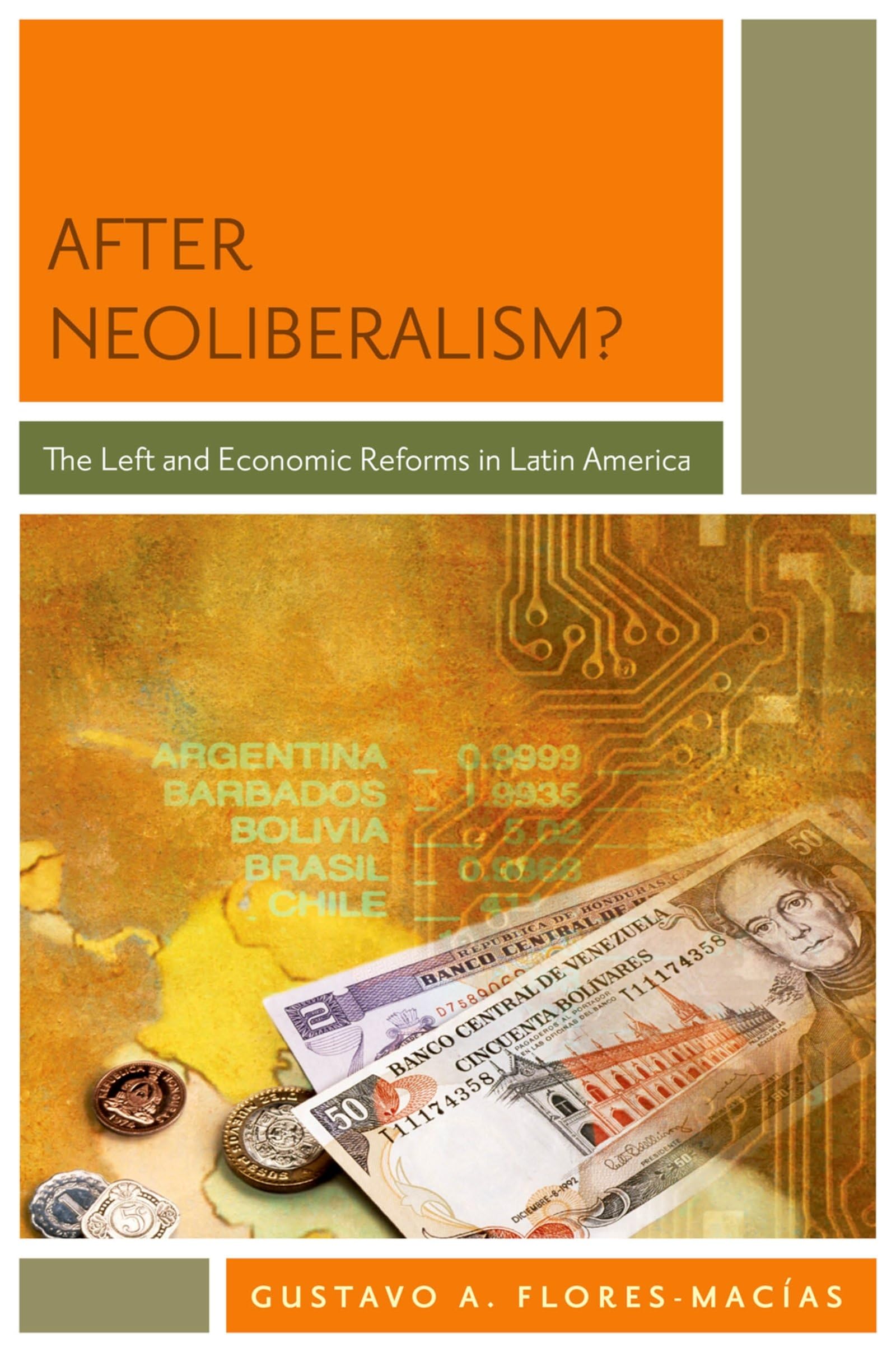
After Neoliberalism?: The Left and Economic Reforms in Latin America,Used
Sold by Ergodebooks, an authorized reseller.
Returns accepted within 30 days | support@ergodebooks.com
Shipping Information
- Free Standard Shipping — United States only
- Processing Time: 3–5 business days
- Estimated Delivery: 6–10 business days after dispatch
- Double-boxed, fully insured & discreetly packaged
- Tracking number sent via email once dispatched
Returns & Refund
Returns accepted within 30 days of delivery.
Damaged or Defective Item
Free return shipping + replacement or full refund
Wrong Item Received
Free return shipping + replacement or full refund
Change of Mind
Return shipping at customer's expense · 25% restocking fee applies
Payment Option

The political trajectory of Latin America in the last decade has been remarkable. The left, which had been given up for dead across the region, swept into power in numerous countries: Ecuador, Brazil, Venezuela, Nicaragua, Bolivia, and even Chile. Moreover, the Mexican left, which lost an extremely close (and disputed) election a couple of years ago, may yet come to power in 2012. Once these left governments took the reins of power, though, they acted very differently. Some have been truly radical, while others have been moderate. Gustavo FloresMacas' After Neoliberalism? offers the first systemic explanation of why leftwing governments across the region have acted in the way that they have. His theory hinges on party systems. Deeply institutionalized, stable party systems have forestalled radical change regardless of the governing party's philosophy, but states with weakly institutionalized party systems have opened the door for more radical reform. Evo Morales and Hugo Chavez, then, are not simply more radical than Lula and Chile's Michele Bachelet (who left office in March 2010). Rather, weak party systems allowed them to adopt more radical policies. FloresMacas is careful to add that weak party systems also allow for rightwing radicals to enact policies more easily, but at this historical conjuncture, the left has the upper hand. Utilizing a rich base of empirical evidence drawn from eleven countries, After Neoliberalism? will reshape our understanding of not simply why the left has had such a farreaching triumph, but how it actually governs.
⚠️ WARNING (California Proposition 65):
This product may contain chemicals known to the State of California to cause cancer, birth defects, or other reproductive harm.
For more information, please visit www.P65Warnings.ca.gov.