
Title
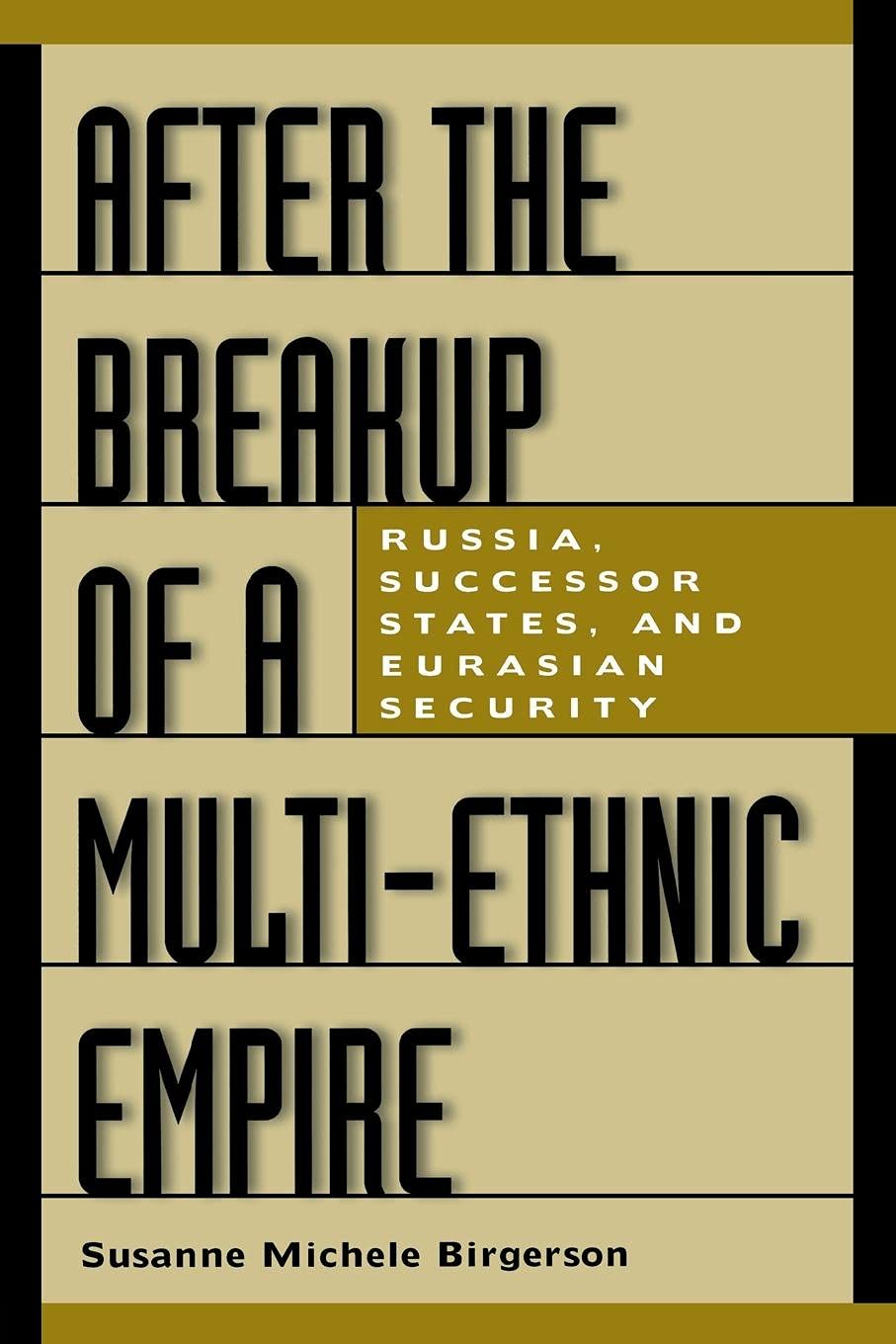
After The Breakup Of A Multiethnic Empire: Russia, Successor States, And Eurasian Security (Praeger Security International)
Sold by Ergodebooks, an authorized reseller.
Returns accepted within 30 days | support@ergodebooks.com
Shipping Information
- Free Standard Shipping — United States only
- Processing Time: 3–5 business days
- Estimated Delivery: 6–10 business days after dispatch
- Double-boxed, fully insured & discreetly packaged
- Tracking number sent via email once dispatched
Returns & Refund
Returns accepted within 30 days of delivery.
Damaged or Defective Item
Free return shipping + replacement or full refund
Wrong Item Received
Free return shipping + replacement or full refund
Change of Mind
Return shipping at customer's expense · 25% restocking fee applies
Payment Option

The relationship between the Russian Federation and the 14 nonRussian successor states is unequal, with Russia the dominant power. This power imbalance is a holdover from the Soviet era in which the RSFSR was first among equals. Empires, like the Soviet one, are specific types of political systems that differed from modern states. The centralized, multiethnic and nondemocratic character of empires explains the continued dominance of the Russian Federation. It also explains the absence of alternative economic arrangements and political contacts between the former republics. The Soviet system was structured so as to establish Russian control over nonRussian republics. The political structure was centralized so that all decisions, including investment, production, and distribution decisions were made in Moscow. Economic planning dictated a complex network of production and distribution that rendered the former republics dependent on Russia in a variety of ways.Soviet patterns of government administration and economic management are still evident in all the former republics. Continued dependency on Russia has compromised the statebuilding efforts of the former republics. Political rhetoric trumpeting new foreign investment, the expansion of diplomatic relations, the signing of trade agreements, and the imminent entrance into international organizations masks the fact that none of these new contacts have been able to replace the old Soviet production and distribution networks. Scholars and students involved with comparative politics and Russian (postCommunist) Studies will find the work of particular value.
⚠️ WARNING (California Proposition 65):
This product may contain chemicals known to the State of California to cause cancer, birth defects, or other reproductive harm.
For more information, please visit www.P65Warnings.ca.gov.