If you have any questions, you are always welcome to contact us. We'll get back to you as soon as possible, withing 24 hours on weekdays.
Customer service
All questions about your order, return and delivery must be sent to our customer service team by e-mail at yourstore@yourdomain.com
Sale & Press
If you are interested in selling our products, need more information about our brand or wish to make a collaboration, please contact us at press@yourdomain.com
Help
If you have any questions, you are always welcome to contact us. We'll get back to you as soon as possible, withing 24 hours on weekdays.
Customer service
All questions about your order, return and delivery must be sent to our customer service team by e-mail at yourstore@yourdomain.com
Sale & Press
If you are interested in selling our products, need more information about our brand or wish to make a collaboration, please contact us at press@yourdomain.com
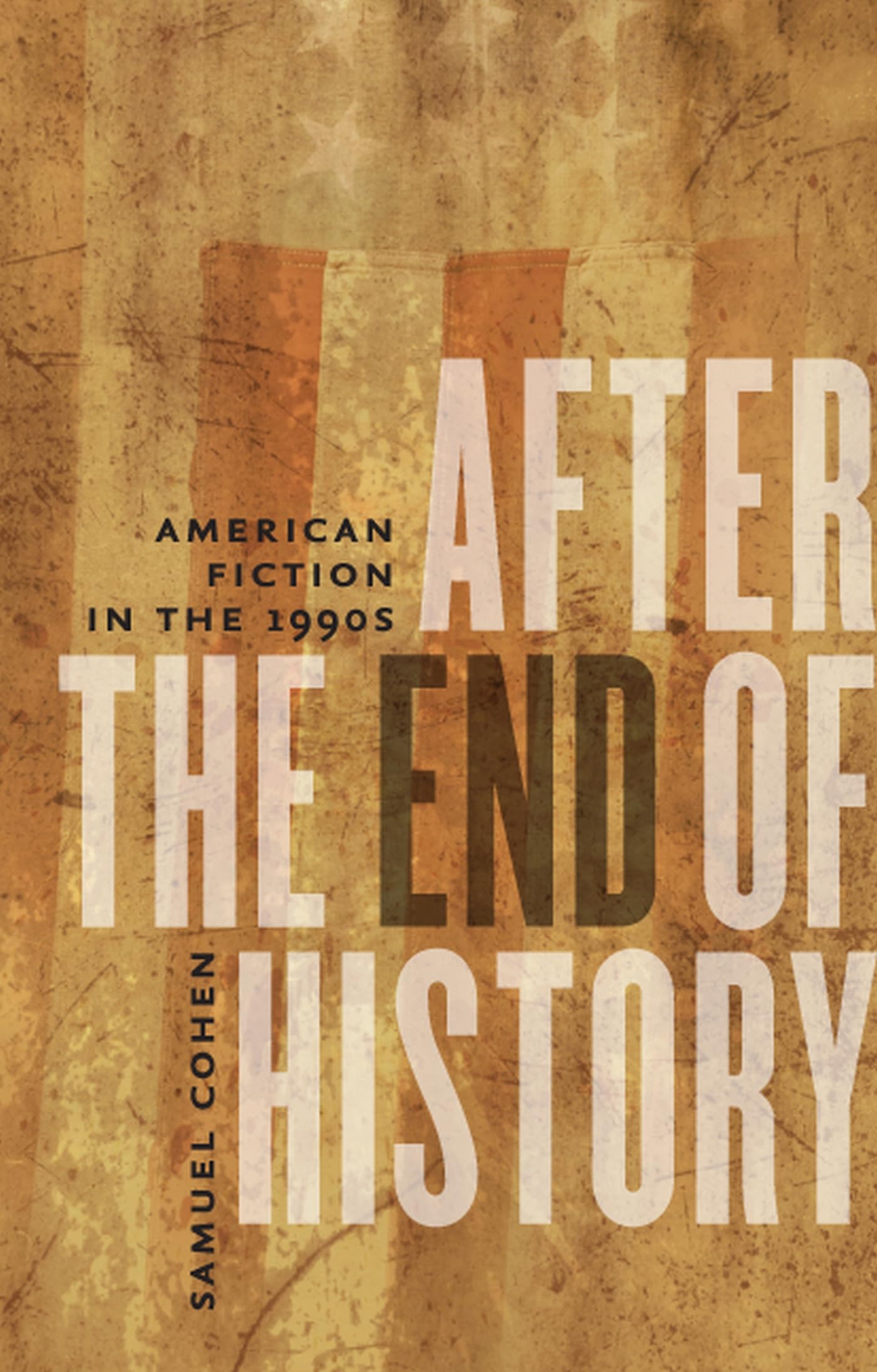
In this bold book, Samuel Cohen asserts the literary and historical importance of the period between the fall of the Berlin wall and that of the Twin Towers in New York. With refreshing clarity, he examines six 1990s novels and two post9/11 novels that explore the impact of the end of the Cold War: Pynchon's Mason & Dixon, Roth's American Pastoral, Morrison's Paradise, O'Brien's In the Lake of the Woods, Didion's The Last Thing He Wanted, Eugenides's Middlesex, Lethem's Fortress of Solitude, and DeLillo's Underworld. Cohen emphasizes how these works reconnect the past to a present that is ironically keen on denying that connection. Exploring the ways ideas about paradise and pastoral, difference and exclusion, innocence and righteousness, triumph and trauma deform the stories Americans tell themselves about their nations past, After the End of History challenges us to reconsider these works in a new light, offering fresh, insightful readings of what are destined to be classic works of literature.At the same time, Cohen enters into the theoretical discussion about postmodern historical understanding. Throwing his hat in the ring with force and style, he confronts not only Francis Fukuyamas triumphalist response to the fall of the Soviet Union but also the other literary and political end of history claims put forth by such theorists as Fredric Jameson and Walter Benn Michaels. In a straightforward, affecting style, After the End of History offers us a new vision for the capabilities and confines of contemporary fiction.
⚠️ WARNING (California Proposition 65):
This product may contain chemicals known to the State of California to cause cancer,
birth defects, or other reproductive harm.
For MAP (Minimum Advertised Price) violations and Intellectual Property (IP) or Trademark concerns, please contact:
support@ergodebooks.com
⚠️ California Proposition 65 Warning: Some products sold on this website may expose you to chemicals known to the State of California to cause cancer, birth defects, or other reproductive harm. For more information, visit www.P65Warnings.ca.gov.