
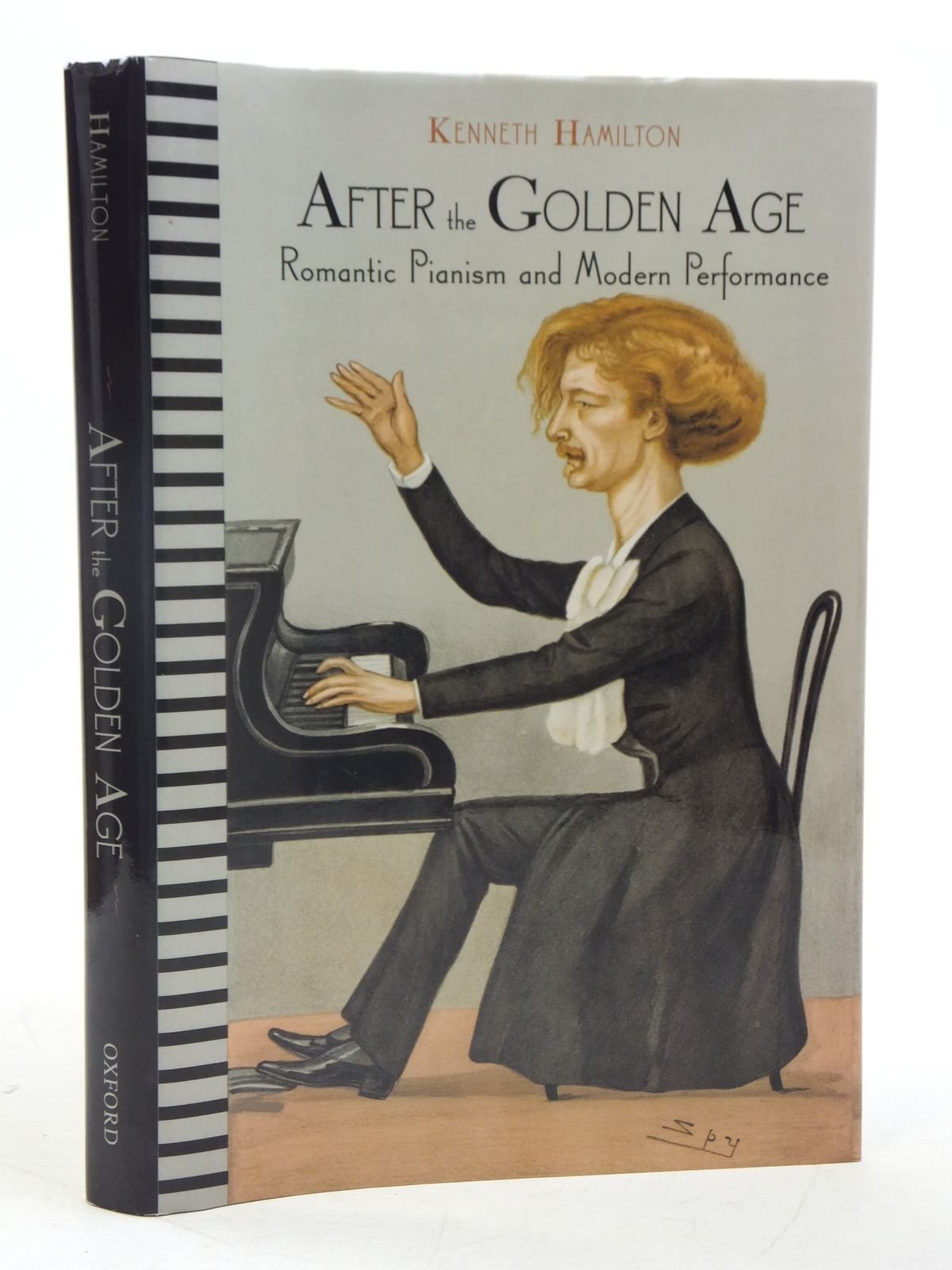
Title
After the Golden Age: Romantic Pianism and Modern Performance,Used
Sold by Ergodebooks, an authorized reseller.
Returns accepted within 30 days | support@ergodebooks.com
Shipping Information
- Free Standard Shipping — United States only
- Processing Time: 3–5 business days
- Estimated Delivery: 6–10 business days after dispatch
- Double-boxed, fully insured & discreetly packaged
- Tracking number sent via email once dispatched
Returns & Refund
Returns accepted within 30 days of delivery.
Damaged or Defective Item
Free return shipping + replacement or full refund
Wrong Item Received
Free return shipping + replacement or full refund
Change of Mind
Return shipping at customer's expense · 25% restocking fee applies
Payment Option

Kenneth Hamilton's book engagingly and lucidly dissects the oftinvoked myth of a Great Tradition, or Golden Age of Pianism. It is written both for players and for members of their audiences by a pianist who believes that scholarship and readability can go handinhand. Hamilton discusses in meticulous yet lively detail the performancestyle of great pianists from Liszt to Paderewski, and delves into the farfrominevitable development of the piano recital. He entertainingly recounts how classical concerts evolved from exuberant, sometimes riotous events into the formal, funereal trotting out of predictable pieces they can be today, how an often unhistorical 'respect for the score' began to replace pianists' improvisations and adaptations, and how the clinical custom arose that an audience should be seen and not heard.Pianists will find food for thought here on their repertoire and the traditions of its performance. Hamilton chronicles why pianists of the past did not always begin a piece with the first note of the score, nor end with the last. He emphasizes that anxiety over wrong notes is a relatively recent psychosis, and playing entirely from memory a relatively recent requirement.Audiences will encounter a vivid account of how drastically different are the recitals they attend compared to concerts of the past, and how their own role has diminished from noisily active participants in the concert experience to passive recipients of artistic benediction from the stage. They will discover when cowed listeners eventually stopped applauding between movements, and why they stopped talking loudly during them.The book's broad message proclaims that there is nothing divinely ordained about our own concertpractices, programming and pianoperformance styles. Many aspects of the modern approach are unhistoricalsome laudable, some merely ludicrous. They are also far removed from those fondly, if deceptively, remembered as constituting a Golden Age.
⚠️ WARNING (California Proposition 65):
This product may contain chemicals known to the State of California to cause cancer, birth defects, or other reproductive harm.
For more information, please visit www.P65Warnings.ca.gov.
- Q: What is the main theme of 'After the Golden Age'? A: The book explores the myth of a Great Tradition or Golden Age of pianism, examining how concert practices and performance styles have evolved over time.
- Q: Who is the author of 'After the Golden Age'? A: The author is Kenneth Hamilton, a pianist and scholar who combines readability with scholarly insight.
- Q: What type of readers would benefit from this book? A: Both pianists and their audiences will find valuable insights regarding performance practices and the evolution of concert experiences.
- Q: How does the book address the role of the audience in piano recitals? A: Hamilton discusses how audiences have transitioned from active participants to passive listeners and the historical reasons behind these changes.
- Q: Is this book suitable for academic study? A: Yes, it provides a scholarly analysis of piano performance and historical practices, making it suitable for both casual readers and academic study.
- Q: What is the binding type of this book? A: The book is available in a hardcover binding, which provides durability and a classic presentation.
- Q: How many pages does 'After the Golden Age' contain? A: The book has a total of 320 pages.
- Q: When was 'After the Golden Age' published? A: The book was published on December 7, 2007.
- Q: What unique perspectives does Kenneth Hamilton offer in this book? A: Hamilton offers insights on how performance styles have changed, including the historical context of improvisation and audience interaction.
- Q: Can this book change how I perceive modern piano performances? A: Yes, it challenges contemporary concert practices and encourages readers to reconsider their perceptions of performance and audience roles.