
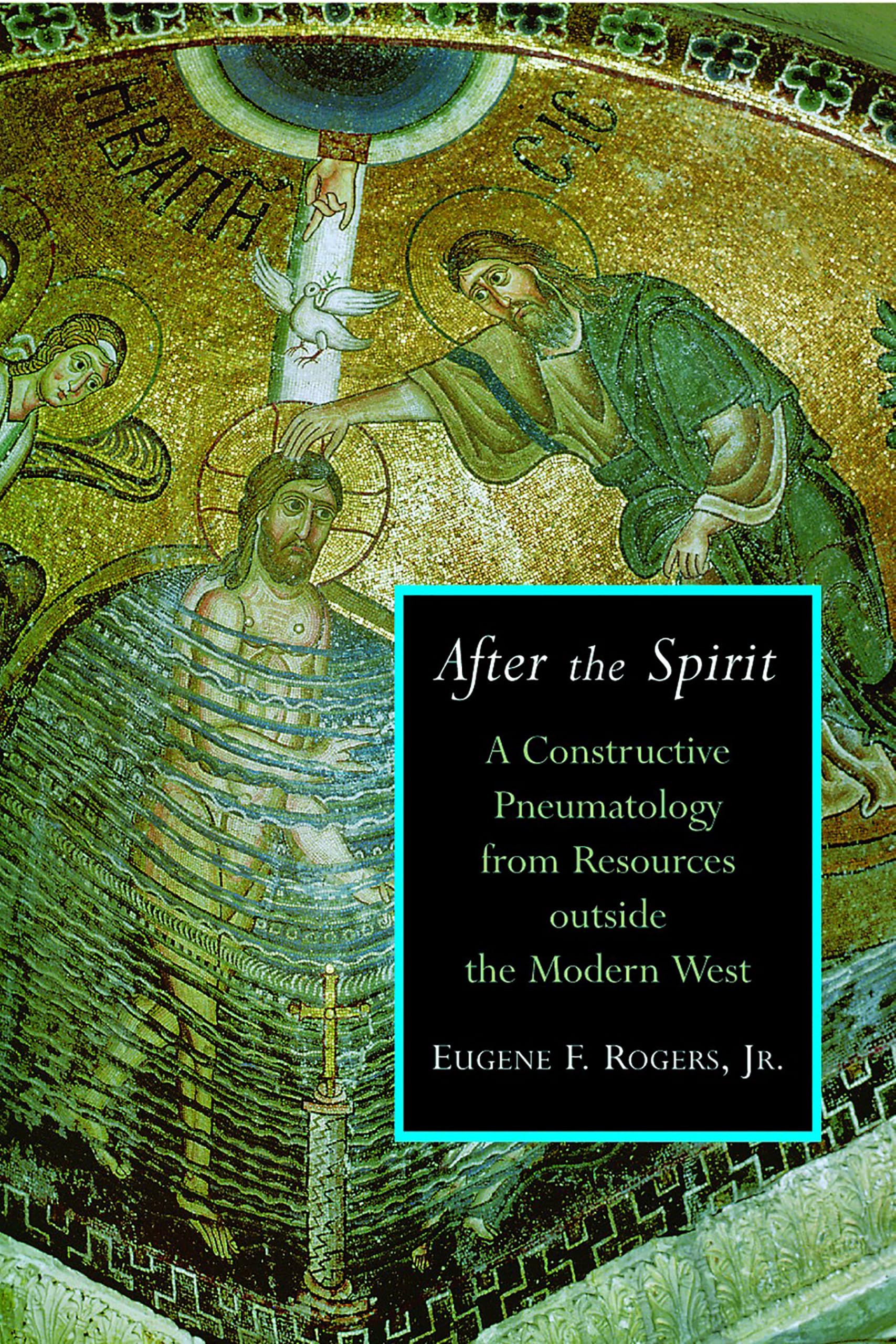
Title
After the Spirit: A Constructive Pneumatology from Resources Outside the Modern West (Radical Traditions (RT)),Used
Sold by Ergodebooks, an authorized reseller.
Returns accepted within 30 days | support@ergodebooks.com
Shipping Information
- Free Standard Shipping — United States only
- Processing Time: 3–5 business days
- Estimated Delivery: 6–10 business days after dispatch
- Double-boxed, fully insured & discreetly packaged
- Tracking number sent via email once dispatched
Returns & Refund
Returns accepted within 30 days of delivery.
Damaged or Defective Item
Free return shipping + replacement or full refund
Wrong Item Received
Free return shipping + replacement or full refund
Change of Mind
Return shipping at customer's expense · 25% restocking fee applies
Payment Option

To think about the Spirit it will not do to think 'spiritually': to think about the Spirit you have to think materially,' claims Eugene F. Rogers. The Holy Spirit, who in classical Christian discourse 'pours out on all flesh,' has tended in modern theology and worship to float free of bodies. The result of such disembodiment, contends Rogers, is that our talk about the Spirit has become flat and uninspiring. In After the Spirit Rogers diagnoses a related gap in the revival of trinitarian theology, a mentality that 'there's nothing the Spirit can do that the Son can't do better.' The Eastern Christian tradition, by contrast, has usually linked the Holy Spirit with holy places, holy people, and holy things. Weaving together a rich tapestry of sources from this tradition, Rogers locates the Spirit in the Gospel stories of the annunciation, Jesus' baptism, the transfiguration, and the resurrection. These stories offer illuminating glimpses into both the Spirit's connection with the tangible world and the Spirit's distinctive place in relation to the other persons of the Trinity. Eight gorgeous color plates complement Rogers's witty and passionate prose.
⚠️ WARNING (California Proposition 65):
This product may contain chemicals known to the State of California to cause cancer, birth defects, or other reproductive harm.
For more information, please visit www.P65Warnings.ca.gov.
- Q: What is the main theme of 'After the Spirit'? A: 'After the Spirit' explores the relationship between the Holy Spirit and materiality, arguing against the disembodiment in modern theology.
- Q: Who is the author of 'After the Spirit'? A: The author of 'After the Spirit' is Eugene F. Rogers.
- Q: What are the key topics discussed in the book? A: Key topics include the Holy Spirit's connection to tangible experiences, the Eastern Christian tradition, and its implications for trinitarian theology.
- Q: How many pages does 'After the Spirit' have? A: 'After the Spirit' has 263 pages.
- Q: What type of binding is used for 'After the Spirit'? A: 'After the Spirit' is available in paperback binding.
- Q: When was 'After the Spirit' published? A: 'After the Spirit' was published on July 26, 2005.
- Q: Are there any illustrations in 'After the Spirit'? A: Yes, 'After the Spirit' includes eight color plates that complement the text.
- Q: What is the significance of the Holy Spirit in the book? A: The book emphasizes the Holy Spirit's role in connecting with holy places, people, and events, contrasting with modern interpretations.
- Q: Is 'After the Spirit' suitable for academic study? A: Yes, 'After the Spirit' provides a scholarly approach to pneumatology and is suitable for academic study in theology.
- Q: Does the book provide practical applications of its themes? A: While primarily theoretical, 'After the Spirit' offers insights that can inform both theological practice and worship.