If you have any questions, you are always welcome to contact us. We'll get back to you as soon as possible, withing 24 hours on weekdays.
Customer service
All questions about your order, return and delivery must be sent to our customer service team by e-mail at yourstore@yourdomain.com
Sale & Press
If you are interested in selling our products, need more information about our brand or wish to make a collaboration, please contact us at press@yourdomain.com
Help
If you have any questions, you are always welcome to contact us. We'll get back to you as soon as possible, withing 24 hours on weekdays.
Customer service
All questions about your order, return and delivery must be sent to our customer service team by e-mail at yourstore@yourdomain.com
Sale & Press
If you are interested in selling our products, need more information about our brand or wish to make a collaboration, please contact us at press@yourdomain.com
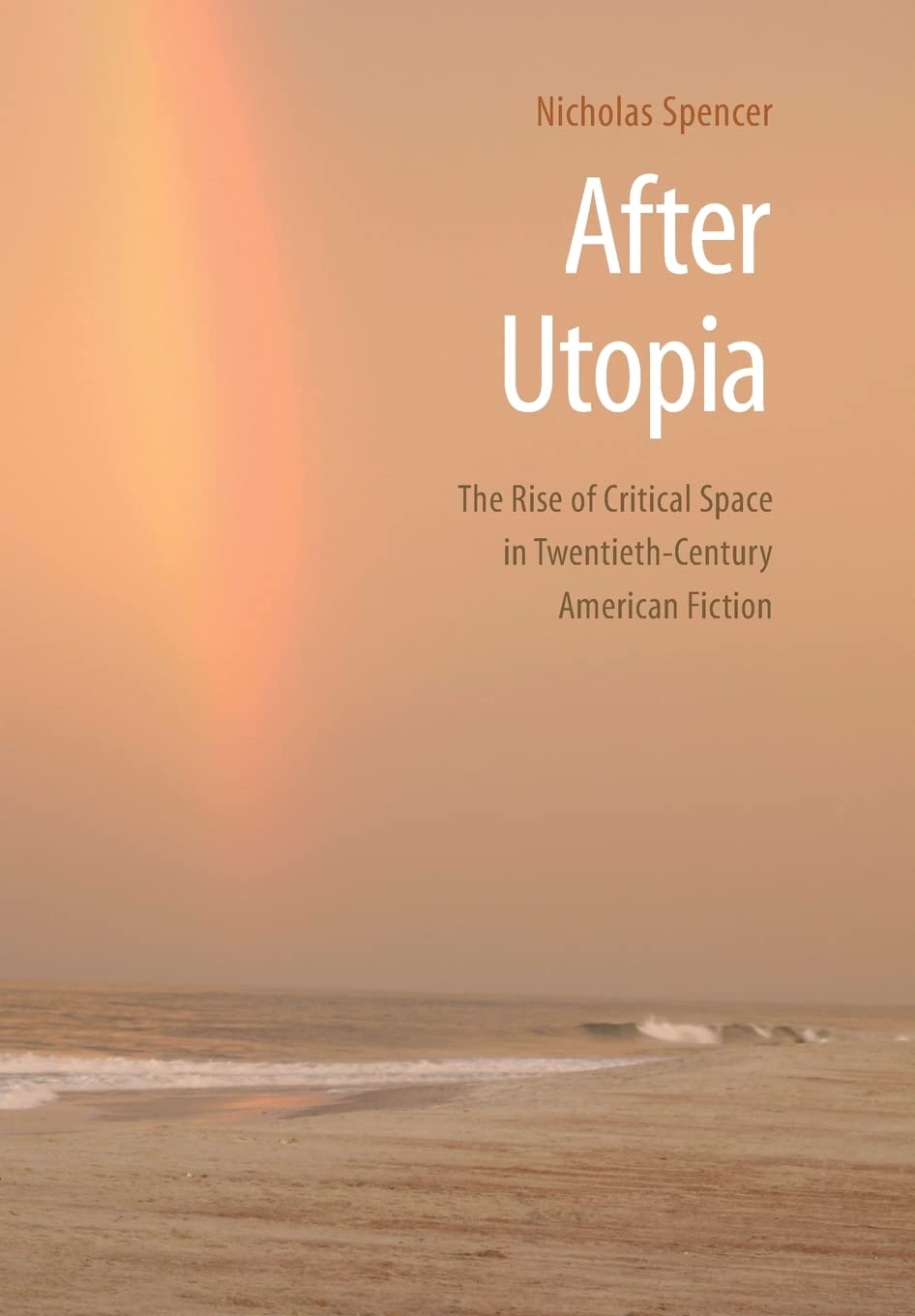
By developing the concept of critical space, After Utopia presents a new genealogy of twentiethcentury American fiction. Nicholas Spencer argues that the radical American fiction of Jack London, Upton Sinclair, John Dos Passos, and Josephine Herbst reimagines the spatial concerns of late nineteenthcentury utopian American texts. Instead of fully imagined utopian societies, such fiction depicts localized utopian spaces that provide essential support for the models of history on which these authors focus. In the midcentury novels of Mary McCarthy and Paul Goodman and the late twentiethcentury fiction of Thomas Pynchon, William Gaddis, Joan Didion, and Don DeLillo, narratives of social space become decreasingly utopian and increasingly critical. The highly varied 'critical space' of such texts attains a position similar to that enjoyed by representations of historical transformation in early twentiethcentury radical American fiction. After Utopia finds that central aspects of postmodern American novels derive from the overtly political narratives of London, Sinclair, Dos Passos, and Herbst.Spencer focuses on distinct moments in the rise of critical space during the past century and relates them to the writing of Georg Lukcs, Ernst Bloch, Antonio Gramsci, Hannah Arendt, Henri Lefebvre, Gilles Deleuze and Flix Guattari, and Paul Virilio. The systematic and genealogical encounter between critical theory and American fiction reveals close parallels between and original analyses of these two areas of twentiethcentury cultural discourse.
⚠️ WARNING (California Proposition 65):
This product may contain chemicals known to the State of California to cause cancer,
birth defects, or other reproductive harm.
For MAP (Minimum Advertised Price) violations and Intellectual Property (IP) or Trademark concerns, please contact:
support@ergodebooks.com
⚠️ California Proposition 65 Warning: Some products sold on this website may expose you to chemicals known to the State of California to cause cancer, birth defects, or other reproductive harm. For more information, visit www.P65Warnings.ca.gov.