
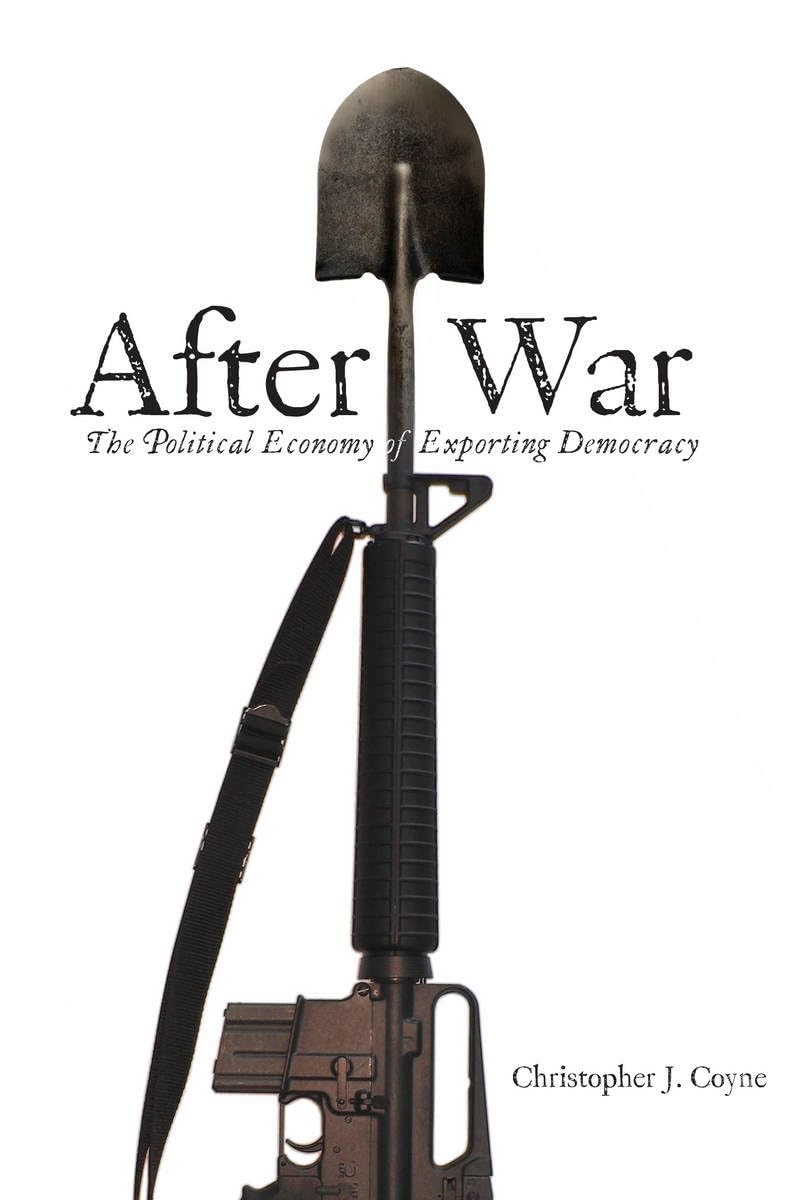
Title
After War: The Political Economy Of Exporting Democracy,New
Sold by Ergodebooks, an authorized reseller.
Returns accepted within 30 days | support@ergodebooks.com
Shipping Information
- Free Standard Shipping — United States only
- Processing Time: 3–5 business days
- Estimated Delivery: 6–10 business days after dispatch
- Double-boxed, fully insured & discreetly packaged
- Tracking number sent via email once dispatched
Returns & Refund
Returns accepted within 30 days of delivery.
Damaged or Defective Item
Free return shipping + replacement or full refund
Wrong Item Received
Free return shipping + replacement or full refund
Change of Mind
Return shipping at customer's expense · 25% restocking fee applies
Payment Option

Why Does Liberal Democracy Take Hold In Some Countries But Not In Others? Why Do We Observe Such Different Outcomes In Military Interventions, From Germany And Japan To Afghanistan And Iraq? Do Efforts To Export Democracy Help As Much As They Hurt? These Are Some Of The Most Enduring Questions Of Our Time.Historically, The United States Has Attempted To Generate Change In Foreign Countries By Exporting Liberal Democratic Institutions Through Military Occupation And Reconstruction. Despite These Efforts, The Record Of U.S.Led Reconstructions Has Been Mixed, At Best. For Every West Germany Or Japan, There Is A Cuba, Haiti, Somalia, Or Vietnam.After War Seeks To Answer These Critical Foreign Policy Questions By Bringing An Economic Mindset To A Topic That Has Been Traditionally Tackled By Historians, Policymakers, And Political Scientists. Economics Focuses On How Incentives Influence Human Action. Therefore, Within An Economic Context, A Successful Reconstruction Entails Finding And Establishing A Set Of Incentives That Makes Citizens Prefer A Liberal Democratic Order. Coyne Examines The Mechanisms And Institutions That Contribute To The Success Of Reconstruction Programs By Creating Incentives For Sustained Cooperation.Coyne Emphasizes That The Main Threat To Western Nations In The Postcold War Period Will Not Come From A Superpower, But Rather From Weak, Failed, And Conflicttorn Statesand Rogue Groups Within Them. It Is Also Critical To Recognize That The Dynamics At Workcultural, Historical, And Socialin These Modern States Are Fundamentally Different From Those That The United States Faced In The Reconstructions Of West Germany And Japan. As Such, These Historical Cases Of Successful Reconstruction Are Poor Models For Todays Challenges. In Coynes View, Policymakers And Occupiers Face An Array Of Internal And External Constraints In Dealing With Rogue States. These Constraints Are Often Greatest In The Countries Most In Need Of The Political, Economic, And Social Change. The Irony Is That These Projects Are Least Likely To Succeed Precisely Where They Are Most Needed.Coyne Offers Two Bold Alternatives To Reconstruction Programs That Could Serve As Catalysts For Social Change: Principled Nonintervention And Unilateral Free Trade. Coyne Points To Major Differences In These Preferred Approaches; Whereas Reconstruction Projects Involve A Period Of Coerced Military Occupation, Free Tradeled Reforms Are Voluntary. The Book Goes On To Highlight The Economic And Cultural Benefits Of Free Trade.While Coyne Contends That A Commitment To Nonintervention And Free Trade May Not Lead To Westernstyle Liberal Democracies In Conflicttorn Countries, Such A Strategy Could Lay The Groundwork For Global Peace.
⚠️ WARNING (California Proposition 65):
This product may contain chemicals known to the State of California to cause cancer, birth defects, or other reproductive harm.
For more information, please visit www.P65Warnings.ca.gov.
- Q: What is the binding type of this book? A: This book is a paperback. Paperback bindings are flexible and lightweight, making them easy to carry and read.
- Q: How many pages does 'After War' have? A: This book contains two hundred forty-eight pages. It provides a comprehensive exploration of the political economy of exporting democracy.
- Q: What are the dimensions of this book? A: The book measures six inches in length, zero point six three inches in width, and nine point zero two inches in height. These dimensions make it a convenient size for reading.
- Q: Who is the author of 'After War'? A: The author of this book is Christopher J. Coyne. He brings an economic perspective to the discussion of democracy and reconstruction.
- Q: What is the primary focus of this book? A: The primary focus is on the political economy of exporting democracy. It examines why democracy succeeds in some nations and fails in others.
- Q: What themes are explored in 'After War'? A: Key themes include military intervention, reconstruction, and the economic incentives that drive political change. The book analyzes various historical case studies.
- Q: Is this book suitable for general readers? A: Yes, this book is suitable for general readers interested in politics and economics. It presents complex ideas in an accessible manner.
- Q: What kind of audience would benefit from reading this book? A: Students, policymakers, and individuals interested in foreign policy and economic development would benefit from this book. It offers valuable insights into reconstructive efforts.
- Q: Are there any alternative strategies proposed in the book? A: Yes, Coyne proposes principled non-intervention and unilateral free trade as alternatives to traditional reconstruction. These strategies aim to foster social change without military occupation.
- Q: How should I care for this book? A: To keep this book in good condition, store it in a dry, cool place and avoid exposing it to direct sunlight. This will help preserve its quality.
- Q: Can I return this book if I'm not satisfied? A: Yes, you can return this book if you're not satisfied with it. Please check the return policy of the seller for specific instructions.
- Q: What if the book arrives damaged? A: If the book arrives damaged, you should contact the seller immediately. They will provide guidance on how to return or replace the item.
- Q: Is this book part of a series? A: No, 'After War' is a standalone book. It does not belong to a larger series but addresses specific themes in foreign policy.
- Q: What is the publisher of this book? A: The publisher of 'After War' is Stanford University Press. They are known for their academic publications in economics and social sciences.
- Q: Does this book include case studies? A: Yes, the book includes various historical case studies. These case studies illustrate the successes and failures of democracy exports in different countries.