
Title
Against Affective Formalism: Matisse, Bergson, Modernism,Used
Sold by Ergodebooks, an authorized reseller.
Returns accepted within 30 days | support@ergodebooks.com
Shipping Information
- Free Standard Shipping — United States only
- Processing Time: 3–5 business days
- Estimated Delivery: 6–10 business days after dispatch
- Double-boxed, fully insured & discreetly packaged
- Tracking number sent via email once dispatched
Returns & Refund
Returns accepted within 30 days of delivery.
Damaged or Defective Item
Free return shipping + replacement or full refund
Wrong Item Received
Free return shipping + replacement or full refund
Change of Mind
Return shipping at customer's expense · 25% restocking fee applies
Payment Option

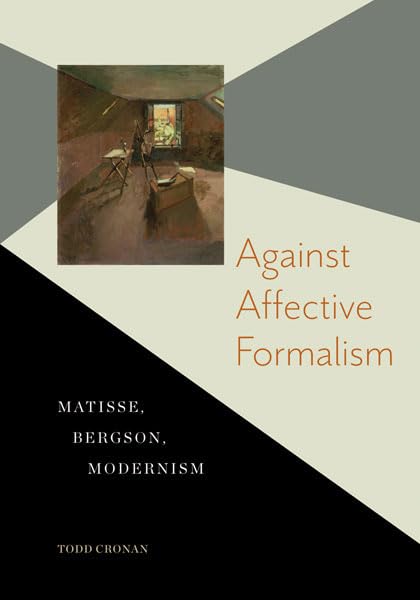
For nearly fifty years the humanities have been confined by a series of critiques: of the subject, of representation, of the visual, of modernism, of autonomy, of intention, of art itself. In their place various "materialities" have appeared: signs, identities, bodies, history, and works. Against Affective Formalism challenges these orthodoxies."What I am after, above all, is expression," Henri Matisse declared. Matisse believed that through the careful arrangement of line and color he could transmit his feelings directly to the minds and bodies of his viewers. Yet Matisse continually struggled with the reality that his feelings were misunderstoodor simply ignoredby viewers of his art. Matisse oscillates between a desire for expressive command over the viewer and a sense of the impossibility of making himself known.Against Affective Formalism confronts modernism's dissatisfactions with representation. As Todd Cronan explains, a central tenet of modernist thought turns on the effort to overcome representation in the name of something more explicit in its capacity to generate bodily or affective experience. Henri Bergson was one of the most influential advocates of the antirepresentational impulse; his novel theories of memory and freedom gripped a generation of writers, philosophers, psychologists, and artists. Matisse and Bergson worked within and against the context of form and expression that remains in force today.Writing in opposition to prevailing theories and assumptions about the relation of intention and formmost of which accept the "death of the author" as a basic fact of interpretationCronan argues that the beholder's response to art, outside a framework of intentionality, is irrelevant to a work's meaning. Intentions are not a matter of method at all: no letter, biography, document, archive, or key will recover an intention. What matters is that intentions make works of art different from objects in the world.
⚠️ WARNING (California Proposition 65):
This product may contain chemicals known to the State of California to cause cancer, birth defects, or other reproductive harm.
For more information, please visit www.P65Warnings.ca.gov.