
Title
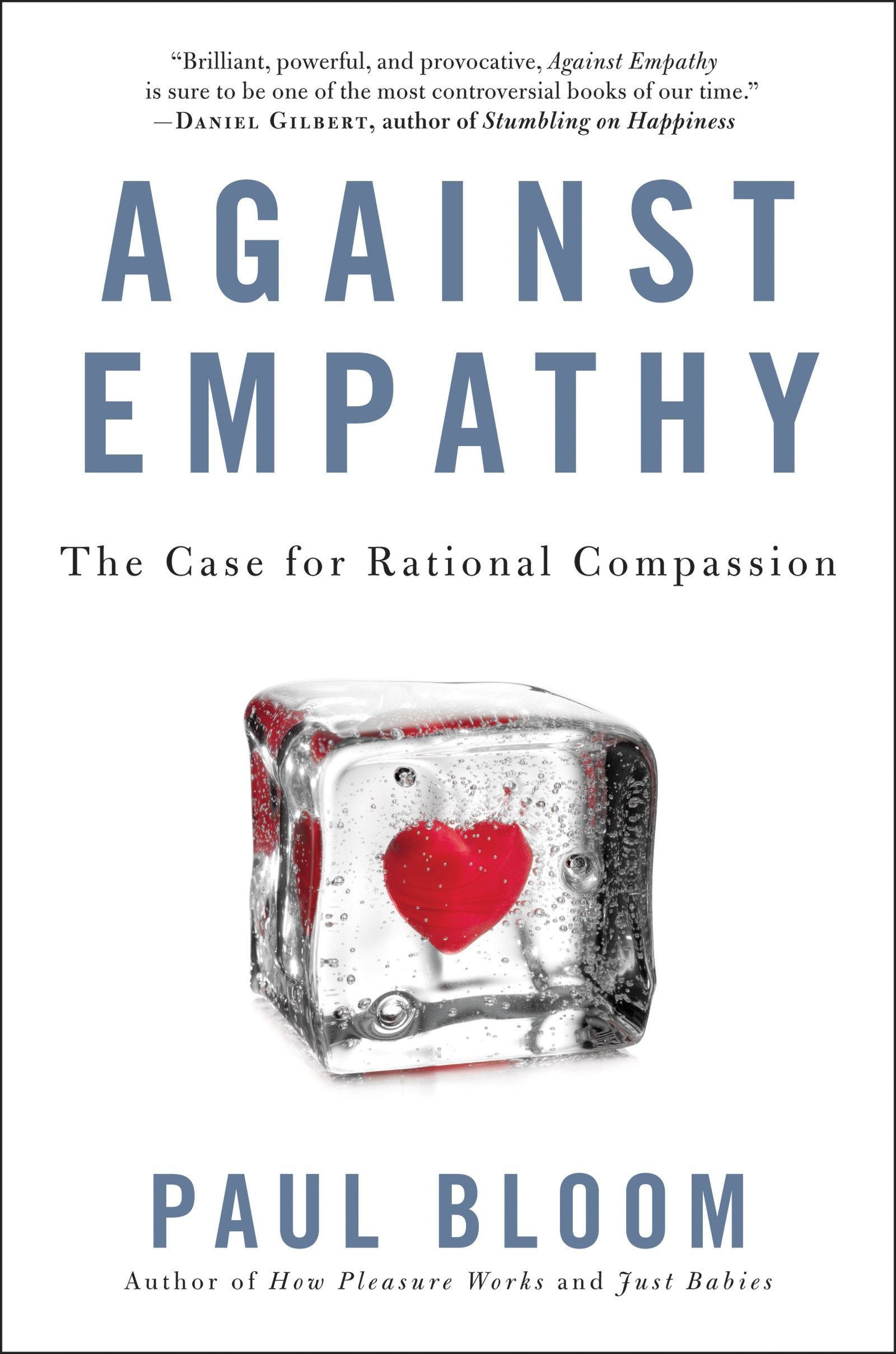
Against Empathy: The Case For Rational Compassion,Used
Sold by Ergodebooks, an authorized reseller.
Returns accepted within 30 days | support@ergodebooks.com
Shipping Information
- Free Standard Shipping — United States only
- Processing Time: 3–5 business days
- Estimated Delivery: 6–10 business days after dispatch
- Double-boxed, fully insured & discreetly packaged
- Tracking number sent via email once dispatched
Returns & Refund
Returns accepted within 30 days of delivery.
Damaged or Defective Item
Free return shipping + replacement or full refund
Wrong Item Received
Free return shipping + replacement or full refund
Change of Mind
Return shipping at customer's expense · 25% restocking fee applies
Payment Option

New York Post Best Book Of 2016We Often Think Of Our Capacity To Experience The Suffering Of Others As The Ultimate Source Of Goodness. Many Of Our Wisest Policymakers, Activists, Scientists, And Philosophers Agree That The Only Problem With Empathy Is That We Dont Have Enough Of It.Nothing Could Be Further From The Truth, Argues Yale Researcher Paul Bloom. In Against Empathy, Bloom Reveals Empathy To Be One Of The Leading Motivators Of Inequality And Immorality In Society. Far From Helping Us To Improve The Lives Of Others, Empathy Is A Capricious And Irrational Emotion That Appeals To Our Narrow Prejudices. It Muddles Our Judgment And, Ironically, Often Leads To Cruelty. We Are At Our Best When We Are Smart Enough Not To Rely On It, But To Draw Instead Upon A More Distanced Compassion.Basing His Argument On Groundbreaking Scientific Findings, Bloom Makes The Case That Some Of The Worst Decisions Made By Individuals And Nationswho To Give Money To, When To Go To War, How To Respond To Climate Change, And Who To Imprisonare Too Often Motivated By Honest, Yet Misplaced, Emotions. With Precision And Wit, He Demonstrates How Empathy Distorts Our Judgment In Every Aspect Of Our Lives, From Philanthropy And Charity To The Justice System; From Medical Care And Education To Parenting And Marriage. Without Empathy, Bloom Insists, Our Decisions Would Be Clearer, Fairer, Andyesultimately More Moral.Brilliantly Argued, Urgent And Humane, Against Empathy Shows Us That, When It Comes To Both Major Policy Decisions And The Choices We Make In Our Everyday Lives, Limiting Our Impulse Toward Empathy Is Often The Most Compassionate Choice We Can Make.
⚠️ WARNING (California Proposition 65):
This product may contain chemicals known to the State of California to cause cancer, birth defects, or other reproductive harm.
For more information, please visit www.P65Warnings.ca.gov.
- Q: How many pages are in 'Against Empathy'? A: There are three hundred four pages in 'Against Empathy'. This hardcover book provides extensive insights into the author's arguments against traditional empathy.
- Q: What are the dimensions of 'Against Empathy'? A: The dimensions of the book are approximately zero point nine one inches in thickness, five point two inches in width, and seven point nine one inches in height. These measurements make it a compact and easy-to-handle read.
- Q: Who is the author of 'Against Empathy'? A: The author of 'Against Empathy' is Paul Bloom. He is a Yale researcher known for his work on psychology and moral philosophy.
- Q: What is the main theme of 'Against Empathy'? A: The main theme is that empathy can lead to inequality and poor decision-making. Paul Bloom argues for a more rational approach to compassion.
- Q: What type of binding does 'Against Empathy' have? A: This book is bound in hardcover. The hardcover format adds durability and a premium feel to the reading experience.
- Q: Is 'Against Empathy' suitable for young readers? A: No, 'Against Empathy' is not specifically aimed at young readers. It deals with complex themes that may be more suitable for adults and older teens.
- Q: How should I read 'Against Empathy' to understand it better? A: Reading 'Against Empathy' slowly and thoughtfully is recommended to fully grasp the author's arguments. Taking notes can also help in retaining key points.
- Q: Is 'Against Empathy' a good choice for book clubs? A: Yes, 'Against Empathy' is an excellent choice for book clubs. Its thought-provoking content encourages rich discussions about morality and decision-making.
- Q: How should I store 'Against Empathy' to keep it in good condition? A: To keep 'Against Empathy' in good condition, store it upright on a shelf away from direct sunlight. Avoid stacking heavy items on top of it.
- Q: Can I clean 'Against Empathy' if it gets dirty? A: Yes, you can clean 'Against Empathy' gently. Use a dry cloth to wipe off any dust or smudges, taking care not to damage the cover.
- Q: What should I do if 'Against Empathy' arrives damaged? A: If 'Against Empathy' arrives damaged, you should contact the seller for a return or exchange. Most sellers have policies in place for such situations.
- Q: Is there a warranty for 'Against Empathy'? A: No, there is typically no warranty for books like 'Against Empathy'. However, check with the retailer for specific return policies.
- Q: How does 'Against Empathy' compare to other psychology books? A: Compared to other psychology books, 'Against Empathy' uniquely challenges the traditional view of empathy, making it a standout for readers interested in moral philosophy.
- Q: What audience is 'Against Empathy' best suited for? A: The book is best suited for adults and readers interested in psychology, philosophy, and ethics. It appeals to those questioning the role of empathy in society.
- Q: Does 'Against Empathy' reference scientific studies? A: Yes, 'Against Empathy' references numerous scientific studies to support its arguments. Paul Bloom uses empirical evidence to discuss the impact of empathy.