
Title
Aggressive Nationalism: McCulloch v. Maryland and the Foundation of Federal Authority in the Young Republic,Used
Sold by Ergodebooks, an authorized reseller.
Returns accepted within 30 days | support@ergodebooks.com
Shipping Information
- Free Standard Shipping — United States only
- Processing Time: 3–5 business days
- Estimated Delivery: 6–10 business days after dispatch
- Double-boxed, fully insured & discreetly packaged
- Tracking number sent via email once dispatched
Returns & Refund
Returns accepted within 30 days of delivery.
Damaged or Defective Item
Free return shipping + replacement or full refund
Wrong Item Received
Free return shipping + replacement or full refund
Change of Mind
Return shipping at customer's expense · 25% restocking fee applies
Payment Option

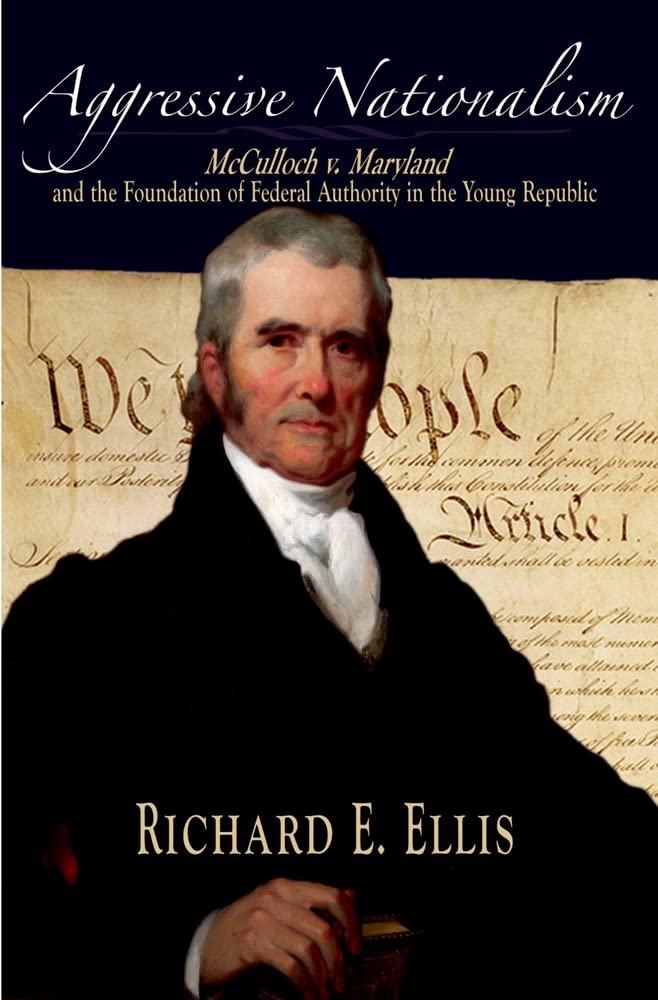
McCulloch v. Maryland (1819) has long been recognized to be one of the most significant decisions ever handed down by the United States Supreme Court. Indeed, many scholars have argued it is the greatest opinion handed down by the greatest Chief Justice, in which he declared the act creating the Second Bank of the United States constitutional and Maryland's attempt to tax it unconstitutional. Although it is now recognized as the foundational statement for a strong and active federal government, the immediate impact of the ruling was shortlived and widely criticized.Placing the decision and the public reaction to it in their proper historical context, Richard E. Ellis finds that Maryland, though unopposed to the Bank, helped to bring the case before the Court and a sympathetic Chief Justice, who worked behind the scenes to save the embattled institution. Almost all treatments of the case consider it solely from Marshall's perspective, yet a careful examination reveals other, even more important issues that the Chief Justice chose to ignore. Ellis demonstrates that the points which mattered most to the States were not treated by the Court's decision: the private, profitmaking nature of the Second Bank, its right to establish branches wherever it wanted with immunity from state taxation, and the right of the States to tax the Bank simply for revenue purposes. Addressing these issues would have undercut Marshall's nationalist view of the Constitution, and his unwillingness to adequately deal with them produced immediate, widespread, and varied dissatisfaction among the States. Ellis argues that Marshall's 'aggressive nationalism' was ultimately counterproductive: his overreaching led to Jackson's democratic rejection of the decision and failed to reconcile states' rights to the effective operation of the institutions of federal governance.Elegantly written, full of new information, and the first indepth examination of McCulloch v. Maryland, Aggressive Nationalism offers an incisive, fresh interpretation of this familiar decision central to understanding the shifting politics of the early republic as well as the development of federalstate relations, a source of constant division in American politics, past and present.
⚠️ WARNING (California Proposition 65):
This product may contain chemicals known to the State of California to cause cancer, birth defects, or other reproductive harm.
For more information, please visit www.P65Warnings.ca.gov.