
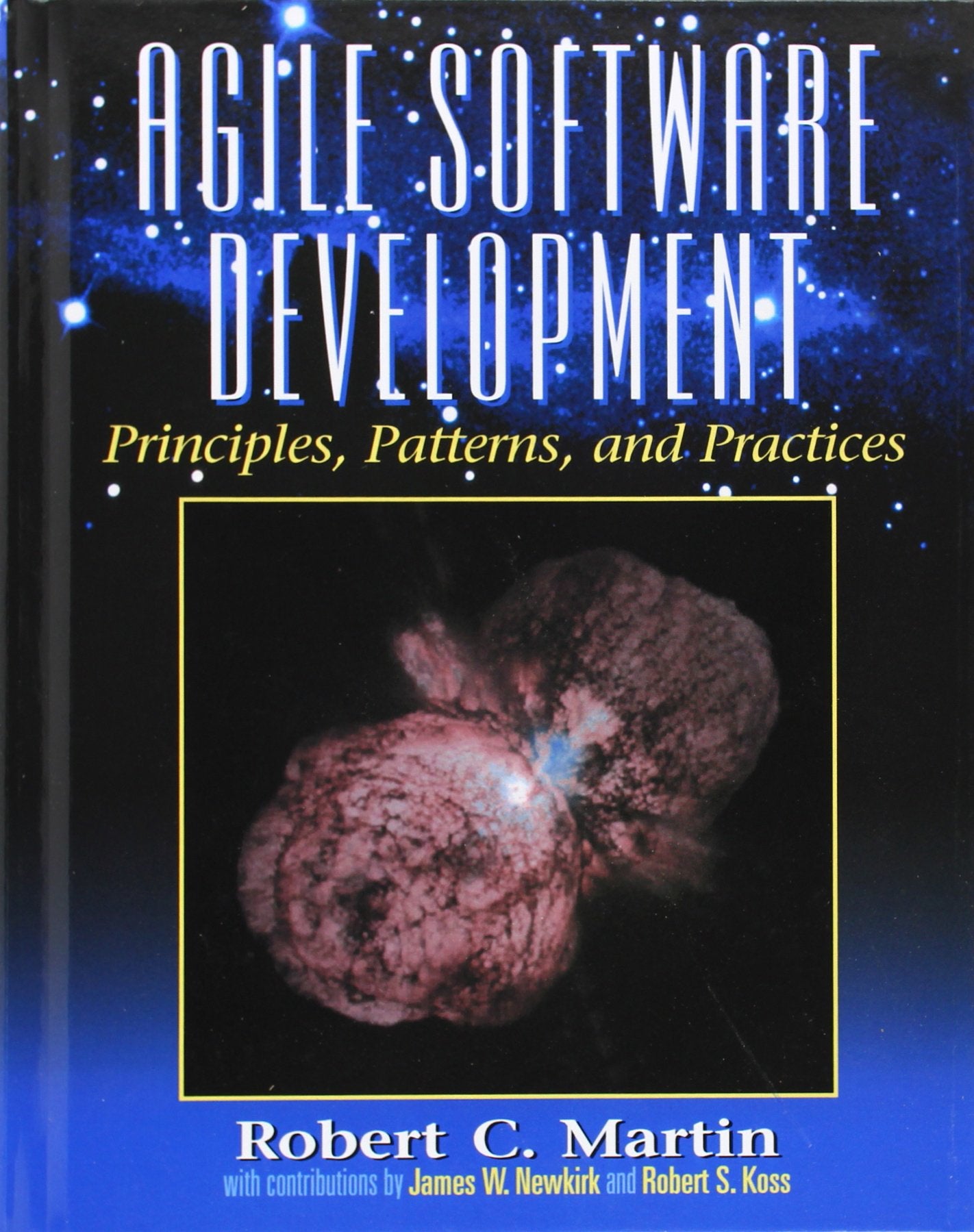
Title
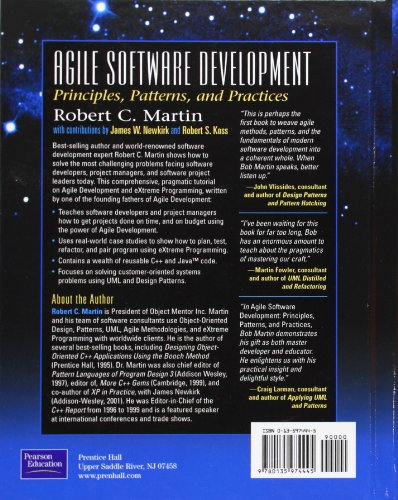

Agile Software Development, Principles, Patterns, and Practices,New
Sold by Ergodebooks, an authorized reseller.
Returns accepted within 30 days | support@ergodebooks.com
Shipping Information
- Free Standard Shipping — United States only
- Processing Time: 3–5 business days
- Estimated Delivery: 6–10 business days after dispatch
- Double-boxed, fully insured & discreetly packaged
- Tracking number sent via email once dispatched
Returns & Refund
Returns accepted within 30 days of delivery.
Damaged or Defective Item
Free return shipping + replacement or full refund
Wrong Item Received
Free return shipping + replacement or full refund
Change of Mind
Return shipping at customer's expense · 25% restocking fee applies
Payment Option

Written by a software developer for software developers, this book is a unique collection of the latest software development methods. The author includes OOD, UML, Design Patterns, Agile and XP methods with a detailed description of a complete software design for reusable programs in C++ and Java. Using a practical, problemsolving approach, it shows how to develop an objectoriented applicationfrom the early stages of analysis, through the lowlevel design and into the implementation. Walks readers through the designer's thoughts showing the errors, blind alleys, and creative insights that occur throughout the software design process. The book covers: Statics and Dynamics; Principles of Class Design; Complexity Management; Principles of Package Design; Analysis and Design; Patterns and Paradigm Crossings. Explains the principles of OOD, one by one, and then demonstrates them with numerous examples, completely workedthrough designs, and case studies. Covers traps, pitfalls, and work arounds in the application of C++ and OOD and then shows how Agile methods can be used. Discusses the methods for designing and developing big software in detail. Features a threechapter, indepth, single case study of a building security system. For Software Engineers, Programmers, and Analysts who want to understand how to design object oriented software with state of the art methods.
⚠️ WARNING (California Proposition 65):
This product may contain chemicals known to the State of California to cause cancer, birth defects, or other reproductive harm.
For more information, please visit www.P65Warnings.ca.gov.
- Q: What are the dimensions of the book? A: The book measures eight point fifteen inches in length, zero point ninety-five inches in width, and ten point fifty-one inches in height.
- Q: How many pages does this book have? A: This book contains five hundred fifty-two pages, providing a comprehensive guide to software development.
- Q: What type of binding does the book have? A: The book is bound in hardcover, ensuring durability and a professional appearance.
- Q: What is the reading level of this book? A: This book is suitable for software engineers, programmers, and analysts, typically at a college or professional level.
- Q: Is this book suitable for beginners in software development? A: No, this book is primarily designed for individuals with some prior knowledge of software development concepts.
- Q: How can I use this book effectively? A: To use this book effectively, read it sequentially from the beginning to understand the principles and methodologies of software design.
- Q: Does the book include practical examples? A: Yes, the book includes numerous examples, case studies, and worked-through designs to illustrate concepts.
- Q: What software languages are covered in the book? A: The book covers programming in C++ and Java, focusing on object-oriented design principles.
- Q: How should I store this book? A: Store the book upright on a shelf in a dry place to prevent damage to the hardcover binding.
- Q: Can I clean the book if it gets dirty? A: Yes, you can lightly wipe the cover with a damp cloth to clean it, but avoid using harsh chemicals.
- Q: What if the book arrives damaged? A: If the book arrives damaged, you can return it for a replacement or refund according to the retailer's return policy.
- Q: What if I have questions while reading the book? A: You can seek help from online forums or communities focused on software development for additional support.
- Q: Is there a warranty for this book? A: Typically, books do not come with a warranty, but check with the retailer for their specific policies.
- Q: Does this book discuss Agile methods? A: Yes, the book discusses Agile methods and how they can be applied in software development.
- Q: Are there case studies included in the book? A: Yes, the book features a three-chapter in-depth case study on a building security system.
- Q: What topics does the book cover? A: The book covers object-oriented design, UML, design patterns, complexity management, and much more.