
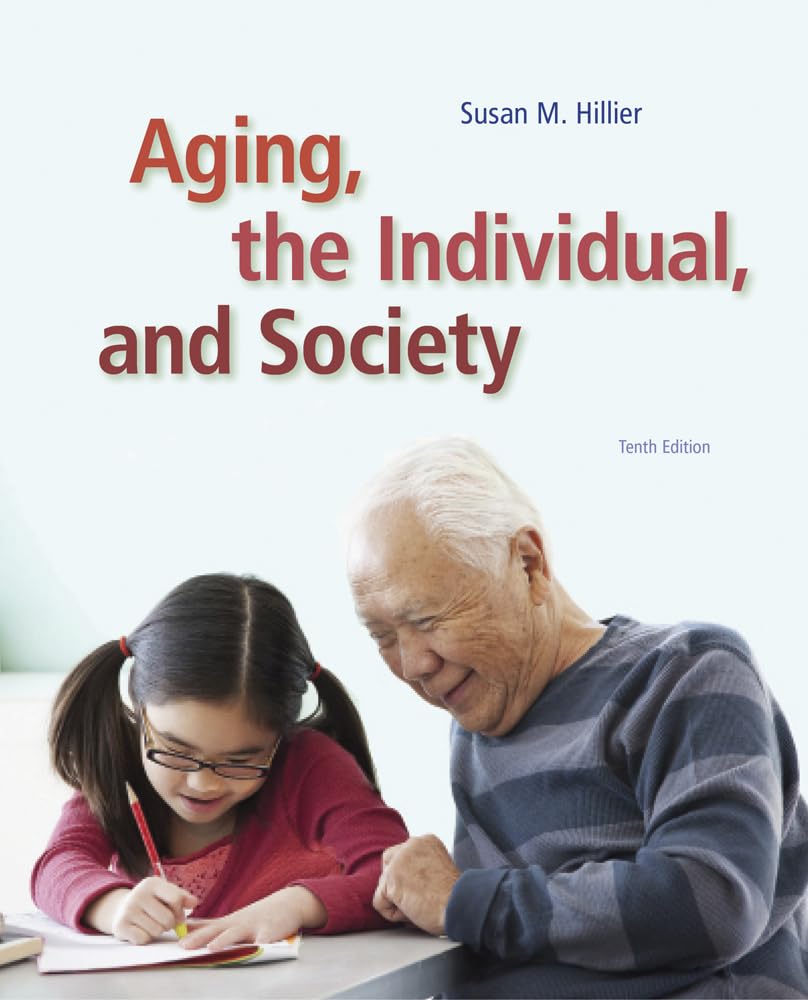
Title
Aging, The Individual, And Society
Sold by Ergodebooks, an authorized reseller.
Returns accepted within 30 days | support@ergodebooks.com
Shipping Information
- Free Standard Shipping — United States only
- Processing Time: 3–5 business days
- Estimated Delivery: 6–10 business days after dispatch
- Double-boxed, fully insured & discreetly packaged
- Tracking number sent via email once dispatched
Returns & Refund
Returns accepted within 30 days of delivery.
Damaged or Defective Item
Free return shipping + replacement or full refund
Wrong Item Received
Free return shipping + replacement or full refund
Change of Mind
Return shipping at customer's expense · 25% restocking fee applies
Payment Option

No Field Of Study More Completely Integrates The Mature Person Over The Life Course Than Does Gerontology. Understanding Senior Citizenswho Represent A Continually Growing Populationis Becoming Increasingly Important. Aging, The Individual, And Society Introduces Readers To Gerontology In A Compassionate Way That Helps Them Understand Older People And Know How To Work With Them. The Book Balances Academic Research And Practical Discussions, Integrating Social And Cultural Perspectives With The Story Of The Individual Aging Process. Activities And Enhance Reader'S Understanding And Skills By Providing Many Opportunities For Experiential Learning.
⚠️ WARNING (California Proposition 65):
This product may contain chemicals known to the State of California to cause cancer, birth defects, or other reproductive harm.
For more information, please visit www.P65Warnings.ca.gov.
- Q: How many pages does the book 'Aging, the Individual, and Society' have? A: The book has four hundred ninety-six pages. This comprehensive length allows for an in-depth exploration of gerontology.
- Q: What are the dimensions of 'Aging, the Individual, and Society'? A: The book measures seven point twenty-five inches in length, zero point seventy-five inches in width, and nine point zero two inches in height. These dimensions make it a manageable size for reading.
- Q: What type of binding does 'Aging, the Individual, and Society' have? A: The book is available in paperback binding. This type of binding is lightweight and flexible, making it easy to carry.
- Q: Who is the author of 'Aging, the Individual, and Society'? A: The author is Susan Hillier. She brings expertise in gerontology to the subject matter.
- Q: What is the main focus of 'Aging, the Individual, and Society'? A: The book focuses on gerontology and the aging process. It aims to help readers understand and work with older individuals.
- Q: Is 'Aging, the Individual, and Society' suitable for beginners in gerontology? A: Yes, it is suitable for beginners. The book introduces concepts in a compassionate way, making them accessible to those new to the field.
- Q: How can I apply the knowledge from 'Aging, the Individual, and Society'? A: You can apply the knowledge by engaging with older adults in various settings. The book offers practical discussions and activities to enhance understanding.
- Q: Is there any experiential learning involved in 'Aging, the Individual, and Society'? A: Yes, the book includes activities for experiential learning. These activities are designed to improve your skills in understanding aging.
- Q: What age group is 'Aging, the Individual, and Society' appropriate for? A: The book is appropriate for adults and higher education students. It provides a comprehensive look at the aging process.
- Q: How should I store 'Aging, the Individual, and Society' to keep it in good condition? A: Store the book in a cool, dry place away from direct sunlight. This will help preserve the binding and pages.
- Q: Can I return 'Aging, the Individual, and Society' if I am not satisfied? A: Yes, you can return the book if you are not satisfied. Check the specific retailer's return policy for details.
- Q: What if 'Aging, the Individual, and Society' arrives damaged? A: If it arrives damaged, you should contact customer service immediately. They will guide you through the return or exchange process.
- Q: Is 'Aging, the Individual, and Society' a scholarly book? A: Yes, it balances academic research with practical discussions. It integrates social and cultural perspectives on aging.
- Q: What makes 'Aging, the Individual, and Society' unique? A: Its compassionate approach to gerontology makes it unique. The integration of personal stories with research provides a holistic view.
- Q: Does 'Aging, the Individual, and Society' discuss cultural perspectives on aging? A: Yes, it integrates social and cultural perspectives. This helps readers understand the diverse experiences of aging individuals.