If you have any questions, you are always welcome to contact us. We'll get back to you as soon as possible, withing 24 hours on weekdays.
Customer service
All questions about your order, return and delivery must be sent to our customer service team by e-mail at yourstore@yourdomain.com
Sale & Press
If you are interested in selling our products, need more information about our brand or wish to make a collaboration, please contact us at press@yourdomain.com
Help
If you have any questions, you are always welcome to contact us. We'll get back to you as soon as possible, withing 24 hours on weekdays.
Customer service
All questions about your order, return and delivery must be sent to our customer service team by e-mail at yourstore@yourdomain.com
Sale & Press
If you are interested in selling our products, need more information about our brand or wish to make a collaboration, please contact us at press@yourdomain.com
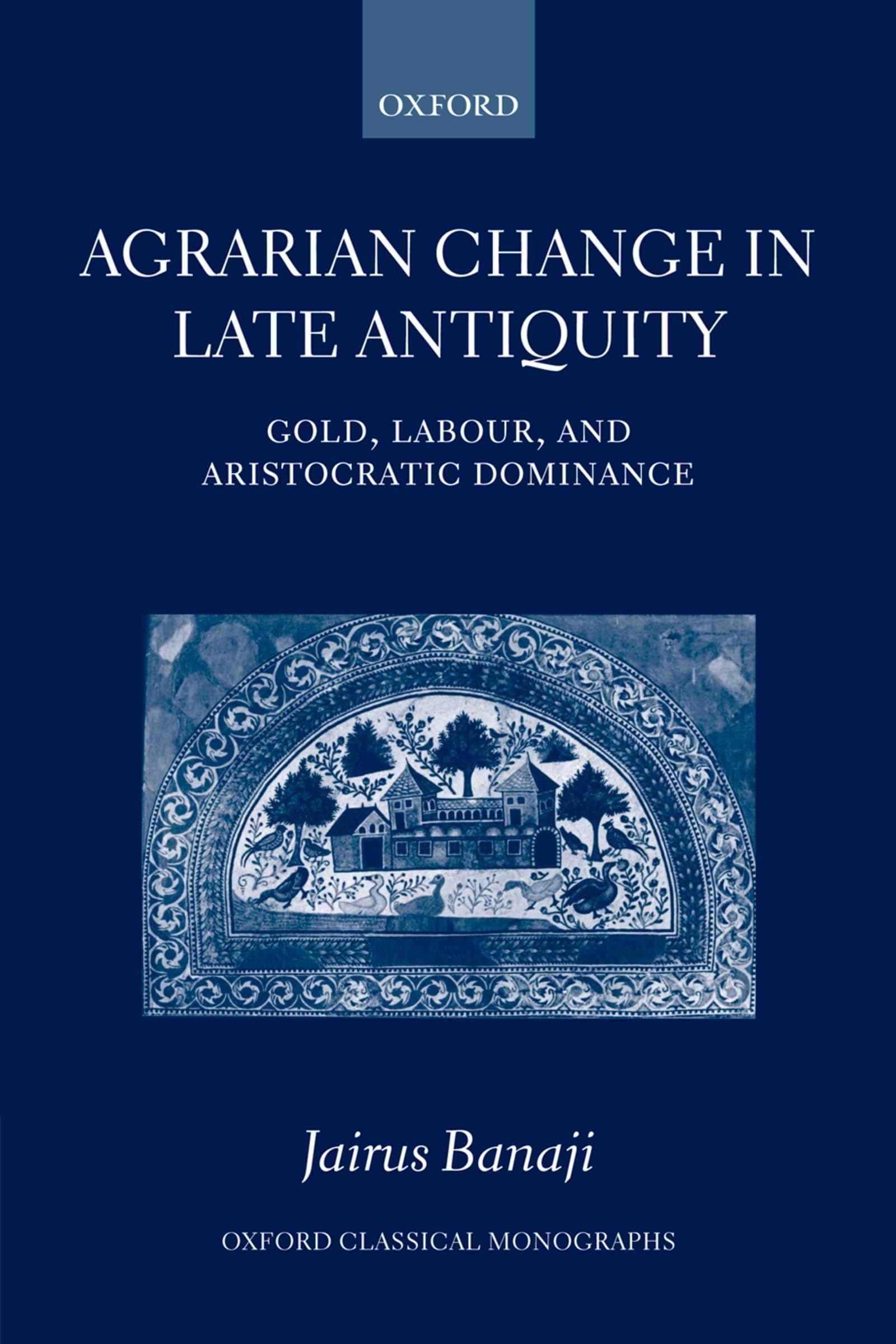
The economy of the late antique Mediterranean is still largely seen through the prism of Weber's influential essay of 1896. Rejecting that orthodoxy, Jairus Banaji argues that the late empire saw substantial economic and social change, propelled by the powerful stimulus of a stable gold coinage that circulated widely. In successive chapters Banaji adduces fresh evidence for the prosperity of the late Roman countryside, the expanding circulation of gold, the restructuring of agrarian lites, and the extensive use of paid labour, above all in the period spanning the fifth to seventh centuries. The papyrological evidence is scrutinized in detail to show that a key development entailed the rise of a new aristocracy whose estates were immune to the devastating fragmentation of partible inheritance, extensively irrigated, and responsive to market opportunities. A concluding chapter defines the more general issue raised by the aristocracy's involvement in the monetary and business economy of the period.Exploiting a wide range of sources, Agrarian Change in Late Antiquity weaves together different strands of historiography (Weber, Mickwitz, papyrology, agrarian history) into a fascinating interpretation that challenges the minimalist orthodoxies about late antiquity and the ancient economy more generally.
⚠️ WARNING (California Proposition 65):
This product may contain chemicals known to the State of California to cause cancer,
birth defects, or other reproductive harm.
For MAP (Minimum Advertised Price) violations and Intellectual Property (IP) or Trademark concerns, please contact:
support@ergodebooks.com
⚠️ California Proposition 65 Warning: Some products sold on this website may expose you to chemicals known to the State of California to cause cancer, birth defects, or other reproductive harm. For more information, visit www.P65Warnings.ca.gov.