
Title
Agrarian Crossings: Reformers and the Remaking of the US and Mexican Countryside (America in the World),Used
Sold by Ergodebooks, an authorized reseller.
Returns accepted within 30 days | support@ergodebooks.com
Shipping Information
- Free Standard Shipping — United States only
- Processing Time: 3–5 business days
- Estimated Delivery: 6–10 business days after dispatch
- Double-boxed, fully insured & discreetly packaged
- Tracking number sent via email once dispatched
Returns & Refund
Returns accepted within 30 days of delivery.
Damaged or Defective Item
Free return shipping + replacement or full refund
Wrong Item Received
Free return shipping + replacement or full refund
Change of Mind
Return shipping at customer's expense · 25% restocking fee applies
Payment Option

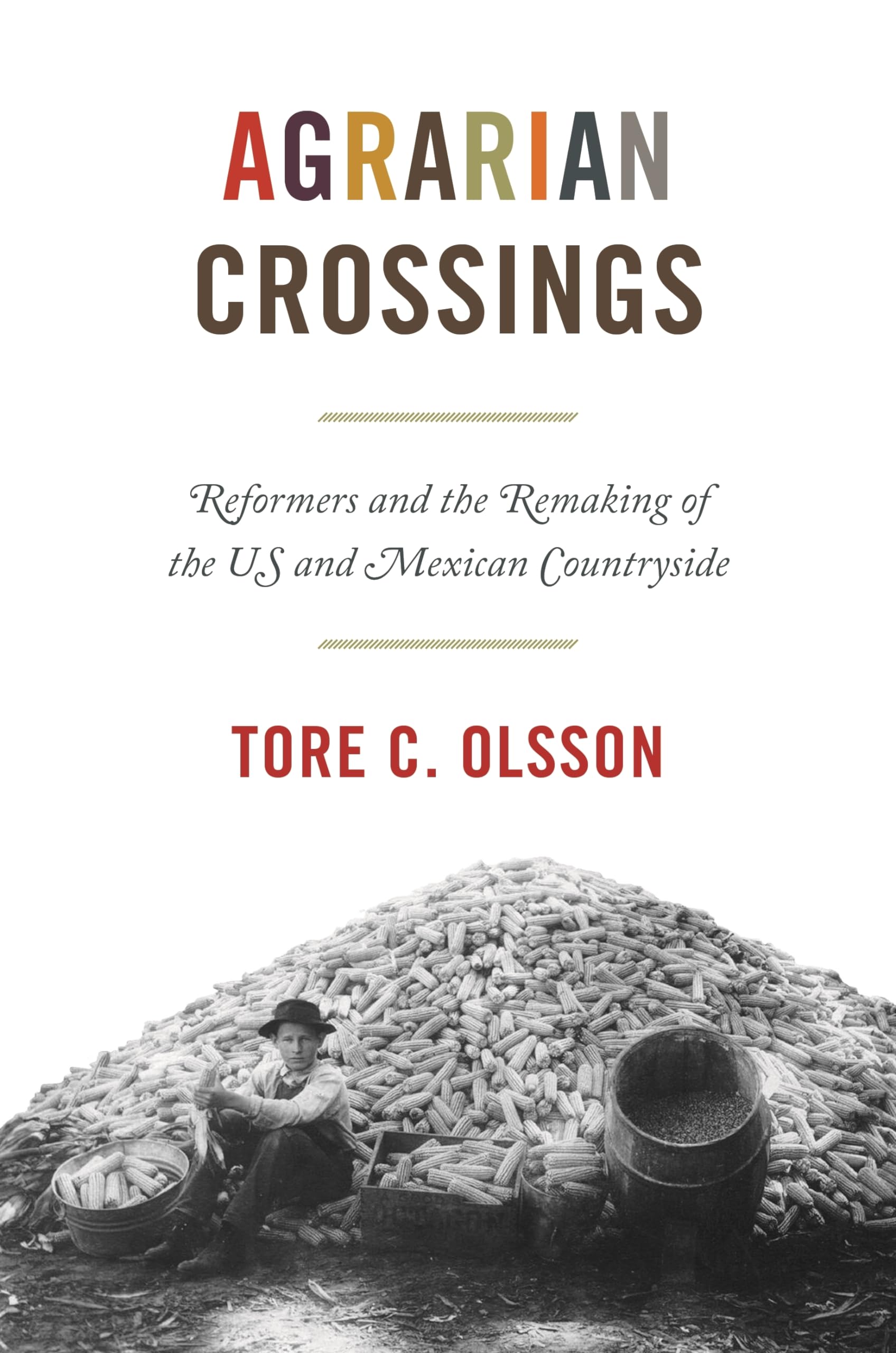
In the 1930s and 1940s, rural reformers in the United States and Mexico waged unprecedented campaigns to remake their countrysides in the name of agrarian justice and agricultural productivity. Agrarian Crossings tells the story of how these campaigns were conducted in dialogue with one another as reformers in each nation came to exchange models, plans, and strategies with their equivalents across the border.Dismantling the artificial boundaries that can divide American and Latin American history, Tore Olsson shows how the agrarian histories of both regions share far more than we realize. He traces the connections between the US South and the plantation zones of Mexico, places that suffered parallel problems of environmental decline, rural poverty, and gross inequities in land tenure. Bringing this tumultuous era vividly to life, he describes how Roosevelts New Deal drew on Mexican revolutionary agrarianism to shape its program for the rural South. Olsson also looks at how the US South served as the domestic laboratory for the Rockefeller Foundations green revolution in Mexicowhich would become the most important Third World development campaign of the twentieth centuryand how the Mexican government attempted to replicate the hydraulic development of the Tennessee Valley Authority after World War II.Rather than a comparative history, Agrarian Crossings is an innovative history of comparisons and the ways they affected policy, moved people, and reshaped the landscape.
⚠️ WARNING (California Proposition 65):
This product may contain chemicals known to the State of California to cause cancer, birth defects, or other reproductive harm.
For more information, please visit www.P65Warnings.ca.gov.
- Q: What is the page count of 'Agrarian Crossings'? A: The book has two hundred ninety-six pages. It provides a comprehensive exploration of rural reform movements in the United States and Mexico.
- Q: What are the dimensions of 'Agrarian Crossings'? A: The book measures six point twenty-six inches in length, zero point seventy-five inches in width, and nine point twenty-five inches in height. These dimensions make it a standard-sized paperback.
- Q: What is the binding type of 'Agrarian Crossings'? A: The book is published in paperback binding. This makes it lightweight and easy to handle for readers.
- Q: Who is the author of 'Agrarian Crossings'? A: The author is Tore C. Olsson. He presents a detailed analysis of agrarian history in the United States and Mexico.
- Q: What category does 'Agrarian Crossings' fall under? A: The book is categorized under Mexico. It explores historical contexts relevant to both the US and Mexican countryside.
- Q: Is 'Agrarian Crossings' suitable for academic study? A: Yes, it is suitable for academic study. The book provides in-depth historical analysis and could be valuable for students and researchers.
- Q: What themes are explored in 'Agrarian Crossings'? A: The book explores themes of agrarian justice, agricultural productivity, and the exchange of ideas between the US and Mexico. It highlights the shared struggles of rural reformers.
- Q: How does 'Agrarian Crossings' relate to environmental issues? A: The book discusses environmental decline and rural poverty as critical issues faced by both the US South and Mexican countryside. It emphasizes the importance of sustainable practices.
- Q: What historical period does 'Agrarian Crossings' cover? A: It covers the 1930s and 1940s. This period was marked by significant rural reform movements in both the US and Mexico.
- Q: Does 'Agrarian Crossings' discuss the New Deal? A: Yes, it discusses how Roosevelt’s New Deal was influenced by Mexican revolutionary agrarianism. It highlights the connections between the two nations' policies.
- Q: Can 'Agrarian Crossings' be recommended for general readers? A: Yes, it can be recommended for general readers. The narrative is engaging and accessible, making it interesting for anyone curious about agricultural history.
- Q: What type of reader would enjoy 'Agrarian Crossings'? A: Readers interested in history, agriculture, or social justice would enjoy this book. It provides insights into the challenges and reforms of rural communities.
- Q: Is there a focus on land tenure issues in 'Agrarian Crossings'? A: Yes, land tenure issues are a significant focus. The book examines the inequities in land distribution and tenure in both the US and Mexico.
- Q: How does 'Agrarian Crossings' depict the relationship between the US and Mexico? A: It depicts the relationship as interconnected, illustrating how reformers exchanged ideas and strategies across the border. This dialogue shaped agricultural policies in both nations.
- Q: What makes 'Agrarian Crossings' innovative in its approach? A: The book offers a history of comparisons rather than a straightforward comparative history. This innovative approach reveals the interconnectedness of agrarian movements.