
Title
Agribusiness And Innovation Systems In Africa (Agriculture And Food Series)
Sold by Ergodebooks, an authorized reseller.
Returns accepted within 30 days | support@ergodebooks.com
Shipping Information
- Free Standard Shipping — United States only
- Processing Time: 3–5 business days
- Estimated Delivery: 6–10 business days after dispatch
- Double-boxed, fully insured & discreetly packaged
- Tracking number sent via email once dispatched
Returns & Refund
Returns accepted within 30 days of delivery.
Damaged or Defective Item
Free return shipping + replacement or full refund
Wrong Item Received
Free return shipping + replacement or full refund
Change of Mind
Return shipping at customer's expense · 25% restocking fee applies
Payment Option

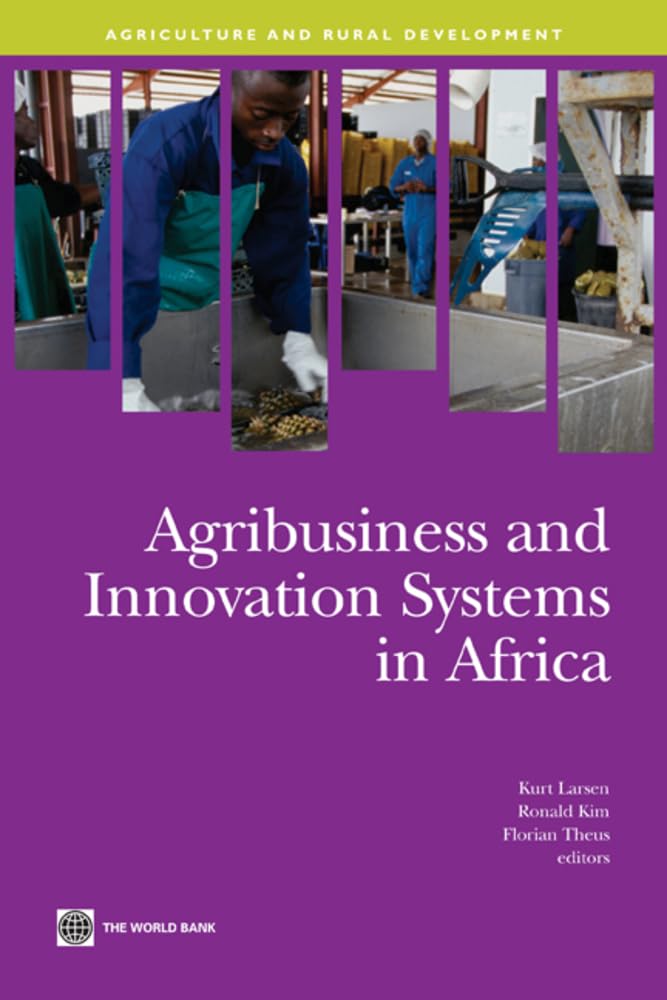
This Book Examines How Agricultural Innovation Arises In Four African Countries Ghana, Kenya, Tanzania, And Uganda Through The Lens Of Agribusiness, Public Policies, And Specific Value Chains For Food Staples, High Value Products, And Livestock. Determinants Of Innovation Are Not Viewed Individually But Within The Context Of A Complex Agricultural Innovation System Involving Many Actors And Interactions. The Volume Is Based On Qualitative Interviews With Agribusiness Representatives That Were Designed To Shed Light On Their Experiences On Public Policies That Either Enhances Or Impedes Innovation In Africa S Agriculture Sector. Following Are The Volume'S Main Messages On Policies, Institutions And Strategies That Nurture Innovation In The Agriculture Sector: 1) Agribusiness Innovation Is In Many Cases Driven By The Need To Maintain Grades And Standards Within The Value Chain, Not Only In The Case Of Export Markets, But Also In Evolving Domestic And Urban Markets And Value Chains; 2) That Staple Food Sector Has Potential To Be A Source Of Growth, Innovation And Poverty Reduction; 3) Successes In Value Chain Innovation And Agribusiness Production Depend Critically On The Structure Of The Whole Agricultural Innovation System And Are Highly Context Specific; 4) Especially Successful Innovation Were Dependent On Creating Synergies Between Marketbased And Knowledgebased Interactions And Strong Linkages Within And Beyond The Value Chain; And 5) The Public Sector S Innovation Support Has To Extend To Interactions, Collective Action And Broader Publicprivate Partnership Programs. This Book Will Be Of Interest To Policymakers, Agribusiness Leaders, Farmer Organizations, Ngos, And Researchers.
⚠️ WARNING (California Proposition 65):
This product may contain chemicals known to the State of California to cause cancer, birth defects, or other reproductive harm.
For more information, please visit www.P65Warnings.ca.gov.
- Q: How many pages are in this book? A: The book contains two hundred thirty-eight pages. It provides in-depth insights into agribusiness and innovation systems in Africa.
- Q: What is the binding type of this book? A: This book is published in paperback. The paperback binding makes it lightweight and portable for easy reading.
- Q: Who is the author of this book? A: The author of this book is Kurt Larsen. He explores agricultural innovation in four African countries.
- Q: What age group is this book suitable for? A: This book is suitable for adults and researchers. It offers advanced insights into agribusiness and public policies.
- Q: Can this book be used as a textbook? A: Yes, this book can be used as a textbook. It is ideal for courses related to agriculture, innovation, and development.
- Q: How should I store this book? A: Store the book in a cool, dry place. Keeping it away from direct sunlight will help preserve its condition.
- Q: Are there any special care instructions for this book? A: No special care instructions are needed. Just handle it with clean hands and avoid exposure to moisture.
- Q: What if the book arrives damaged? A: If the book arrives damaged, you can return it within the return policy period. Contact the seller for further instructions.
- Q: Is there a warranty for this book? A: No, there is no warranty for this book. However, you can check the seller's return policy for any issues.
- Q: How does this book compare to others in its genre? A: This book stands out for its focus on African agribusiness innovation systems. It provides unique insights that may not be found in other texts.
- Q: Is this book appropriate for beginners in agribusiness? A: This book is more suited for those with some background in agribusiness. It delves into complex systems and policies.
- Q: What themes does this book cover? A: The book covers themes of agribusiness, innovation systems, and public policies in Africa. It provides valuable insights into various agricultural value chains.
- Q: What kind of policies does the book discuss? A: The book discusses public policies that enhance or impede innovation in agriculture. It emphasizes the need for supportive frameworks.
- Q: Does this book include case studies? A: Yes, the book includes qualitative interviews and case studies from agribusiness representatives. These illustrate real-world challenges and successes.
- Q: What is the primary audience for this book? A: The primary audience includes policymakers, agribusiness leaders, and researchers. It's designed for those involved in agriculture and development sectors.