
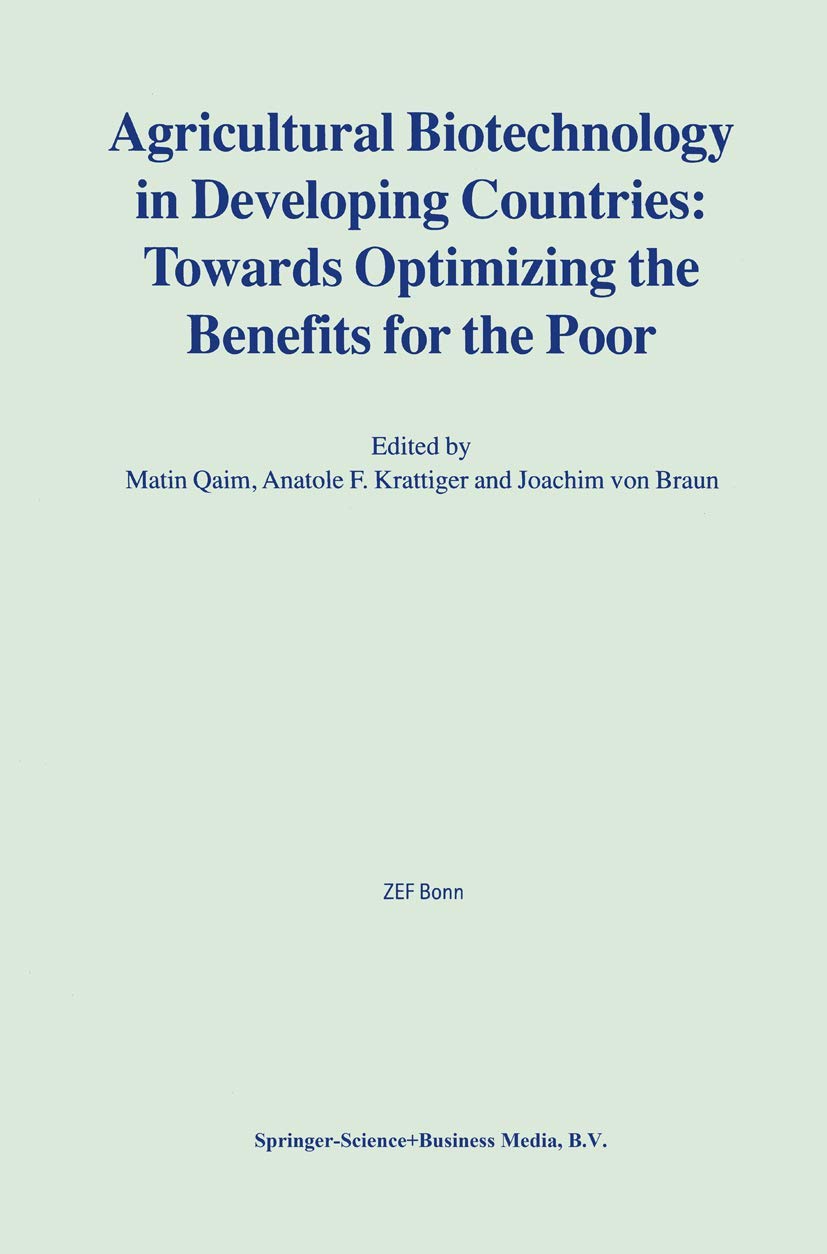
Title
Agricultural Biotechnology In Developing Countries: Towards Optimizing The Benefits For The Poor,New
Sold by Ergodebooks, an authorized reseller.
Returns accepted within 30 days | support@ergodebooks.com
Shipping Information
- Free Standard Shipping — United States only
- Processing Time: 3–5 business days
- Estimated Delivery: 6–10 business days after dispatch
- Double-boxed, fully insured & discreetly packaged
- Tracking number sent via email once dispatched
Returns & Refund
Returns accepted within 30 days of delivery.
Damaged or Defective Item
Free return shipping + replacement or full refund
Wrong Item Received
Free return shipping + replacement or full refund
Change of Mind
Return shipping at customer's expense · 25% restocking fee applies
Payment Option

Biotechnology Offers Great Potential To Contribute To Sustainable Agricultural Growth, Food Security And Poverty Alleviation In Developing Countries. Yet There Are Economic And Institutional Constraints At National And International Levels That Inhibit The Poor People'S Access To Appropriate Biotechnological Innovations. Agricultural Biotechnology In Developing Countries: Towards Optimizing The Benefits For The Poor Addresses The Major Constraints. Twentythree Chapters, Written By A Wide Range Of Scholars And Stakeholders, Provide An Uptodate Analysis Of Agricultural Biotechnology Developments In Latin America, Africa And Asia. Besides The Expected Economic And Social Impacts, The Challenges For An Adjustment Of The International Research Structure Are Discussed, With A Special Focus On Intellectual Property Rights And The Roles Of The Main Research Organizations. Harnessing The Comparative Advantages Of The Public And Private Sectors Through Innovative Partnerships Is The Only Way Forward To Optimize The Benefits Of Biotechnology For The Poor. The Book Will Be An Invaluable Resource For Both Academics And Policymakers Concerned With Agricultural Biotechnology In Context Of Developingcountries.
⚠️ WARNING (California Proposition 65):
This product may contain chemicals known to the State of California to cause cancer, birth defects, or other reproductive harm.
For more information, please visit www.P65Warnings.ca.gov.
- Q: How many pages does the book have? A: This book has four hundred forty-four pages. It provides comprehensive insights into agricultural biotechnology in developing countries.
- Q: What is the binding type of this book? A: This book is hardcover. The durable binding ensures longevity and makes it suitable for extensive use.
- Q: What are the dimensions of the book? A: The book measures six point fourteen inches in length, one inch in width, and nine point twenty-one inches in height. These dimensions make it easy to handle and store.
- Q: How can I use this book for my studies? A: You can use this book as a resource for academic research on agricultural biotechnology. It includes insights from various scholars and stakeholders.
- Q: Is this book suitable for beginners in biotechnology? A: Yes, this book is suitable for beginners. It covers fundamental concepts and provides a comprehensive overview of the field.
- Q: What is the reading level of this book? A: The book is aimed at a scholarly audience, suitable for undergraduate and graduate students. It contains technical discussions and analyses.
- Q: How should I store this book to keep it in good condition? A: Store the book in a cool, dry place away from direct sunlight. This will help maintain its binding and prevent fading.
- Q: Can I clean the book if it gets dirty? A: Yes, you can gently wipe the cover with a soft, dry cloth. Avoid using water or cleaning solutions to prevent damage.
- Q: Does the book contain any hazardous materials? A: No, the book does not contain any hazardous materials. It is safe for general reading and educational use.
- Q: What if my book arrives damaged? A: If your book arrives damaged, you should contact the seller for a return or replacement. Most sellers have policies for handling such issues.
- Q: Is there a warranty for this book? A: No, books typically do not come with warranties. However, check your seller's return policy for options.
- Q: How does this book compare to others in its genre? A: This book stands out for its comprehensive analysis of agricultural biotechnology in developing countries. It includes contributions from a diverse range of experts.
- Q: Is this book recommended for policy makers? A: Yes, this book is highly recommended for policy makers. It addresses economic and institutional constraints relevant to agricultural biotechnology.
- Q: What topics are covered in the book? A: The book covers a variety of topics including economic impacts, social implications, and challenges in the biotechnology sector.
- Q: Who is the author of this book? A: The author of this book is Matin Qaim. He is a recognized scholar in the field of agricultural biotechnology.