If you have any questions, you are always welcome to contact us. We'll get back to you as soon as possible, withing 24 hours on weekdays.
Customer service
All questions about your order, return and delivery must be sent to our customer service team by e-mail at yourstore@yourdomain.com
Sale & Press
If you are interested in selling our products, need more information about our brand or wish to make a collaboration, please contact us at press@yourdomain.com
Help
If you have any questions, you are always welcome to contact us. We'll get back to you as soon as possible, withing 24 hours on weekdays.
Customer service
All questions about your order, return and delivery must be sent to our customer service team by e-mail at yourstore@yourdomain.com
Sale & Press
If you are interested in selling our products, need more information about our brand or wish to make a collaboration, please contact us at press@yourdomain.com
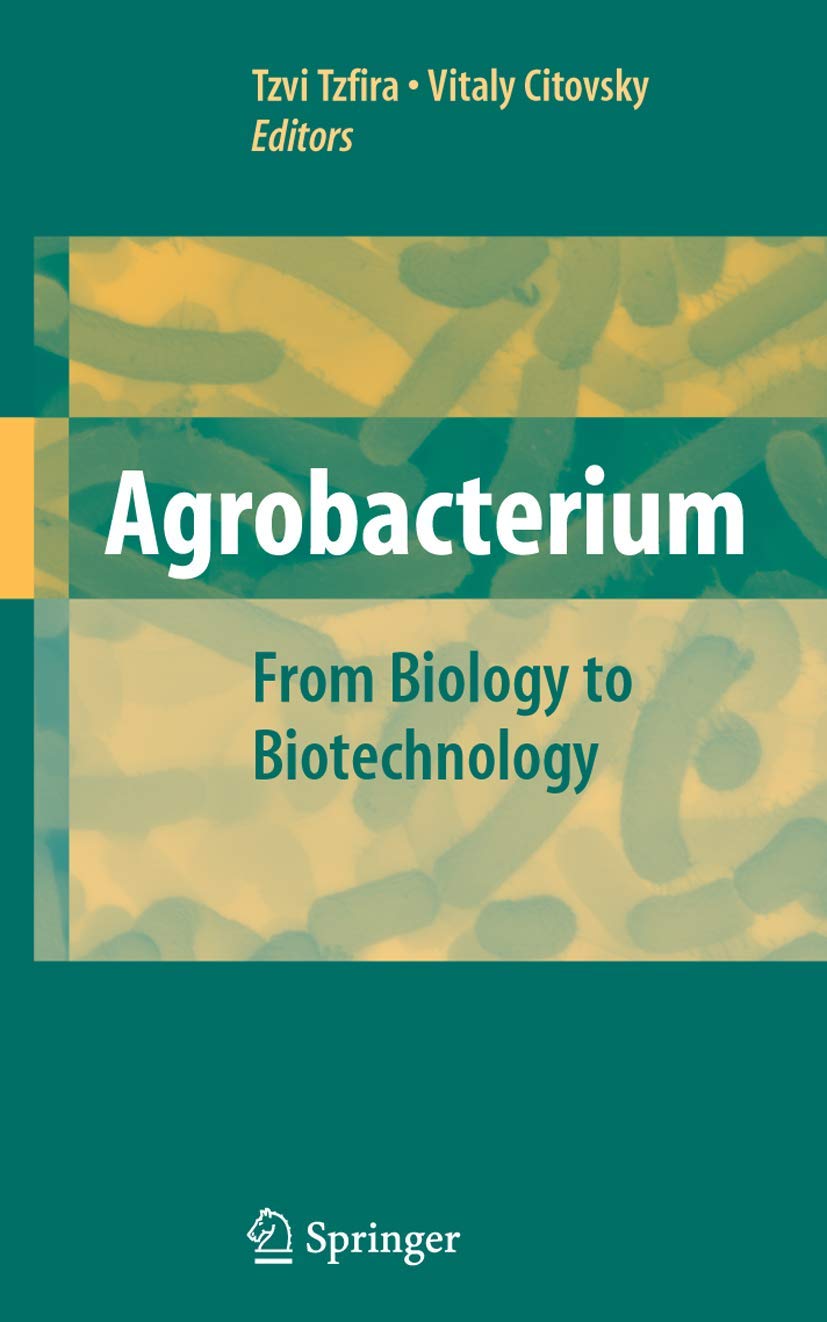
Agrobacterium is a plant pathogen which causes the crowngall disease, a neoplastic growth that results from the transfer of a welldefined DNA segment (transferred DNA, or TDNA) from the bacterial Ti (tumorinducing) plasmid to the host cell, its integration into the host genome, and the expression of oncogenes contained on the TDNA. The molecular machinery, needed for TDNA generation and transport into the host cell and encoded by a series of chromosomal (chv) and Tiplasmid virulence (vir) genes, has been the subject of numerous studies over the past several decades. Today, Agrobacterium is the tool of choice for plant genetic engineering with an ever expanding host range that includes many commercially important crops, flowers, and tree species. Furthermore, its recent application for the genetic transformation of nonplant species, from yeast to cultivated mushrooms and even to human cells, promises this bacterium a unique place in the future of biotechnological applications.The book is a comprehensive volume describing Agrobacterium's biology, interactions with host species, and uses for genetic engineering.
⚠️ WARNING (California Proposition 65):
This product may contain chemicals known to the State of California to cause cancer,
birth defects, or other reproductive harm.
For MAP (Minimum Advertised Price) violations and Intellectual Property (IP) or Trademark concerns, please contact:
support@ergodebooks.com
⚠️ California Proposition 65 Warning: Some products sold on this website may expose you to chemicals known to the State of California to cause cancer, birth defects, or other reproductive harm. For more information, visit www.P65Warnings.ca.gov.