If you have any questions, you are always welcome to contact us. We'll get back to you as soon as possible, withing 24 hours on weekdays.
Customer service
All questions about your order, return and delivery must be sent to our customer service team by e-mail at yourstore@yourdomain.com
Sale & Press
If you are interested in selling our products, need more information about our brand or wish to make a collaboration, please contact us at press@yourdomain.com
Help
If you have any questions, you are always welcome to contact us. We'll get back to you as soon as possible, withing 24 hours on weekdays.
Customer service
All questions about your order, return and delivery must be sent to our customer service team by e-mail at yourstore@yourdomain.com
Sale & Press
If you are interested in selling our products, need more information about our brand or wish to make a collaboration, please contact us at press@yourdomain.com
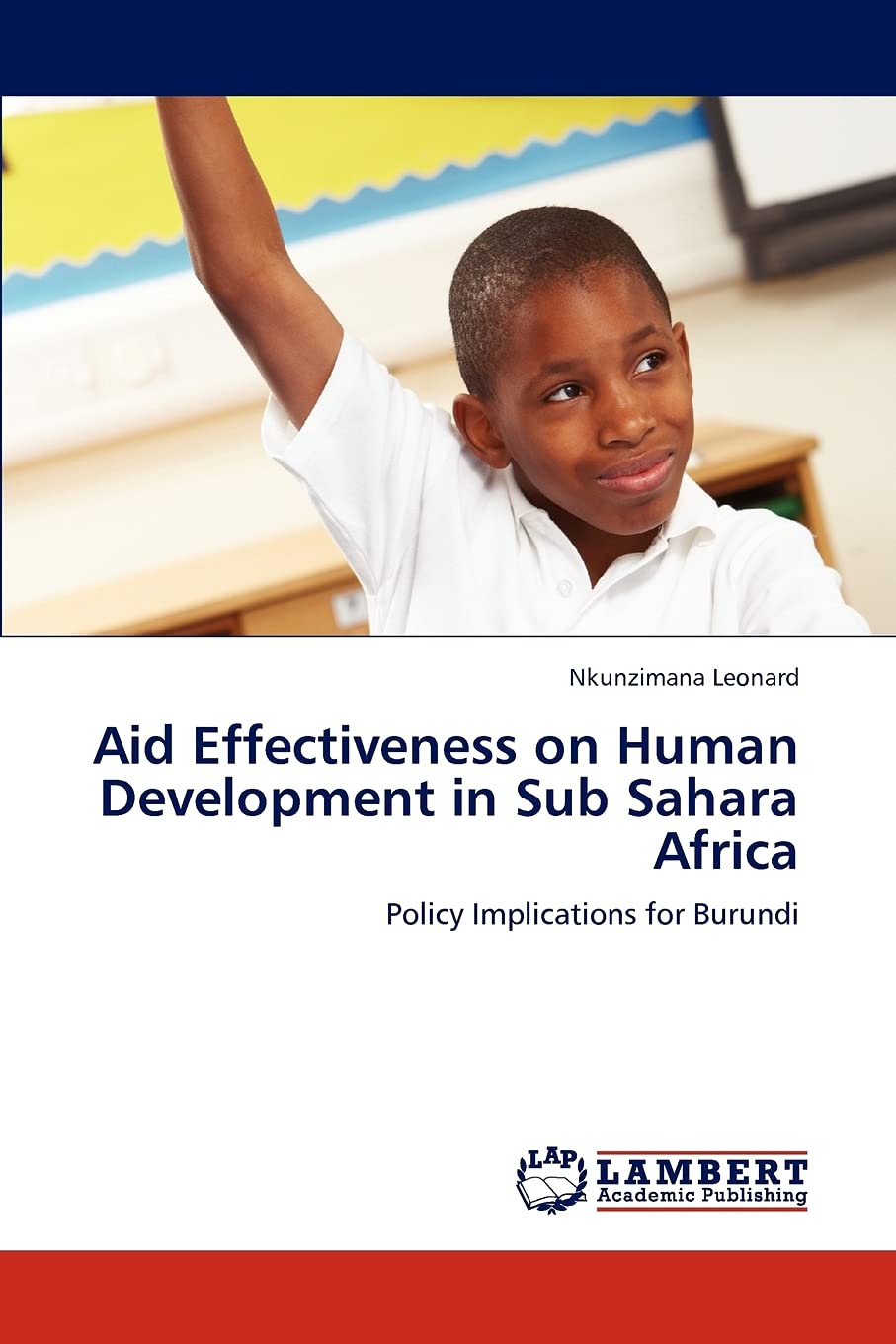
Product Description The purpose of this study is to assess the trend of Official Development Assistance and its impact on human development in sub Saharan African(SSA) countries. By comparing the trends of these variables, the study argues a positive evolution of aid inflows and a positive evolution of human development in SSA countries. The study aimed then to analyze whether the official development assistance has impacted on human development during this last decade. By the data Panel analysis, the aid effectiveness in all SSA countries on human development is positive but very low when one did not control for the countryspecific effects and temporal effects. By taking into account these last variables the analysis has then found that the temporal effects and country specific effects have negatively affected human development in SSA countries. The analysis has also concluded a positive relationship between a good governance and human development in one hand, and between the Human development and GDP per capita in the other hand. Within this context, the aid policy for SSA countries, specifically in Burundi needs to be well designed and implemented by taking into its specific problems. About the Author Mr Leonard Nkunzimana is an economist andLecturer at the National University of Burundi. He is holding an Master in Development Evaluation and Management(DEM), and a Specialization inCooperation and Development(CooPM) that have been delivered respectively by University of Antwerp(UA) and Free University of Brussels(ULB).
⚠️ WARNING (California Proposition 65):
This product may contain chemicals known to the State of California to cause cancer,
birth defects, or other reproductive harm.
For MAP (Minimum Advertised Price) violations and Intellectual Property (IP) or Trademark concerns, please contact:
support@ergodebooks.com
⚠️ California Proposition 65 Warning: Some products sold on this website may expose you to chemicals known to the State of California to cause cancer, birth defects, or other reproductive harm. For more information, visit www.P65Warnings.ca.gov.