
Title
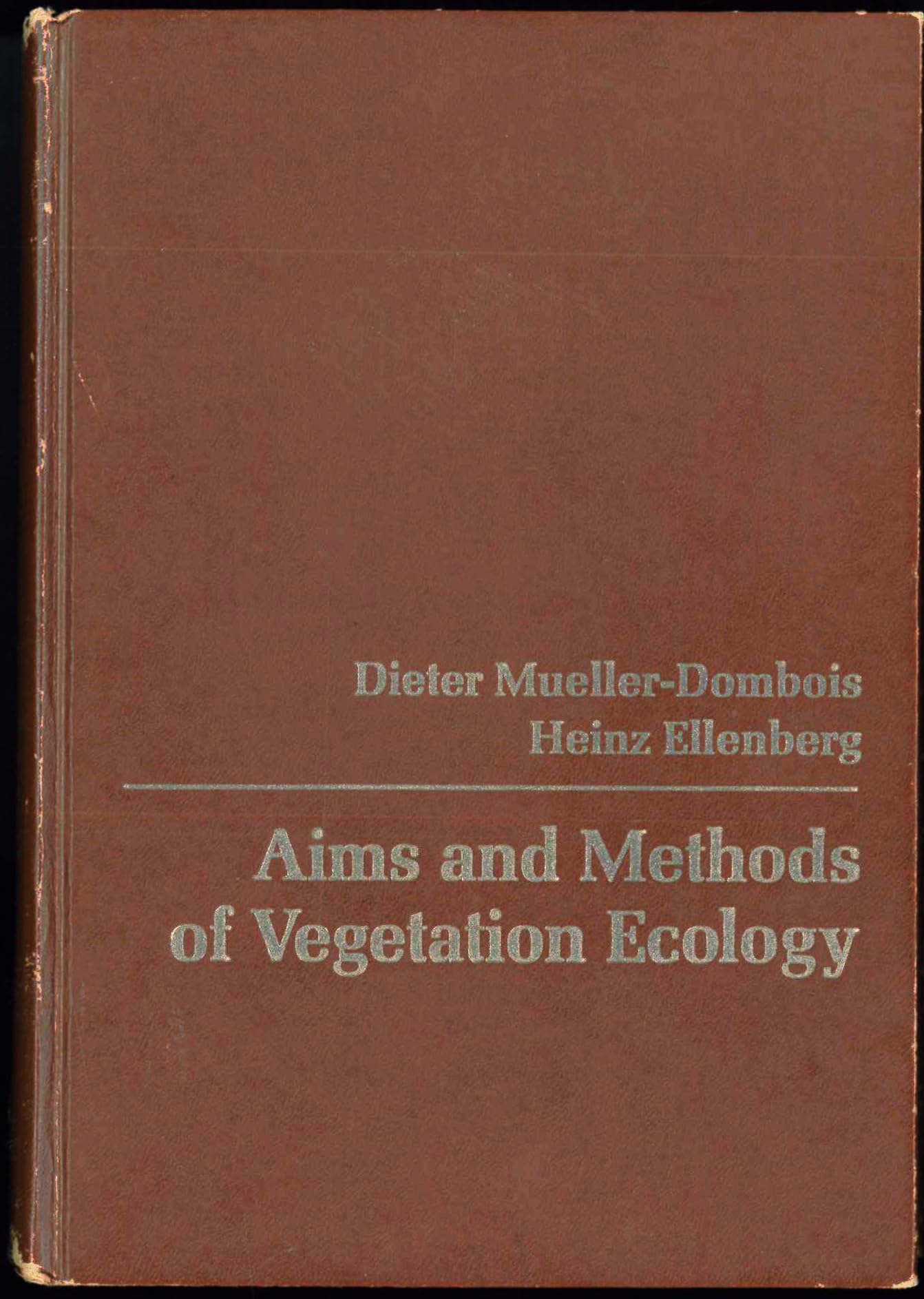
Aims and Methods of Vegetation Ecology,Used
Sold by Ergodebooks, an authorized reseller.
Returns accepted within 30 days | support@ergodebooks.com
Shipping Information
- Free Standard Shipping — United States only
- Processing Time: 3–5 business days
- Estimated Delivery: 6–10 business days after dispatch
- Double-boxed, fully insured & discreetly packaged
- Tracking number sent via email once dispatched
Returns & Refund
Returns accepted within 30 days of delivery.
Damaged or Defective Item
Free return shipping + replacement or full refund
Wrong Item Received
Free return shipping + replacement or full refund
Change of Mind
Return shipping at customer's expense · 25% restocking fee applies
Payment Option

This book was written 30 years ago as the first synthesis of European and AngloAmerican methods in vegetation ecology. Upon its publication in 1974, it rapidly became the standard text for the study of vegetation in over 60 US colleges and universities. An unsolicited review appeared in Ecology 56: 1233 (1975) with the title 'Getting It All Together in Plant Synecology.' The book also received wide international acceptance. 'In his foreword to the 1974 edition, Raymond Fosberg referred to this book as 'by far the best work of its scope that I know.' It is still agreed that there is no comparable work. It was used as the only textbook for the first twenty offerings of one graduate course. For the past dozen years it's been moved to the recommended list because it has been out of print. There have been several vegetation science textbooks published since 1974, but their foci have been on ordination and multivariate data analysis instead of on sampling methods. No other text has covered the subject of vegetation sampling design in such depth, breadth, and impartiality as this book, Aims and Methods of Vegetation Ecology. Most of this material remains as current and topical today as it was a quarter of a century ago, because the progress that has been made in vegetation science is in the computerbased treatment of sample data, not in the creation of new sampling protocols. A new generation of vegetation ecologists can now have the same advantage the same easy access to this classic reference work that a past generation had in quantifying and summarizing the formidable complexity of natural, wildland vegetation.' Foreword by Michael G. Barbour, Plant Ecologist, University of California at Davis, Department of Environmental Horticulture, November 2002.
⚠️ WARNING (California Proposition 65):
This product may contain chemicals known to the State of California to cause cancer, birth defects, or other reproductive harm.
For more information, please visit www.P65Warnings.ca.gov.
- Q: What is the main focus of 'Aims and Methods of Vegetation Ecology'? A: The book focuses on synthesizing European and Anglo-American methods in vegetation ecology, specifically emphasizing sampling methods over multivariate data analysis.
- Q: Who are the authors of this book? A: The book is authored by Dieter Mueller-Dombois and Heinz Ellenberg.
- Q: When was 'Aims and Methods of Vegetation Ecology' first published? A: The book was first published in 1975.
- Q: What type of binding does this book have? A: This book comes in a hardcover binding.
- Q: How many pages are in 'Aims and Methods of Vegetation Ecology'? A: The book contains 570 pages.
- Q: Is this book suitable for college-level study? A: Yes, it has been used as a standard text in over 60 US colleges and universities.
- Q: What condition is the book in? A: The item condition is listed as 'Good'.
- Q: Does the book include information on modern vegetation ecology practices? A: While the book was published in 1975, much of its content remains relevant today, focusing on the foundational aspects of vegetation sampling design.
- Q: What is the significance of the foreword by Michael G. Barbour? A: The foreword by Michael G. Barbour highlights the book's enduring value and its recognition as an authoritative work in vegetation ecology.
- Q: Are there any other recommended textbooks on vegetation ecology? A: While there are newer textbooks, they often focus on specific techniques such as ordination and multivariate data analysis, rather than comprehensive sampling methods.