If you have any questions, you are always welcome to contact us. We'll get back to you as soon as possible, withing 24 hours on weekdays.
Customer service
All questions about your order, return and delivery must be sent to our customer service team by e-mail at yourstore@yourdomain.com
Sale & Press
If you are interested in selling our products, need more information about our brand or wish to make a collaboration, please contact us at press@yourdomain.com
Help
If you have any questions, you are always welcome to contact us. We'll get back to you as soon as possible, withing 24 hours on weekdays.
Customer service
All questions about your order, return and delivery must be sent to our customer service team by e-mail at yourstore@yourdomain.com
Sale & Press
If you are interested in selling our products, need more information about our brand or wish to make a collaboration, please contact us at press@yourdomain.com
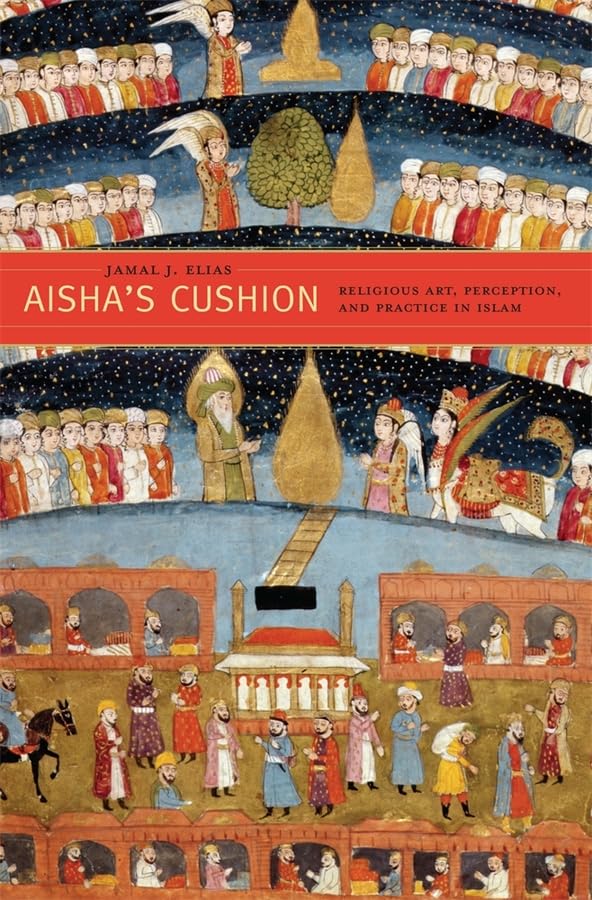
Media coverage of the Danish cartoon crisis and the destruction of the Buddhas of Bamiyan left Westerners with a strong impression that Islam does not countenance depiction of religious imagery. Jamal J. Elias corrects this view by revealing the complexity of Islamic attitudes toward representational religious art. Aishas Cushion emphasizes Islams perceptual and intellectual modes and in so doing offers the reader both insight into Islamic visual culture and a unique way of seeing the world.Aishas Cushion evaluates the controversies surrounding blasphemy and iconoclasm by exploring Islamic societies at the time of Muhammad and the birth of Islam; during early contact between Arab Muslims and Byzantine Christians; in medieval Anatolia and India; and in modern times. Eliass inquiry then goes further, to situate Islamic religious art in a global context. His comparisons with Christian, Jewish, Buddhist, and Hindu attitudes toward religious art show them to be as contradictory as those of Islam. Contemporary theories about arts place in society inform Eliass investigation of how religious objects have been understood across time and in different cultures.Elias contends that Islamic perspectives on representation and perception should be sought not only in theological writings or aesthetic treatises but in a range of Islamic works in areas as diverse as optics, alchemy, dreaming, calligraphy, literature, vehicle and home decoration, and Sufi metaphysics. Unearthing shades of meaning in Islamic thought throughout history, Elias offers fresh insight into the relations among religion, art, and perception across a broad range of cultures.
⚠️ WARNING (California Proposition 65):
This product may contain chemicals known to the State of California to cause cancer,
birth defects, or other reproductive harm.
For MAP (Minimum Advertised Price) violations and Intellectual Property (IP) or Trademark concerns, please contact:
support@ergodebooks.com
⚠️ California Proposition 65 Warning: Some products sold on this website may expose you to chemicals known to the State of California to cause cancer, birth defects, or other reproductive harm. For more information, visit www.P65Warnings.ca.gov.