
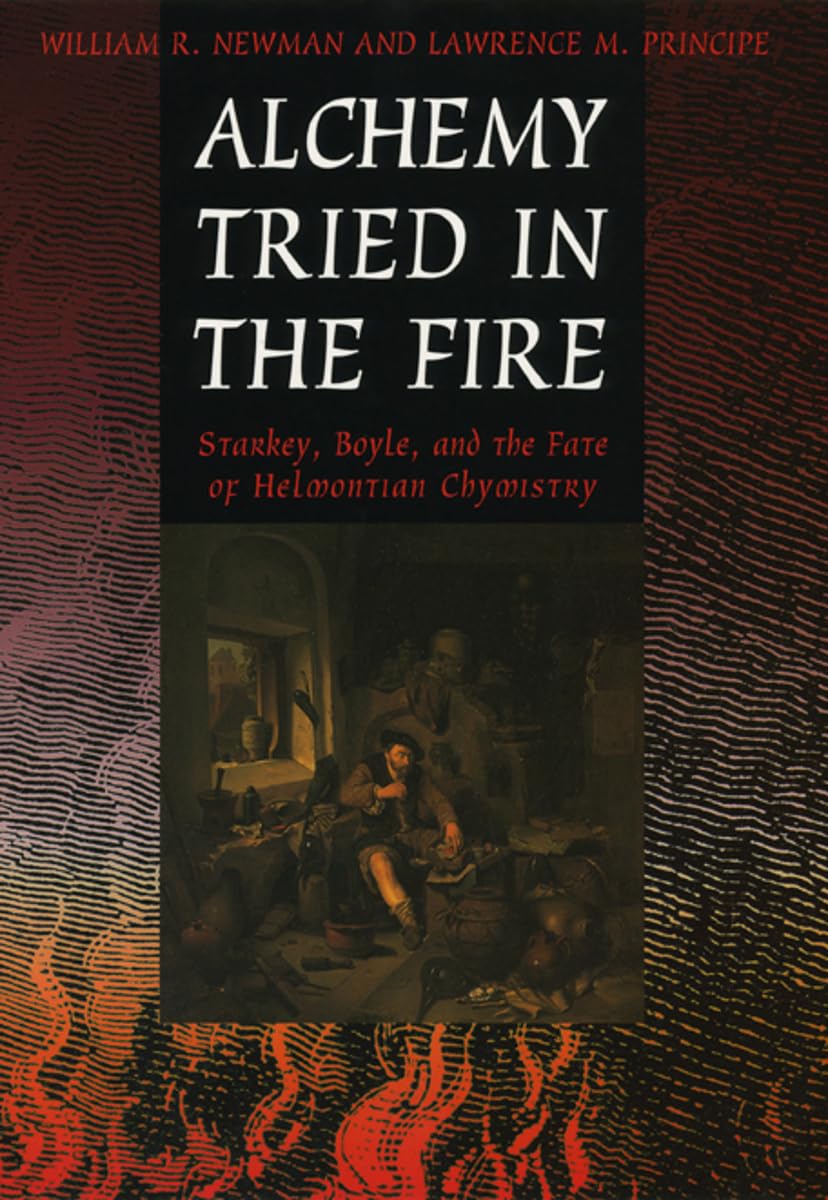
Title
Alchemy Tried in the Fire: Starkey, Boyle, and the Fate of Helmontian Chymistry,Used
Sold by Ergodebooks, an authorized reseller.
Returns accepted within 30 days | support@ergodebooks.com
Shipping Information
- Free Standard Shipping — United States only
- Processing Time: 3–5 business days
- Estimated Delivery: 6–10 business days after dispatch
- Double-boxed, fully insured & discreetly packaged
- Tracking number sent via email once dispatched
Returns & Refund
Returns accepted within 30 days of delivery.
Damaged or Defective Item
Free return shipping + replacement or full refund
Wrong Item Received
Free return shipping + replacement or full refund
Change of Mind
Return shipping at customer's expense · 25% restocking fee applies
Payment Option

Winner of the 2005 Pfizer Prize from the History of Science Society.What actually took place in the private laboratory of a midseventeenth century alchemist? How did he direct his quest after the secrets of Nature? What instruments and theoretical principles did he employ?Using, as their guide, the previously misunderstood interactions between Robert Boyle, widely known as "the father of chemistry," and George Starkey, an alchemist and the most prominent American scientific writer before Benjamin Franklin as their guide, Newman and Principe reveal the hitherto hidden laboratory operations of a famous alchemist and argue that many of the principles and practices characteristic of modern chemistry derive from alchemy. By analyzing Starkey's extraordinary laboratory notebooks, the authors show how this American "chymist" translated the wildly figurative writings of traditional alchemy into quantitative, carefully reasoned laboratory practiceand then encoded his own work in allegorical, secretive treatises under the name of Eirenaeus Philalethes. The intriguing "mystic" Joan Baptista Van Helmonta favorite of Starkey, Boyle, and even of Lavoisieremerges from this study as a surprisingly central figure in seventeenthcentury "chymistry." A common emphasis on quantification, material production, and analysis/synthesis, the authors argue, illustrates a continuity of goals and practices from late medieval alchemy down to and beyond the Chemical Revolution.For anyone who wants to understand how alchemy was actually practiced during the Scientific Revolution and what it contributed to the development of modern chemistry, Alchemy Tried in the Fire will be a veritable philosopher's stone.
⚠️ WARNING (California Proposition 65):
This product may contain chemicals known to the State of California to cause cancer, birth defects, or other reproductive harm.
For more information, please visit www.P65Warnings.ca.gov.