
Title
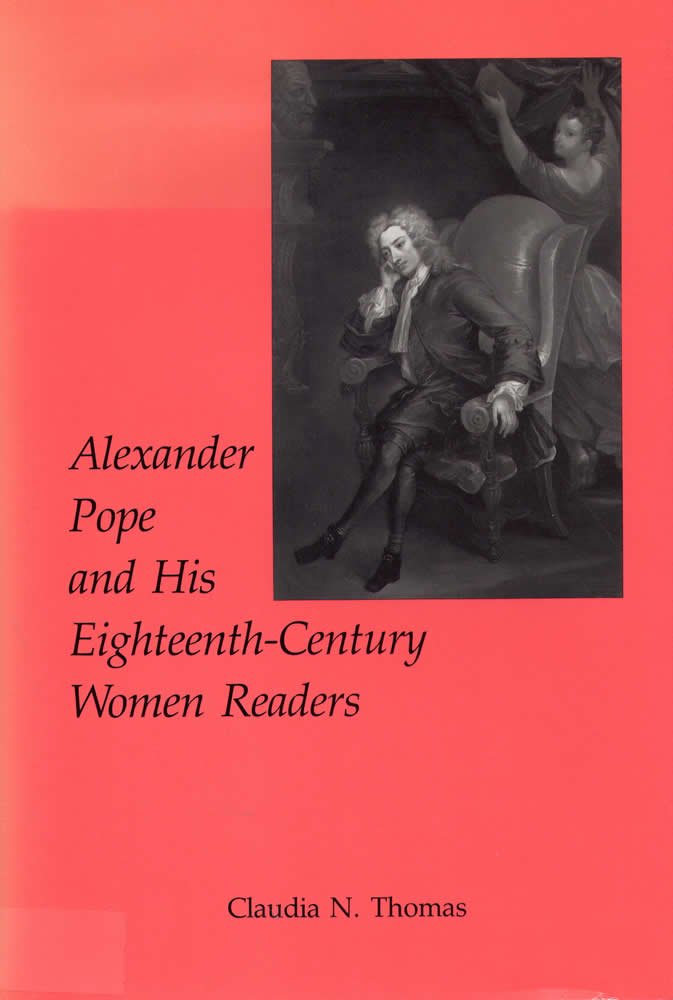
Alexander Pope And His Eighteenthcentury Women Readers,Used
Sold by Ergodebooks, an authorized reseller.
Returns accepted within 30 days | support@ergodebooks.com
Shipping Information
- Free Standard Shipping — United States only
- Processing Time: 3–5 business days
- Estimated Delivery: 6–10 business days after dispatch
- Double-boxed, fully insured & discreetly packaged
- Tracking number sent via email once dispatched
Returns & Refund
Returns accepted within 30 days of delivery.
Damaged or Defective Item
Free return shipping + replacement or full refund
Wrong Item Received
Free return shipping + replacement or full refund
Change of Mind
Return shipping at customer's expense · 25% restocking fee applies
Payment Option

Throughout the 1980s, scholars debated Alexander Popes attitude toward women by applying such critical methods as Marxist or deconstructionist theories to his texts. In this book, Claudia N. Thomas instead adopts readerresponse theory in order to present what she regards as a more accurate analysis, mindful of the historical reception of Popes various works.Thomas specifically responds to modern allegations that Pope was a misogynist and a literary victimizer of women. If Pope thought women inconsequential, she argues, why did he bother to cultivate a female audience? Furthermore, how did eighteenthcentury women readers receive his writings?Thomas answers these questions by examining the literary responses to Pope of his eighteenthcentury women readers: their prose responses to Pope, their poems addressed to him or replying to his poems, and their poems strongly influenced by him. These responses not only clarify Popes works and their relation to cultural history; they also advance womens literary history by reconstructing the female experience of eighteenthcentury culture.A surprising amount of testimony survives to illuminate the ways eighteenthcentury women read Pope. Women referred to, quoted, and commented on his poems and letters in a variety of writings: diaries, letters, travel books, translations, essays, poems, and novels. They wrote poems of praise and criticism and designed companion pieces to his poems. A number of women poets learned their craft by studying his work; their poems frequently appropriate and recontextualize his themes, language, and imagery.For many women, a response to Pope was a reaction to cultural issues ranging from womens emotional and intellectual qualities to their creative capacity. Womens responses to Pope demonstrate that they were often shrewdly critical of his gendered rhetoric, yet in contrast, women often claimed him as a sympathetic ally in their quests for education and for a more dignified role in their culture.
⚠️ WARNING (California Proposition 65):
This product may contain chemicals known to the State of California to cause cancer, birth defects, or other reproductive harm.
For more information, please visit www.P65Warnings.ca.gov.