
Title
All Hail to the Archpriest: Confessional Conflict, Toleration, and the Politics of Publicity in PostReformation England,Used
Sold by Ergodebooks, an authorized reseller.
Returns accepted within 30 days | support@ergodebooks.com
Shipping Information
- Free Standard Shipping — United States only
- Processing Time: 3–5 business days
- Estimated Delivery: 6–10 business days after dispatch
- Double-boxed, fully insured & discreetly packaged
- Tracking number sent via email once dispatched
Returns & Refund
Returns accepted within 30 days of delivery.
Damaged or Defective Item
Free return shipping + replacement or full refund
Wrong Item Received
Free return shipping + replacement or full refund
Change of Mind
Return shipping at customer's expense · 25% restocking fee applies
Payment Option

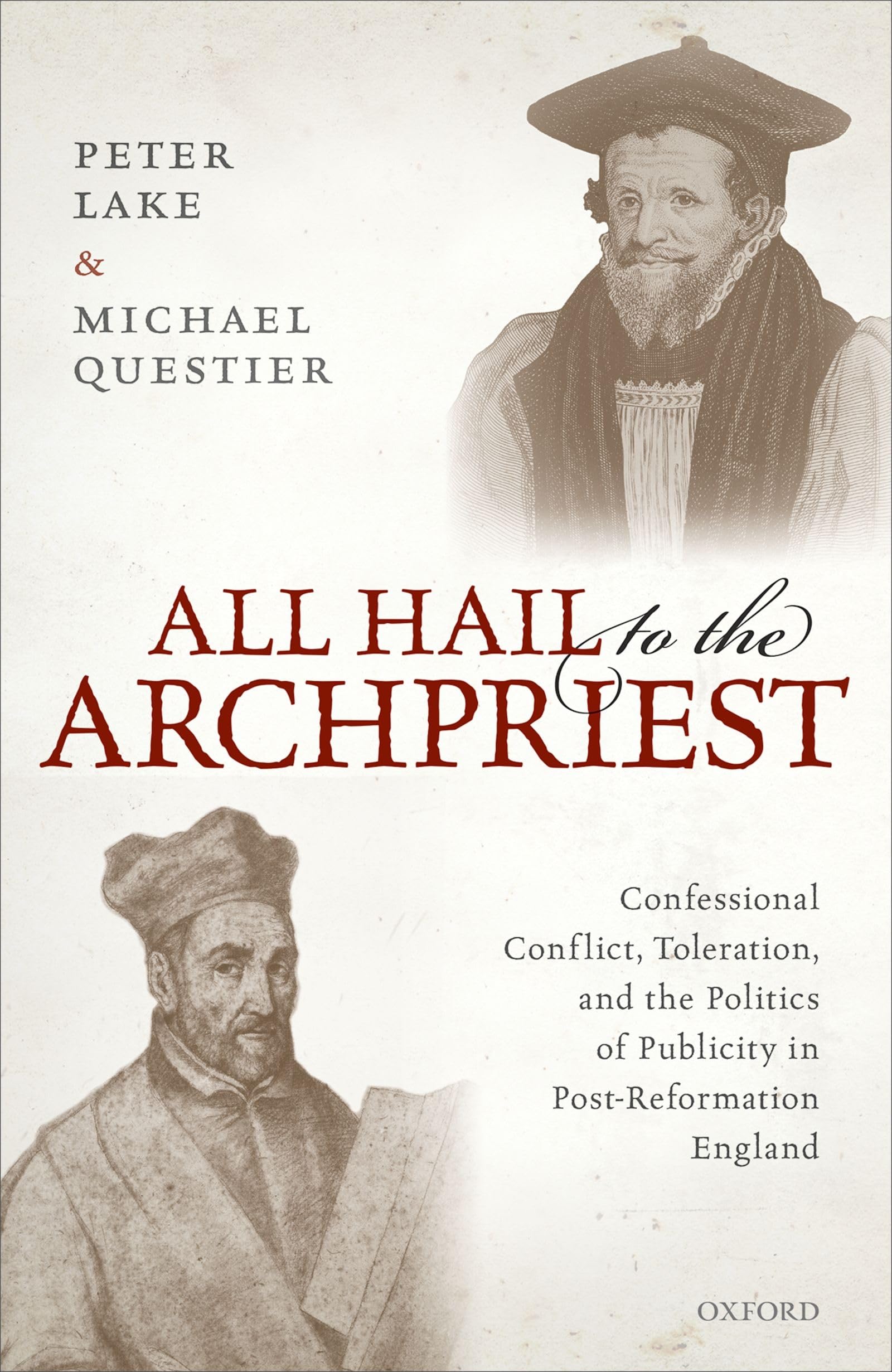
All Hail to the Archpriest revisits the debates and disputes known collectively in the literature on late sixteenth and early seventeenth century England as the 'Archpriest controversy'. Peter Lake and Michael Questier argue that this was an extraordinary instance of the conduct of contemporary public politics and that, in its apparent strangeness, it is in fact a guide to the ways in which contemporaries negotiated the unstable later Reformation settlement in England. The published texts which form the core of the arguments involved in this debate survive, as do several caches of manuscript material generated by the dispute. Together they tell us a good deal about the aspirations of the writers and the networks that they inhabited. They also allow us to retell the progress of the dispute both as a narrative and as an instance of contemporary public argument about topics such as the increasingly imminent royal succession, late Elizabethan puritanism, and the function of episcopacy.Our contention is that, if one takes this material seriously, it is very hard to sustain standard accounts of the accession of James VI in England as part of an almost seamless continuity of royal government, contextualised by a virtually untroubled and consensusbased Protestant account of the relationship between Church and State. Nor is it possible to maintain that by the end of Elizabeth's reign the fraction of the national Church, separatist and otherwise, which regarded itself or was regarded by others as Catholic, had been driven into irrelevance.
⚠️ WARNING (California Proposition 65):
This product may contain chemicals known to the State of California to cause cancer, birth defects, or other reproductive harm.
For more information, please visit www.P65Warnings.ca.gov.