
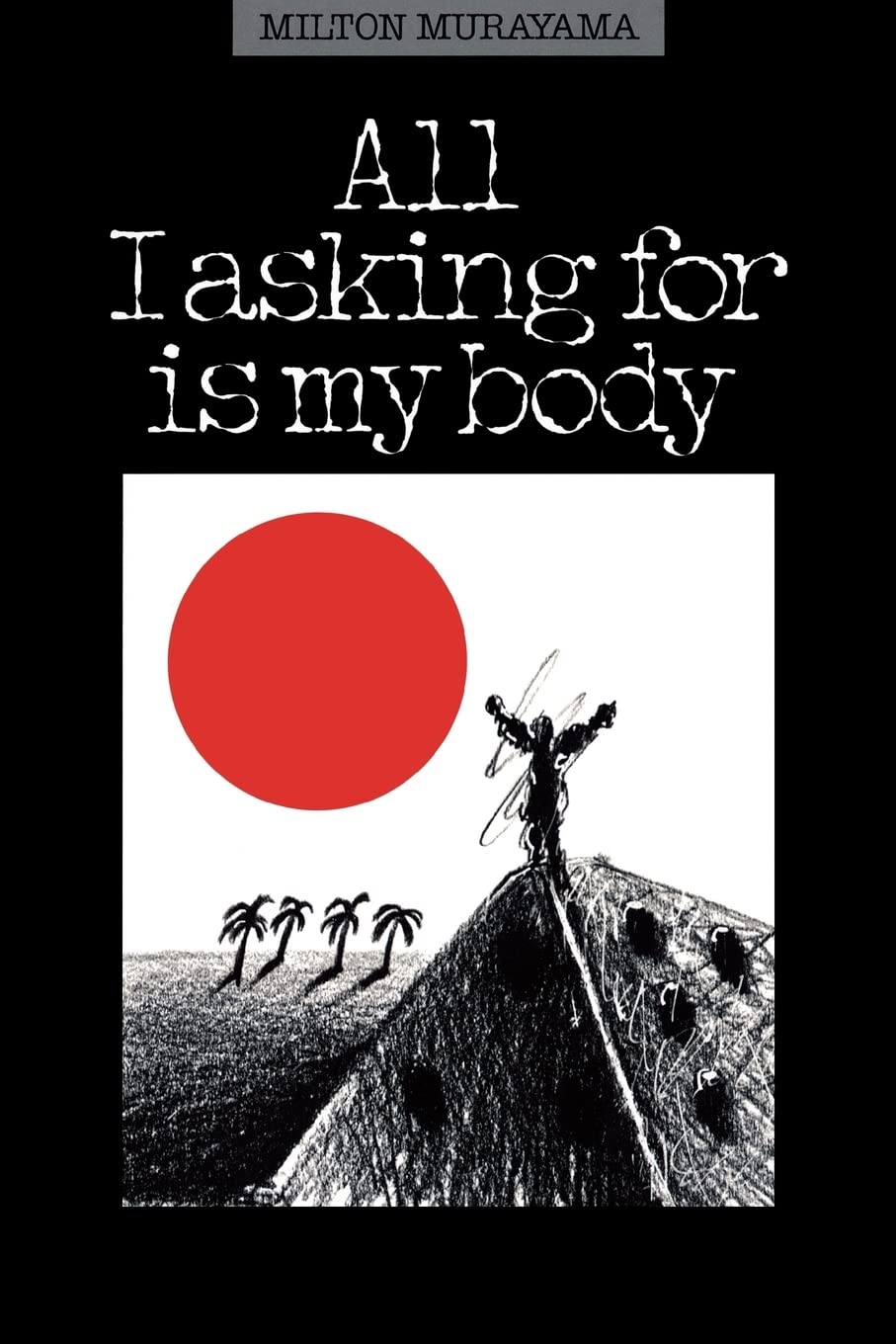
Title
All I Asking For Is My Body (Kolowalu Book)
Sold by Ergodebooks, an authorized reseller.
Returns accepted within 30 days | support@ergodebooks.com
Shipping Information
- Free Standard Shipping — United States only
- Processing Time: 3–5 business days
- Estimated Delivery: 6–10 business days after dispatch
- Double-boxed, fully insured & discreetly packaged
- Tracking number sent via email once dispatched
Returns & Refund
Returns accepted within 30 days of delivery.
Damaged or Defective Item
Free return shipping + replacement or full refund
Wrong Item Received
Free return shipping + replacement or full refund
Change of Mind
Return shipping at customer's expense · 25% restocking fee applies
Payment Option

From The Afterword By Franklin S. Odo:The Most Important Feature Of Milton Murayama'S Brilliant All I Asking For Is My Body Is The Quality Of The Storytelling. It Deserves Thorough Discussion And Criticism Among Literary Professionals And Students. The Work Has A Further Genius, However, In Its Evocation Of Several Major Topics In Modern Hawaiian History, Specifically During The 1930S, The Decade Before United States Involvement In World War Ii. I Suggest That Murayamas Novel Provides Us With Valuable Insights Into The Worlds Of Language, Sugar Plantation History, And The Secondgeneration Japanese Americans, The Nisei. . . . Critic Rob Wilson Noted: Part Of The Accomplishment Of The Novel Is That The Language Ranges From The Vernacular To The Literate And Standard, And So Reflects The Cultural And Linguistic Diversity Of Hawaii. In The Novel, Murayama Uses Standard English And Pidgin. In Real Life, The Narrator Kiyo Explains, We Spoke Four Languages: Good English In School, Pidgin English Among Ourselves, Good Or Pidgin Japanese To Our Parents And The Other Old Folks. The Wonder Is That Murayama Emerged Using Any One Of The Languages Well. For Most, That Experience Proved To Be An Insuperable Barrier To Good Creative Writing. . . . All I Asking For Is My Body Is The Most Compelling Work Done On The Hawaii Nisei Experience. Murayama Understood His Theme To Be The Japanese Family System Vs. Individualism, The Plantation System Vs. Individualism. And So The Environments Of The Family And The Plantation Are Inseparable From The Theme. Fortunately For Us As Readers, However, He Understood That The Story Was The Key Ingredient; That Anything Less Would Simply Add To The Sociological Study Of The Plantation And The Japanese Family In Hawaii.
⚠️ WARNING (California Proposition 65):
This product may contain chemicals known to the State of California to cause cancer, birth defects, or other reproductive harm.
For more information, please visit www.P65Warnings.ca.gov.
- Q: What are the dimensions of the book 'All I Asking for Is My Body'? A: The book measures six point zero two inches in length, nine point zero two inches in height, and zero point three one inches in width.
- Q: How many pages does 'All I Asking for Is My Body' have? A: The book contains one hundred twenty pages, providing a concise yet impactful narrative.
- Q: What type of binding does this book have? A: The book is available in paperback binding, which is flexible and lightweight for easy handling.
- Q: Who is the author of 'All I Asking for Is My Body'? A: The author of the book is Milton Murayama, known for his contributions to Hawaiian literature.
- Q: What is the genre of this book? A: The book falls under the category of historical fiction, focusing on themes relevant to Hawaiian history.
- Q: Is 'All I Asking for Is My Body' suitable for young readers? A: The book is generally suitable for older teens and adults due to its complex themes, including cultural identity and history.
- Q: How does one engage with the themes in the book? A: Readers can engage with the themes by reflecting on the cultural and historical contexts presented in the narrative.
- Q: What is the reading level for 'All I Asking for Is My Body'? A: The reading level is appropriate for high school students and above, due to its literary style and thematic depth.
- Q: Are there any special considerations for discussing this book in a classroom? A: Yes, discussions may benefit from focusing on historical context and the experiences of Japanese Americans in Hawaii during the 1930s.
- Q: How should I store 'All I Asking for Is My Body' to keep it in good condition? A: Store the book in a cool, dry place away from direct sunlight to prevent fading and wear.
- Q: Is there a specific way to clean the book if it gets dirty? A: To clean the book, gently wipe the cover with a soft, dry cloth, avoiding any moisture that could damage the pages.
- Q: What do I do if my book arrives damaged? A: If the book arrives damaged, you can typically request a return or exchange through the retailer's customer service.
- Q: Can I return 'All I Asking for Is My Body' if I don't like it? A: Yes, most retailers offer a return policy, allowing you to return the book within a specified period if unsatisfied.
- Q: How can I find more books like 'All I Asking for Is My Body'? A: You can find similar books by exploring the historical fiction genre or searching for works by Asian American authors.
- Q: What makes 'All I Asking for Is My Body' a significant work? A: The book is significant for its portrayal of the nisei experience and its exploration of cultural identity and family dynamics.