
Title
Allegorical Quests From Deguileville To Spenser,Used
Sold by Ergodebooks, an authorized reseller.
Returns accepted within 30 days | support@ergodebooks.com
Shipping Information
- Free Standard Shipping — United States only
- Processing Time: 3–5 business days
- Estimated Delivery: 6–10 business days after dispatch
- Double-boxed, fully insured & discreetly packaged
- Tracking number sent via email once dispatched
Returns & Refund
Returns accepted within 30 days of delivery.
Damaged or Defective Item
Free return shipping + replacement or full refund
Wrong Item Received
Free return shipping + replacement or full refund
Change of Mind
Return shipping at customer's expense · 25% restocking fee applies
Payment Option

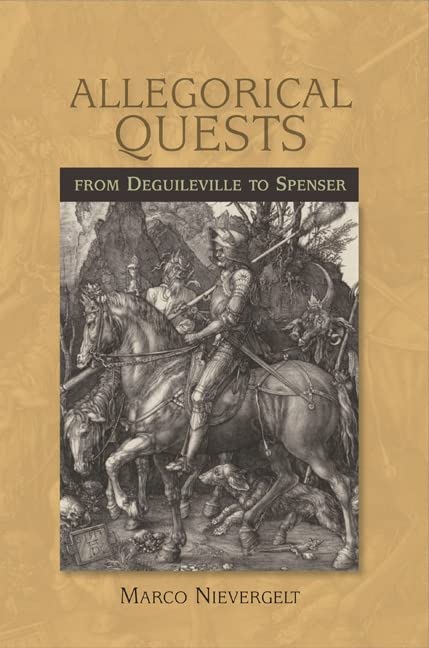
An examination of sixteenthcentury quest narratives, focussing on their conscious use of a medieval tradition to hold a mirror up to contemporary culture.Offers the first full study of the allegorical knightly quest tradition from the Middle Ages to the Renaissance. Richly satisfying, as impressive in the detail of its scholarship as in the elegance of its critical formulations. It seamlessly moves between different literary traditions and across conventional period boundaries. In Dr Nievergelt's treatment of this theme, the successive retellings of the tale of the knight's quest come to stand as an emblemof shifting values and norms, both religious and worldly; and of our repeated failures to realise those ideals. Dr Alex Davis, Department of English, University of St Andrews.The literary motif of the 'allegorical knightly quest' appears repeatedly in the literature of the late medieval/early modern period, notably in Spenser, but has hitherto been little examined. Here, in his examination of a number of sixteenthcentury English allegoricalchivalric quest narratives, focussing on Spenser's Faerie Queene but including important, lesserknown works such as Stephen Bateman's Travayled Pylgrime and William Goodyear's Voyage of the Wandering Knight,the author argues that the tradition begins with the French writer Guillaume de Deguileville. His seminal Plerinage de la vie humaine was composed c.13311355; it was widely adapted, translated, rewritten and printed overthe next centuries. Dr Nievergelt goes on to demonstrate how this essentially 'medieval' literary form could be adapted to articulate reflections on changing patterns of identity, society and religion during the early modern period; and how it becomes a vehicle of selfexploration and selffashioning during a period of profound cultural crisis.Dr Marco Nievergelt is Lecturer (Matre Assitant) and SNF (Swiss National Science Foundation) Research Fellow in the English Department at the Universit de Lausanne
⚠️ WARNING (California Proposition 65):
This product may contain chemicals known to the State of California to cause cancer, birth defects, or other reproductive harm.
For more information, please visit www.P65Warnings.ca.gov.