If you have any questions, you are always welcome to contact us. We'll get back to you as soon as possible, withing 24 hours on weekdays.
Customer service
All questions about your order, return and delivery must be sent to our customer service team by e-mail at yourstore@yourdomain.com
Sale & Press
If you are interested in selling our products, need more information about our brand or wish to make a collaboration, please contact us at press@yourdomain.com
Help
If you have any questions, you are always welcome to contact us. We'll get back to you as soon as possible, withing 24 hours on weekdays.
Customer service
All questions about your order, return and delivery must be sent to our customer service team by e-mail at yourstore@yourdomain.com
Sale & Press
If you are interested in selling our products, need more information about our brand or wish to make a collaboration, please contact us at press@yourdomain.com
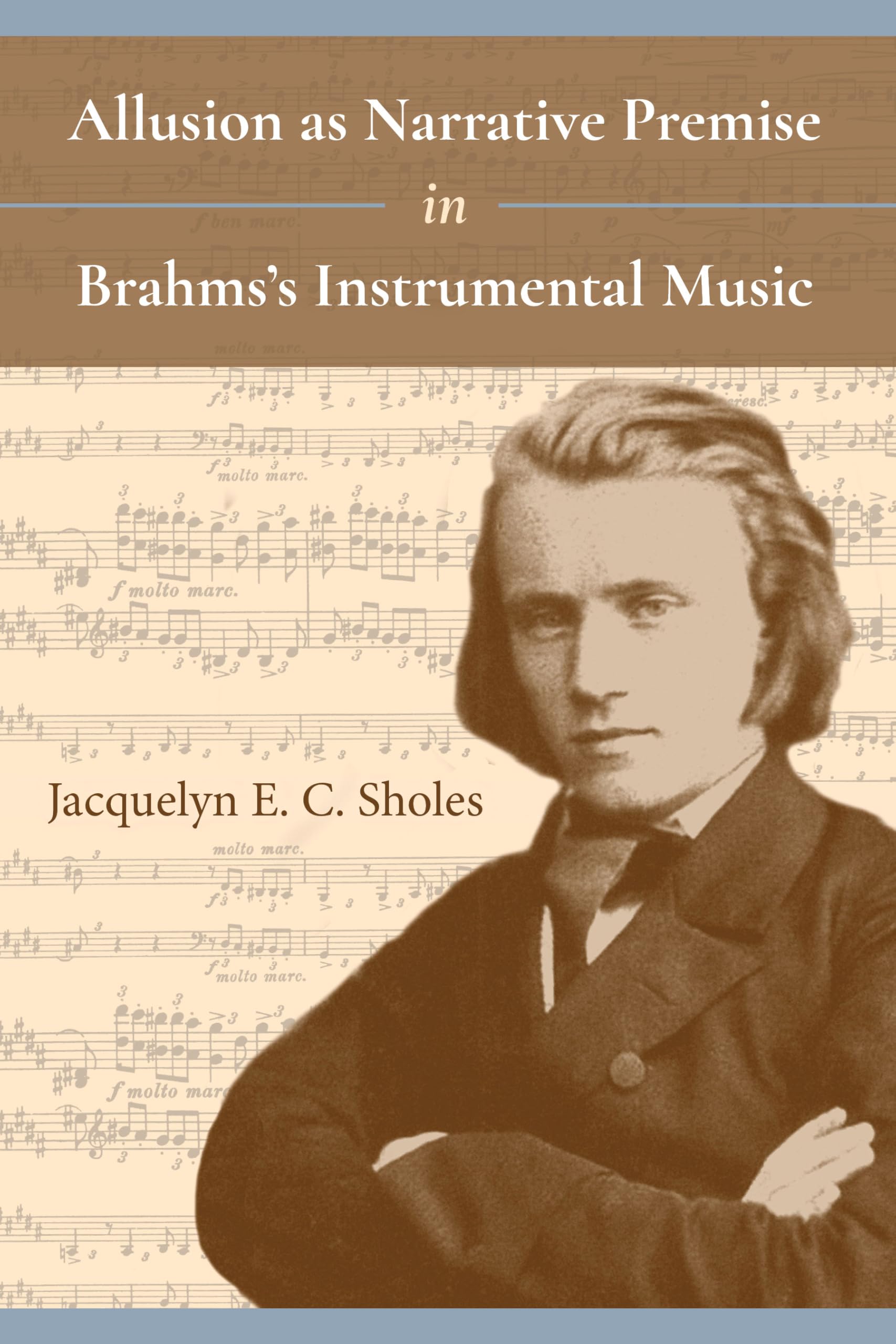
Who inspired Johannes Brahms in his art of writing music? In this book, Jacquelyn E. C. Sholes provides a fresh look at the ways in which Brahms employed musical references to works of earlier composers in his own instrumental music. By analyzing newly identified allusions alongside previously known musical references in works such as the BMajor Piano Trio, the DMajor Serenade, the First Piano Concerto, and the Fourth Symphony, among others, Sholes demonstrates how a historical reference in one movement of a work seems to resonate meaningfully, musically, and dramatically with material in other movements in ways not previously recognized. She highlights Brahms's ability to weave such references into broad, movementspanning narratives, arguing that these narratives served as expressive outlets for his complicated, sometimes conflicted, attitudes toward the material to which he alludes. Ultimately, Brahms's music reveals both the inspiration and the burden that established masters such as Domenico Scarlatti, J. S. Bach, Haydn, Mozart, Schubert, Schumann, Wagner, and especially Beethoven represented for him as he struggled to emerge with his own artistic voice and to define and secure his unique position in music history.
⚠️ WARNING (California Proposition 65):
This product may contain chemicals known to the State of California to cause cancer,
birth defects, or other reproductive harm.
For MAP (Minimum Advertised Price) violations and Intellectual Property (IP) or Trademark concerns, please contact:
support@ergodebooks.com
⚠️ California Proposition 65 Warning: Some products sold on this website may expose you to chemicals known to the State of California to cause cancer, birth defects, or other reproductive harm. For more information, visit www.P65Warnings.ca.gov.