
Title
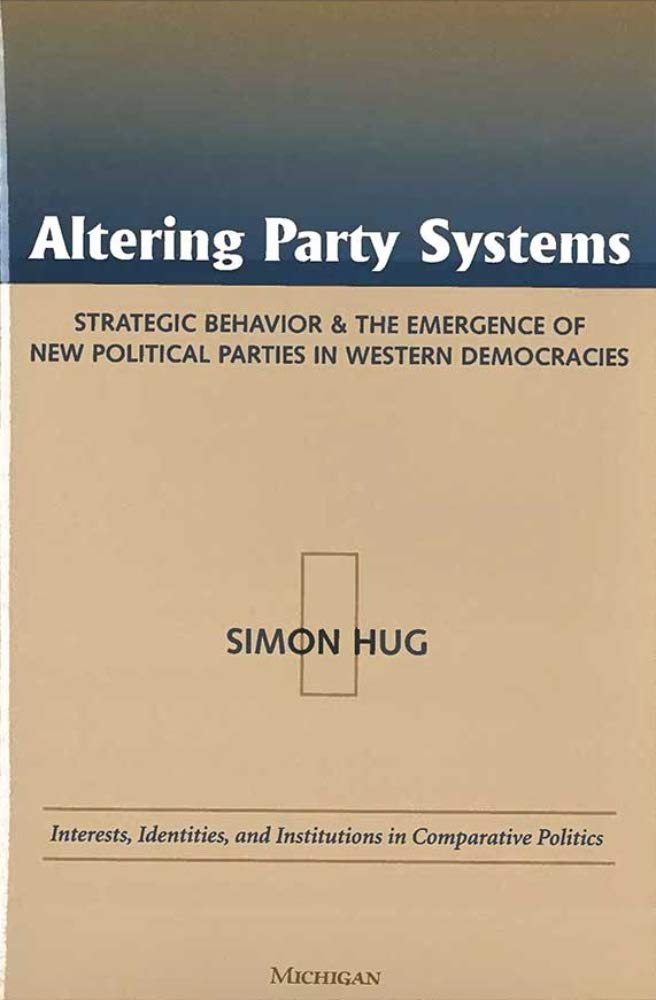
Altering Party Systems: Strategic Behavior and the Emergence of New Political Parties in Western Democracies (Interests, Identit,Used
Sold by Ergodebooks, an authorized reseller.
Returns accepted within 30 days | support@ergodebooks.com
Shipping Information
- Free Standard Shipping — United States only
- Processing Time: 3–5 business days
- Estimated Delivery: 6–10 business days after dispatch
- Double-boxed, fully insured & discreetly packaged
- Tracking number sent via email once dispatched
Returns & Refund
Returns accepted within 30 days of delivery.
Damaged or Defective Item
Free return shipping + replacement or full refund
Wrong Item Received
Free return shipping + replacement or full refund
Change of Mind
Return shipping at customer's expense · 25% restocking fee applies
Payment Option

New political parties have regularly appeared in developed democracies around the world. In some countries issues focusing on the environment, immigration, economic decline, and regional concerns have been brought to the forefront by new political parties. In other countries these issues have been addressed by established parties, and new issuedriven parties have failed to form. Most current research is unable to explain why under certain circumstances new issues or neglected old ones lead to the formation of new parties. Based on a novel theoretical framework, this study demonstrates the crucial interplay between established parties and possible newcomers to explain the emergence of new political parties.Deriving stable hypotheses from a simple theoretical model, the book proceeds to a study of party formation in twentytwo developed democracies. New or neglected issues still appear as a driving force in explaining the emergence of new parties, but their effect is partially mediated by institutional factors, such as access to the ballot, public support for parties, and the electoral system. The hypotheses in part support existing theoretical work, but in part present new insights. The theoretical model also pinpoints problems of research design that are hardly addressed in the comparative literature on new political parties. These insights from the theoretical model lead to empirical tests that improve on those employed in the literature and allow for a muchenhanced understanding of the formation and the success of new parties.Simon Hug is Lecturer in Political Science, University of Geneva.
⚠️ WARNING (California Proposition 65):
This product may contain chemicals known to the State of California to cause cancer, birth defects, or other reproductive harm.
For more information, please visit www.P65Warnings.ca.gov.