
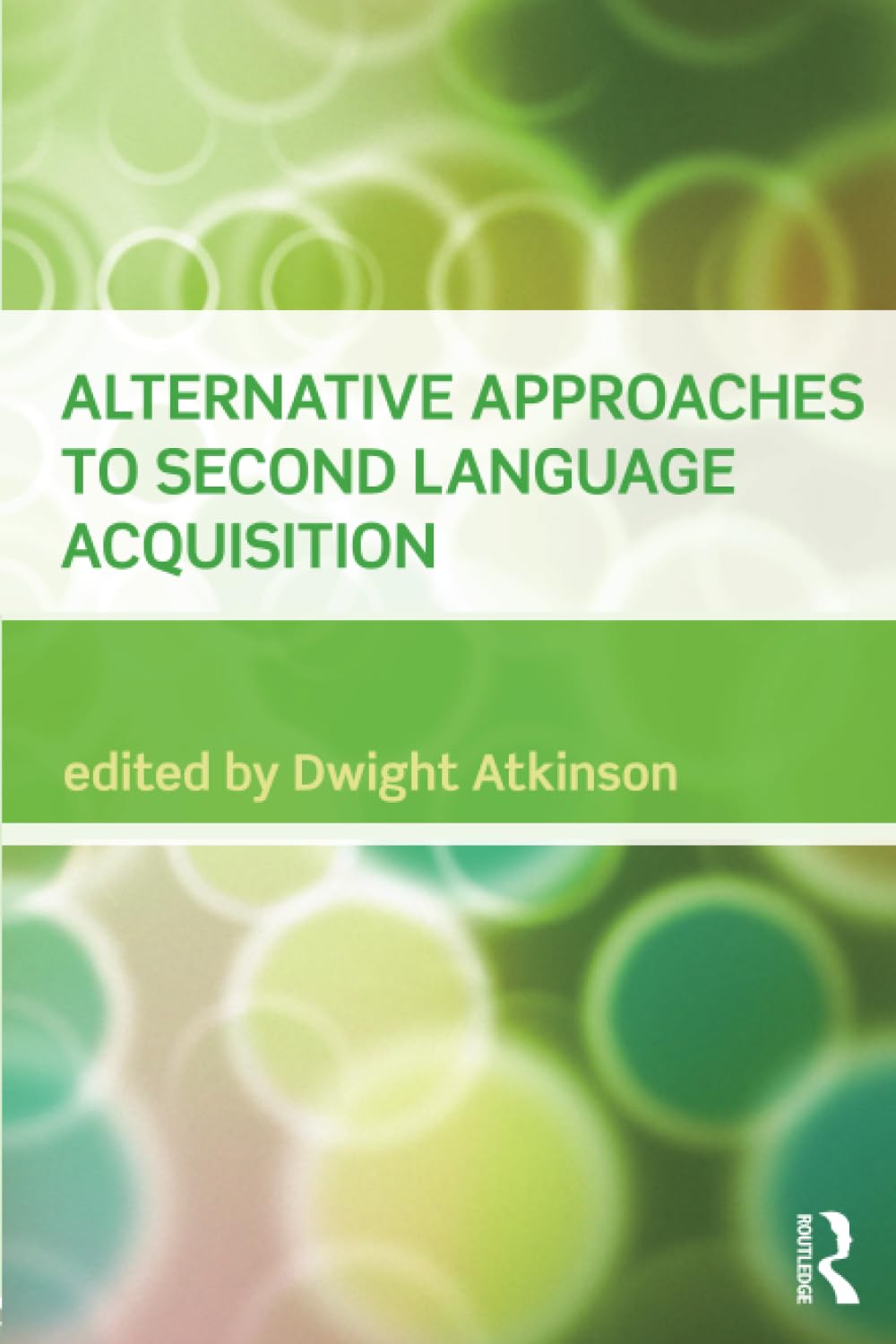
Title
Alternative Approaches To Second Language Acquisition
Sold by Ergodebooks, an authorized reseller.
Returns accepted within 30 days | support@ergodebooks.com
Shipping Information
- Free Standard Shipping — United States only
- Processing Time: 3–5 business days
- Estimated Delivery: 6–10 business days after dispatch
- Double-boxed, fully insured & discreetly packaged
- Tracking number sent via email once dispatched
Returns & Refund
Returns accepted within 30 days of delivery.
Damaged or Defective Item
Free return shipping + replacement or full refund
Wrong Item Received
Free return shipping + replacement or full refund
Change of Mind
Return shipping at customer's expense · 25% restocking fee applies
Payment Option

This Volume Presents Six Alternative Approaches To Studying Second Language Acquisition 'Alternative' In The Sense That They Contrast With And/Or Complement The Cognitivism Pervading The Field. All Six Approaches Sociocultural, Complexity Theory, Conversationanalytic, Identity, Language Socialization, And Sociocognitive Are Described According To The Same Set Of Six Headings, Allowing For Direct Comparison Across Approaches.Each Chapter Is Authored By Leading Advocates For The Approach Described: James Lantolf For The Sociocultural Approach; Diane Larsenfreeman For The Complexity Theory Approach; Gabriele Kasper And Johannes Wagner For The Conversationanalytic Approach; Bonny Norton And Carolyn Mckinney For The Identity Approach; Patricia Duff And Steven Talmy For The Language Socialization Approach And Dwight Atkinson For The Sociocognitive Approach.Introductory And Commentary Chapters Round Out This Volume. The Editors Introduction Describes The Significance Of Alternative Approaches To Sla Studies Given Its Strongly Cognitivist Orientation. Lourdes Ortegas Commentary Considers The Six Approaches From An 'Enlightened Traditional' Perspective On Sla Studies A Viewpoint Which Is Cognitivist In Orientation But Broad Enough To Give Serious And Balanced Consideration To Alternative Approaches.This Volume Is Essential Reading In The Field Of Second Language Acquisition.
⚠️ WARNING (California Proposition 65):
This product may contain chemicals known to the State of California to cause cancer, birth defects, or other reproductive harm.
For more information, please visit www.P65Warnings.ca.gov.
- Q: How many pages are in 'Alternative Approaches to Second Language Acquisition'? A: This book contains two hundred eight pages. It's a comprehensive volume discussing various approaches to language acquisition.
- Q: What is the binding type of this book? A: The book is paperback bound. This makes it lightweight and flexible for easy reading and transport.
- Q: What are the dimensions of this book? A: The book measures six point fourteen inches in length, zero point forty-seven inches in width, and nine point twenty-one inches in height. These dimensions make it a standard size for easy handling.
- Q: What topics does this book cover? A: This book covers alternative approaches to second language acquisition, including sociocultural and complexity theory. It contrasts these with traditional cognitivist perspectives.
- Q: Who is the author of this book? A: The book is authored by Dwight Atkinson. He is well-known in the field of linguistics and second language acquisition.
- Q: Is this book suitable for beginners in linguistics? A: Yes, this book is suitable for beginners. It provides foundational insights into various approaches to second language acquisition.
- Q: How is this book organized? A: The book is organized into chapters, each covering a different approach to language acquisition. This structure allows for easy comparison of the approaches.
- Q: Can I use this book for academic research? A: Yes, this book is ideal for academic research. It includes contributions from leading scholars and provides significant insights into the field.
- Q: What is the focus of the sociocultural approach discussed in the book? A: The sociocultural approach focuses on the social context of language learning. It emphasizes interaction and cultural factors in language acquisition.
- Q: Are there any introductory chapters in this book? A: Yes, there are introductory and commentary chapters. These provide context and significance for the alternative approaches discussed.
- Q: What is the significance of the commentary by Lourdes Ortega? A: Lourdes Ortega's commentary considers the six approaches from an 'enlightened traditional' perspective. This perspective balances cognitivist views with alternative approaches.
- Q: Is there a glossary or index in this book? A: No, the book does not specifically mention a glossary or index. However, the structured chapters help guide readers through the content.
- Q: Who are some of the contributors to the chapters? A: Contributors include James Lantolf and Diane Larsen-Freeman among others. They are leading advocates for their respective approaches.
- Q: What makes this book essential for linguistics students? A: This book is essential because it challenges traditional cognitivist perspectives with alternative approaches. It's a critical resource for understanding diverse theories in SLA.
- Q: How does this book compare to other linguistics textbooks? A: This book offers unique perspectives compared to other textbooks by emphasizing alternative approaches rather than solely cognitivist frameworks. It enriches the discourse in SLA.
- Q: What kind of audience would benefit most from this book? A: Students, educators, and researchers in linguistics will benefit most. It provides valuable insights for anyone interested in second language acquisition.