
Title
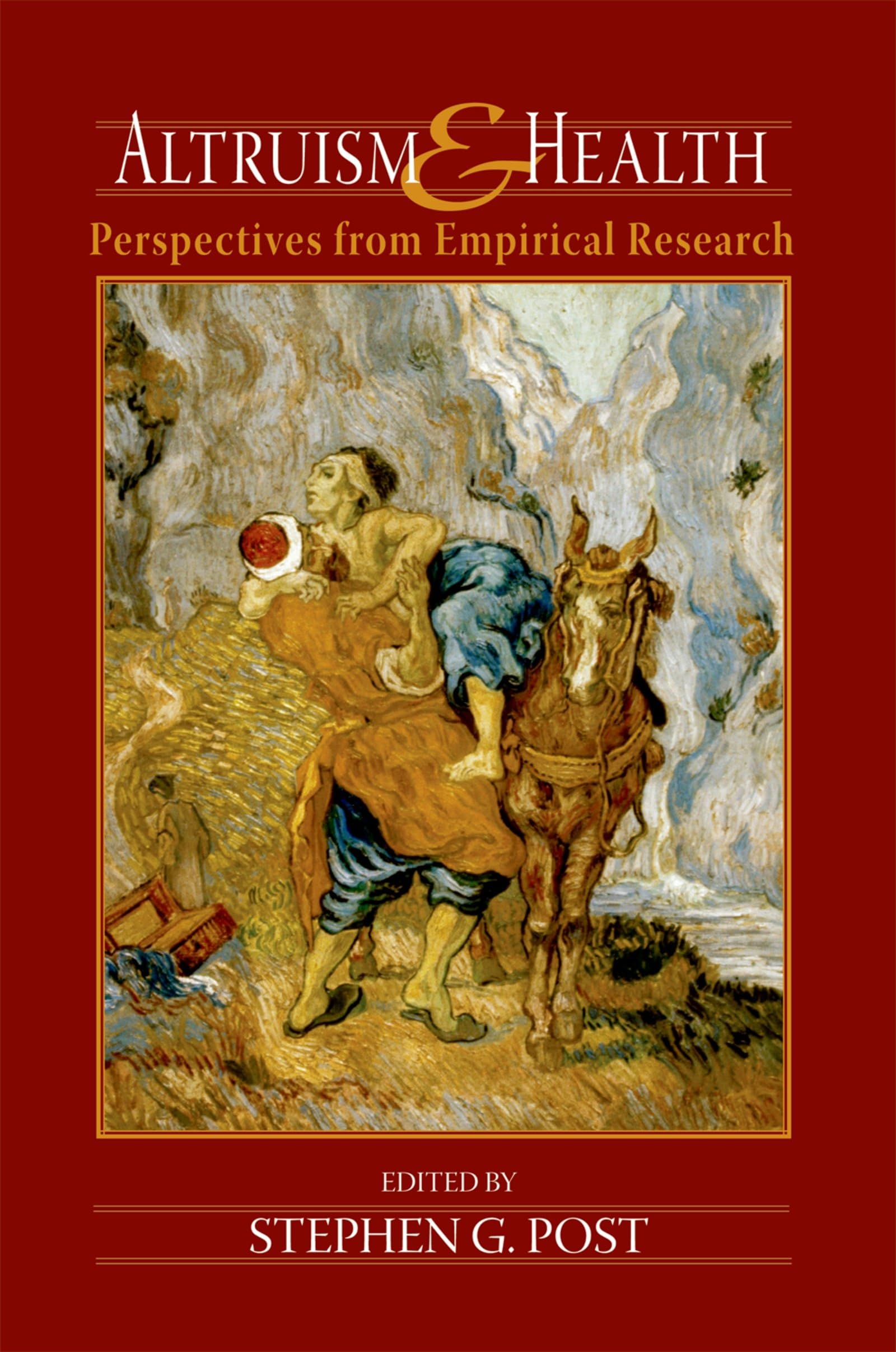
Altruism and Health: Perspectives from Empirical Research,Used
Sold by Ergodebooks, an authorized reseller.
Returns accepted within 30 days | support@ergodebooks.com
Shipping Information
- Free Standard Shipping — United States only
- Processing Time: 3–5 business days
- Estimated Delivery: 6–10 business days after dispatch
- Double-boxed, fully insured & discreetly packaged
- Tracking number sent via email once dispatched
Returns & Refund
Returns accepted within 30 days of delivery.
Damaged or Defective Item
Free return shipping + replacement or full refund
Wrong Item Received
Free return shipping + replacement or full refund
Change of Mind
Return shipping at customer's expense · 25% restocking fee applies
Payment Option

We're all quite familiar with the tale of Ebenezer Scrooge, who was miserable in his selfishness, but later became happy when he began helping others. Ebenezer's story is compelling, but is it true that helping others is good for the giver? Although numerous studies have demonstrated that people experience health benefits when treated kindly and compassionately, do those who provide love to others also experience health benefits? In other words, is it at least as good to give as to receive? Does virtue actually have its own rewards?To answer these questions, Altruism and Health brings research in biology, psychiatry, psychology, gerontology, epidemiology, and public health. Much of this research shows that unselfish individuals will find life to be more meaningful, will usually be happier than their selfish counterparts, and will often experience better mental health. Some of this research also finds that unselfish individuals have reduced mortality rates and better physical health. Evolutionary and biological models help to explain these results by elucidating why a person who gives generously to others might live a more functional, happier, and healthier life. There is, however, an obvious caveat: those who allow themselves to be overwhelmed by caregiving will often suffer from the stressful burden of care. These findings challenge the shibboleth that being altruistic has either negative consequences or no benefits. This volume presents the first unified, empirical argument that an individual can live a generous life, without concern for reciprocity or reputational gain, and as a byproduct, discover deeper relationships, happiness, health, and even longevity. In doing so, it raises the most essential and perennial questions of moral psychology and the good life.
⚠️ WARNING (California Proposition 65):
This product may contain chemicals known to the State of California to cause cancer, birth defects, or other reproductive harm.
For more information, please visit www.P65Warnings.ca.gov.