
Title
Amalasuintha: The Transformation Of Queenship In The Postroman World,Used
Sold by Ergodebooks, an authorized reseller.
Returns accepted within 30 days | support@ergodebooks.com
Shipping Information
- Free Standard Shipping — United States only
- Processing Time: 3–5 business days
- Estimated Delivery: 6–10 business days after dispatch
- Double-boxed, fully insured & discreetly packaged
- Tracking number sent via email once dispatched
Returns & Refund
Returns accepted within 30 days of delivery.
Damaged or Defective Item
Free return shipping + replacement or full refund
Wrong Item Received
Free return shipping + replacement or full refund
Change of Mind
Return shipping at customer's expense · 25% restocking fee applies
Payment Option

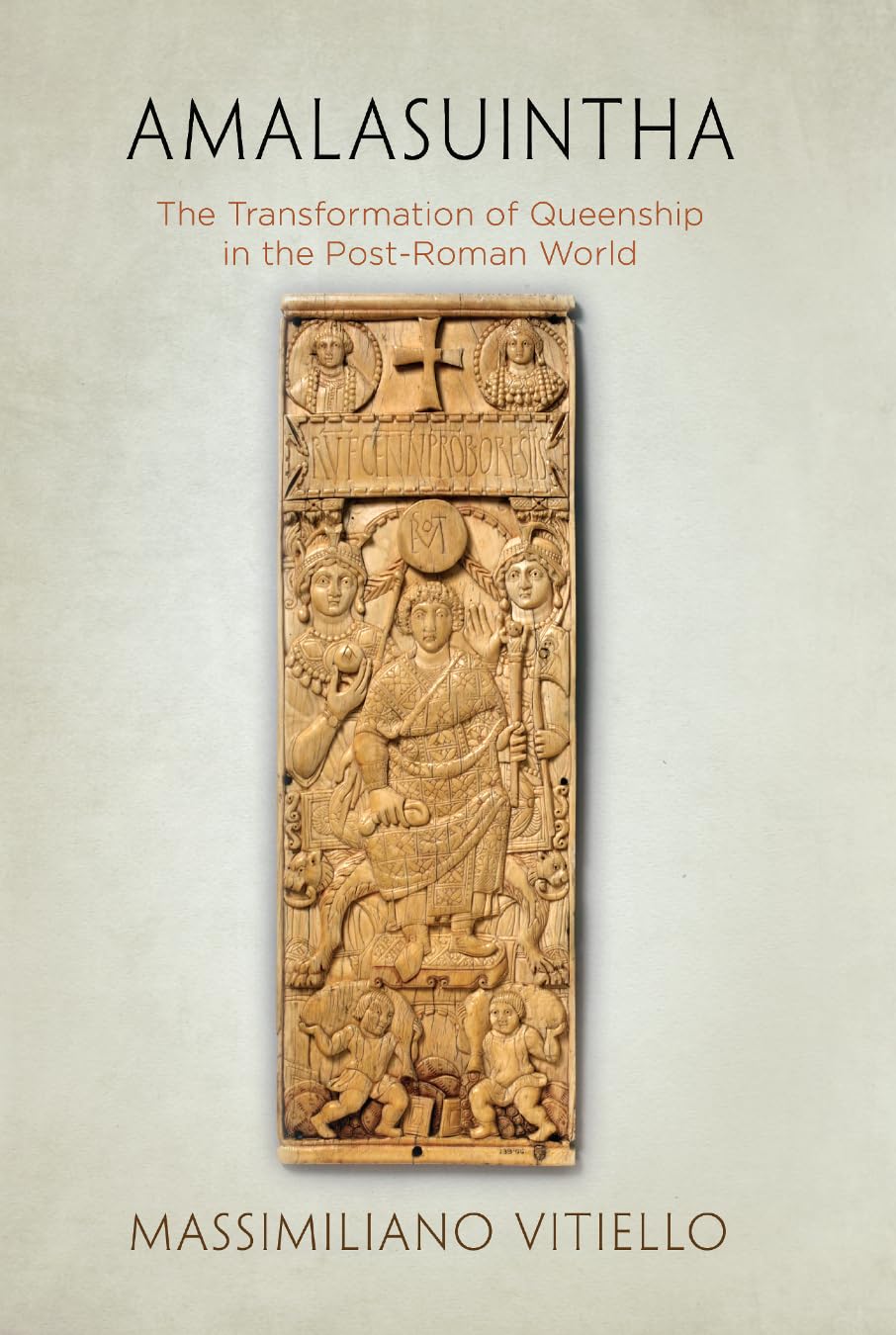
In this book, Massimiliano Vitiello situates the life and career of the Ostrogothic queen Amalasuintha (c. 494/5535), daughter of Theoderic the Great, in the context of the transitional time, after the fall of Rome, during which new dynastic regimes were experimenting with various forms of political legitimation. A member of the Gothic elite raised in the Romanized palace of Ravenna, Amalasuintha married her father's chosen successor and was set to become a traditional Gothic queena helpmate and advisor to her husband, the Visigothic prince Eutharicwith no formal political role of her own. But her early widowhood and the subsequent death of her father threw her into a position unprecedented in the Gothic world: a regent mother who assumed control of the government.During her regency, Amalasuintha clashed with a conservative Gothic aristocracy who resisted her leadership, garnered support among her Roman and proRoman subjects, defended Italy from the ambitions of other kings, and negotiated the expansionistic designs of Justinian and Theodora. When her son died unexpectedly at a young age, she undertook her most dangerous political enterprise: forming an unmarried coregency with her cousin, Theodahad, whom she raised to the throne. His final betrayal would cost Amalasuintha her rule and her life.Vitiello argues that Amalasuintha's story reveals a key phase in the transformation of queenship in late antiquity and the early Middle Ages, a time in which royal women slowly began exercising political power. Assessing the ancient sources for Amalasuintha's biography, Cassiodorus, Procopius, Gregory of Tours, and Jordanes, Vitiello demonstrates the ways in which her life and public image show the influence of late Roman and Byzantine imperial models on the formation of female political power in the postRoman world.
⚠️ WARNING (California Proposition 65):
This product may contain chemicals known to the State of California to cause cancer, birth defects, or other reproductive harm.
For more information, please visit www.P65Warnings.ca.gov.