
Title
Ambient Television: Visual Culture and Public Space (Consoleing Passions),New
Sold by Ergodebooks, an authorized reseller.
Returns accepted within 30 days | support@ergodebooks.com
Shipping Information
- Free Standard Shipping — United States only
- Processing Time: 3–5 business days
- Estimated Delivery: 6–10 business days after dispatch
- Double-boxed, fully insured & discreetly packaged
- Tracking number sent via email once dispatched
Returns & Refund
Returns accepted within 30 days of delivery.
Damaged or Defective Item
Free return shipping + replacement or full refund
Wrong Item Received
Free return shipping + replacement or full refund
Change of Mind
Return shipping at customer's expense · 25% restocking fee applies
Payment Option

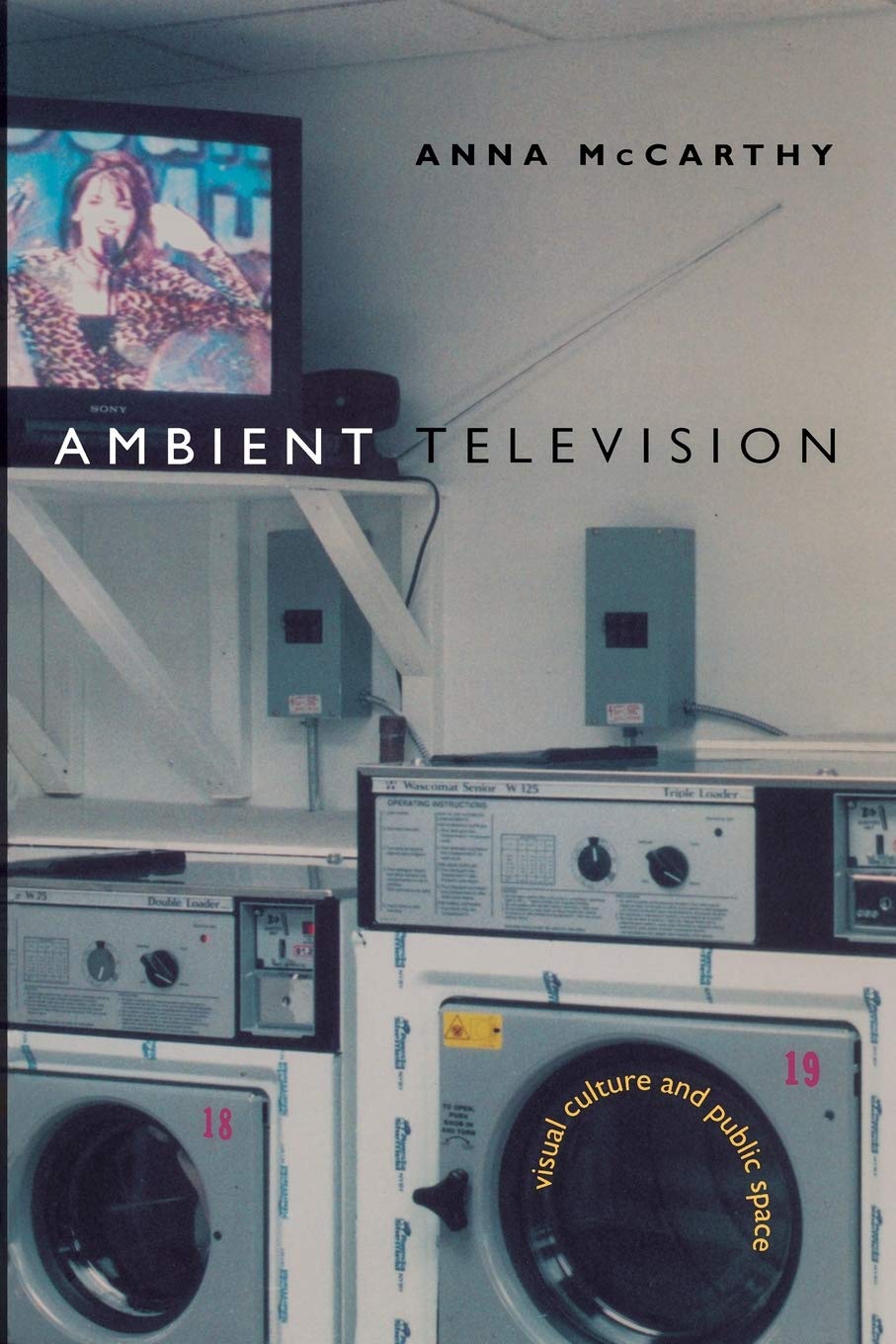
Although we tend to think of television primarily as a household fixture, TV monitors outside the home are widespread: in bars, laundromats, and stores; conveying flight arrival and departure times in airports; uniting crowds at sports events and allaying boredom in waiting rooms; and helping to pass the time in workplaces of all kinds. In Ambient Television Anna McCarthy explores the significance of this pervasive phenomenon, tracing the forms of conflict, commerce, and community that television generates outside the home.Discussing the roles television has played in different institutions from 1945 to the present day, McCarthy draws on a wide array of sources. These include retail merchandising literature, TV industry trade journals, and journalistic discussions of public viewing, as well as the work of cultural geographers, architectural theorists, media scholars, and anthropologists. She also uses photography as a research tool, documenting the uses and meanings of television sets in the built environment, and focuses on such locations as the tavern and the department store to show how television is used to support very different ideas about gender, class, and consumption. Turning to contemporary examples, McCarthy discusses practices such as Turner Private Networks efforts to transform waiting room populations into advertising audiences and the use of pointofsale video that influences brand visibility and consumer behavior. Finally, she inquires into the activist potential of outofhome television through a discussion of the video practices of two contemporary artists in everyday public settings.Scholars and students of cultural, visual, urban, American, film, and television studies will be interested in this thoughtprovoking, interdisciplinary book.
⚠️ WARNING (California Proposition 65):
This product may contain chemicals known to the State of California to cause cancer, birth defects, or other reproductive harm.
For more information, please visit www.P65Warnings.ca.gov.