
Title
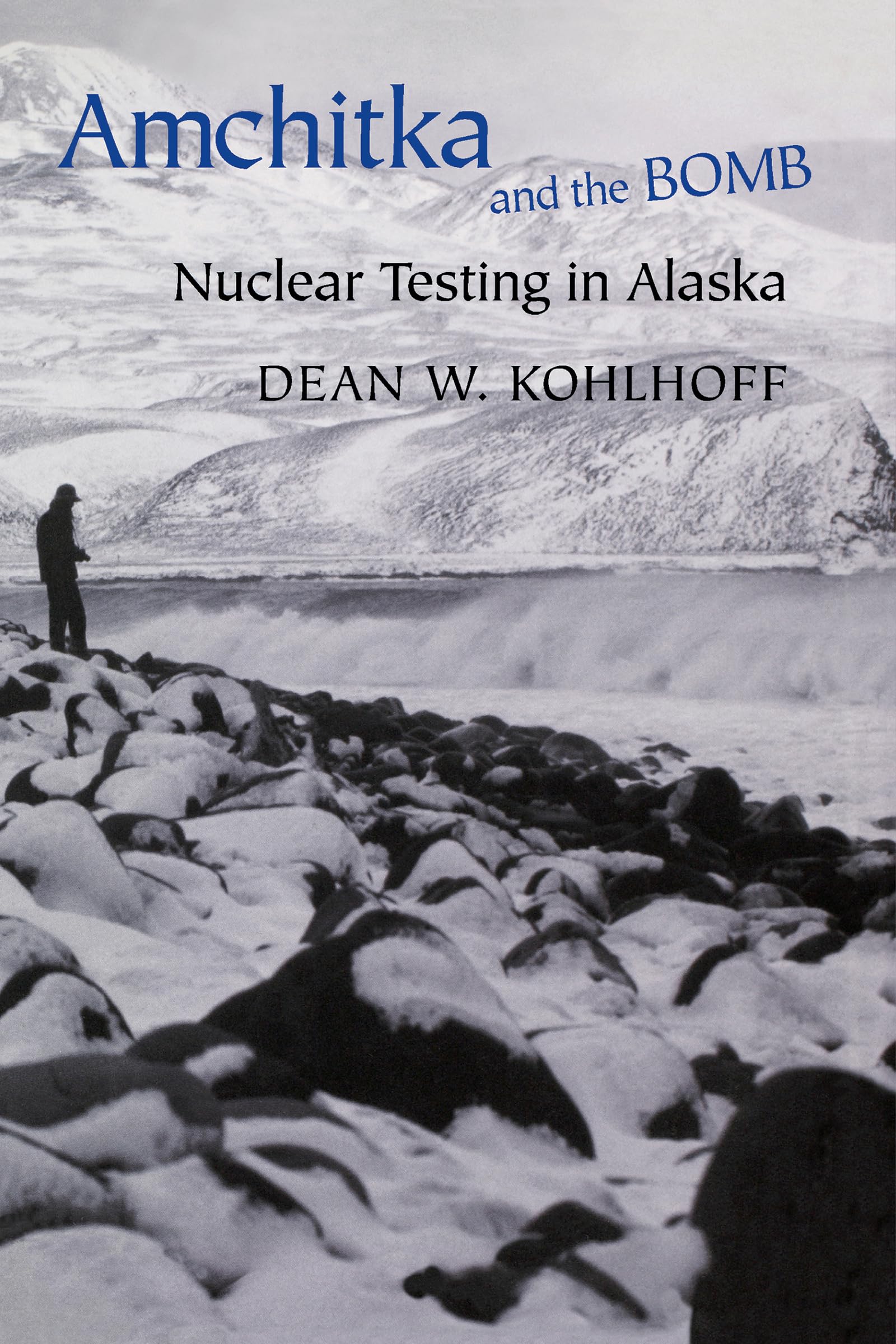
Amchitka and the Bomb: Nuclear Testing in Alaska,Used
Sold by Ergodebooks, an authorized reseller.
Returns accepted within 30 days | support@ergodebooks.com
Shipping Information
- Free Standard Shipping — United States only
- Processing Time: 3–5 business days
- Estimated Delivery: 6–10 business days after dispatch
- Double-boxed, fully insured & discreetly packaged
- Tracking number sent via email once dispatched
Returns & Refund
Returns accepted within 30 days of delivery.
Damaged or Defective Item
Free return shipping + replacement or full refund
Wrong Item Received
Free return shipping + replacement or full refund
Change of Mind
Return shipping at customer's expense · 25% restocking fee applies
Payment Option

More than a quartercentury has now passed since the United States set off the last of three underground atomic blasts in the remote wilderness of the Aleutian islands, off the coast of Alaska. Cannikin, as this third test was called, exploded as planned on November 6, 1971, on Amchitka Island. The first test, Project Long Shot (1965), was designed to determine whether the blast's shock waves could be distinguished from earthquakes. Milrow, the second (1969), and Cannikin were part of the U.S. antiballistic missile development program.Amchitka and the Bomb looks at how these nuclear explosions were planned and conducted by the U.S. Department of Defense and the Atomic Energy Commission, in spite of vehement protests by political and civilian groups. In addition to demonstrating the feasibility of a new generation of weapons, the government defended the nuclear tests on Amchitka as providing U.S. presidents, and especially Richard Nixon, with negotiating power to force the Soviet Union to accept a satisfactory arms limitation agreement.Dean Kohlhoff traces the enormous environmental impact of the blasts on the Aleutian wildlife refuge system. He also examines the social and political fallout from the tests on Aleut civilian populations. As the tests inexorably went forward, an emerging environmental movement was galvanized to action. Passionate but ultimately futile attempts to stop the blasts were made by such nascent groups as Greenpeace, Friends of the Earth, and the Wilderness Society. Although Alaskan Aleuts sued to halt Cannikin and environmental groups joined them for an injunction against the test, a split U.S. Supreme Court eventually approved the 5.1megaton explosion.Amchitka and the Bomb tells a harrowing story of the struggle of private citizens and small environmental groups to counter the weight of the federal government. It adds immeasurably to our understanding of the nuclear history of the United States. Its concise interweaving of the military, scientific, economic, and social implications surrounding the nuclear explosions on Amchitka Island exposes the unpleasant consequences of allowing treasured national values to become victim to political necessity. Kohlhoff has contributed a vital chapter to Alaska's history and to the history of the American environmental movement.
⚠️ WARNING (California Proposition 65):
This product may contain chemicals known to the State of California to cause cancer, birth defects, or other reproductive harm.
For more information, please visit www.P65Warnings.ca.gov.
- Q: What is the main subject of 'Amchitka and the Bomb'? A: 'Amchitka and the Bomb' focuses on the nuclear testing conducted by the United States in Alaska, particularly the underground atomic blasts on Amchitka Island and their environmental, social, and political implications.
- Q: Who is the author of 'Amchitka and the Bomb'? A: The book is authored by Dean W. Kohlhoff.
- Q: When was 'Amchitka and the Bomb' published? A: 'Amchitka and the Bomb' was published on August 1, 2002.
- Q: What is the binding type for this book? A: 'Amchitka and the Bomb' is available in hardcover binding.
- Q: How many pages are in 'Amchitka and the Bomb'? A: The book contains 176 pages.
- Q: What environmental issues does the book address? A: The book discusses the environmental impact of nuclear testing on the Aleutian wildlife refuge and the responses from environmental groups and local communities.
- Q: Is 'Amchitka and the Bomb' a new book? A: Yes, the book is listed as 'New' condition.
- Q: What kind of historical context does the book provide? A: 'Amchitka and the Bomb' provides insight into the nuclear history of the United States, detailing military, scientific, economic, and social factors related to the nuclear tests.
- Q: What is the significance of the Cannikin test mentioned in the book? A: The Cannikin test, conducted on November 6, 1971, was the largest underground nuclear test in the U.S. and is significant for its implications on U.S. military strategy and environmental policy.
- Q: What movements were influenced by the events described in 'Amchitka and the Bomb'? A: The book highlights the emergence of environmental movements, including groups like Greenpeace and Friends of the Earth, which mobilized against the nuclear tests.