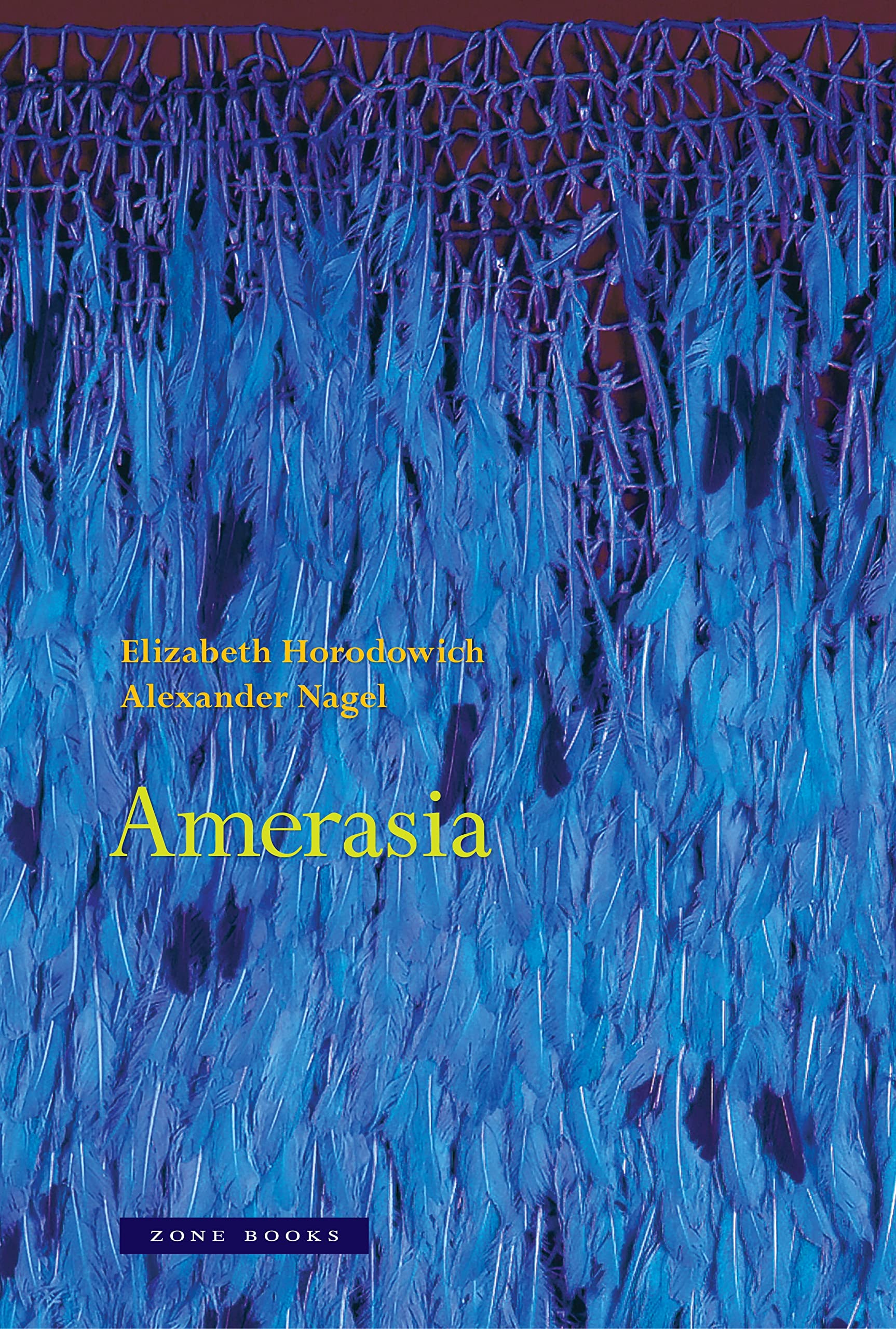
A connected world as imagined by early modern European artists, mapmakers, and writers, where Asia and the Americas were on a continuumAmerica and Asia mingled in the geographical and cultural imagination of Europe for well over a century after 1492. Through an array of texts, maps, objects, and images produced between 1492 and 1700, this compelling and revelatory study immerses the reader in a vision of a world where Mexico really was India, North America was an extension of China, and South America was marked by a variety of biblical and Asian sites. It asks, further: What does it mean that the Amerasian worldview predominated at a time when Europe itself was coming into cultural selfdefinition? Each of the chapters focuses on a particular artifact, map, image, or book that illuminates aspects of Amerasia from specific European cultural milieus. Amerasia shows how it was possible to inhabit a world where America and Asia were connected either imaginatively when viewed from afar, or in reality when traveling through the newly encountered lands. Readers will learn why early modern maps regularly label Mexico as India, why the Amazonas region was named after a race of Asian female warriors, and why artifacts and manuscripts that we now identify as Indian and Chinese are entangled in European collections with what we now label Americana.Elizabeth Horodowich and Alexander Nagel pose a dynamic model of the world and of Europes place in it that was eclipsed by the rise of Eurocentric colonialist narratives in the nineteenth and twentieth centuries. To rediscover this history is an essential part of coming to terms with the emergent polyfocal global reality of our own time.
⚠️ WARNING (California Proposition 65):
This product may contain chemicals known to the State of California to cause cancer,
birth defects, or other reproductive harm.
For more information, please visit
www.P65Warnings.ca.gov.
<div class="dynamic-checkout__content" id="dynamic-checkout-cart" data-shopify="dynamic-checkout-cart"> <shopify-accelerated-checkout-cart wallet-configs="[{"supports_subs":true,"supports_def_opts":false,"name":"shop_pay","wallet_params":{"shopId":73758048501,"merchantName":"Ergodebooks","personalized":true}},{"supports_subs":false,"supports_def_opts":false,"name":"amazon_pay","wallet_params":{"checkoutLanguage":"en_US","ledgerCurrency":"USD","placement":"Cart","sandbox":false,"merchantId":"A1G1ZY975O1T6J","productType":"PayAndShip","design":"C0002"}},{"supports_subs":true,"supports_def_opts":false,"name":"paypal","wallet_params":{"shopId":73758048501,"countryCode":"US","merchantName":"Ergodebooks","phoneRequired":true,"companyRequired":false,"shippingType":"shipping","shopifyPaymentsEnabled":true,"hasManagedSellingPlanState":false,"requiresBillingAgreement":false,"merchantId":"L873BZSC9NMQS","sdkUrl":"https://www.paypal.com/sdk/js?components=buttons\u0026commit=false\u0026currency=USD\u0026locale=en_US\u0026client-id=AbasDhzlU0HbpiStJiN1KRJ_cNJJ7xYBip7JJoMO0GQpLi8ePNgdbLXkC7_KMeyTg8tnAKW4WKrh9qmf\u0026merchant-id=L873BZSC9NMQS\u0026intent=authorize"}}]" access-token="c0f52a66b386e9fa5c0ab4c2febc737c" buyer-country="US" buyer-locale="en" buyer-currency="USD" shop-id="73758048501" cart-id="863637f73df44f3d1a69da2064b46f9d" enabled-flags="["d6d12da0","32a68cd0","a1c7ccbe","ce346acf","c0874428"]" > <div class="wallet-button-wrapper"> <ul class='wallet-cart-grid wallet-cart-grid--skeleton' role="list" data-shopify-buttoncontainer="true"> <li data-testid='grid-cell' class='wallet-cart-button-container'><div class='wallet-cart-button wallet-cart-button__skeleton' role='button' disabled aria-hidden='true'> </div></li><li data-testid='grid-cell' class='wallet-cart-button-container'><div class='wallet-cart-button wallet-cart-button__skeleton' role='button' disabled aria-hidden='true'> </div></li><li data-testid='grid-cell' class='wallet-cart-button-container'><div class='wallet-cart-button wallet-cart-button__skeleton' role='button' disabled aria-hidden='true'> </div></li> </ul> </div> </shopify-accelerated-checkout-cart> <small id="shopify-buyer-consent" class="hidden" aria-hidden="true" data-consent-type="subscription"> One or more of the items in your cart is a deferred, subscription, or recurring purchase. By continuing, I agree to the <span id="shopify-subscription-policy-button">cancellation policy</span> and authorize you to charge my payment method at the prices, frequency and dates listed on this page until my order is fulfilled or I cancel, if permitted. </small> </div>